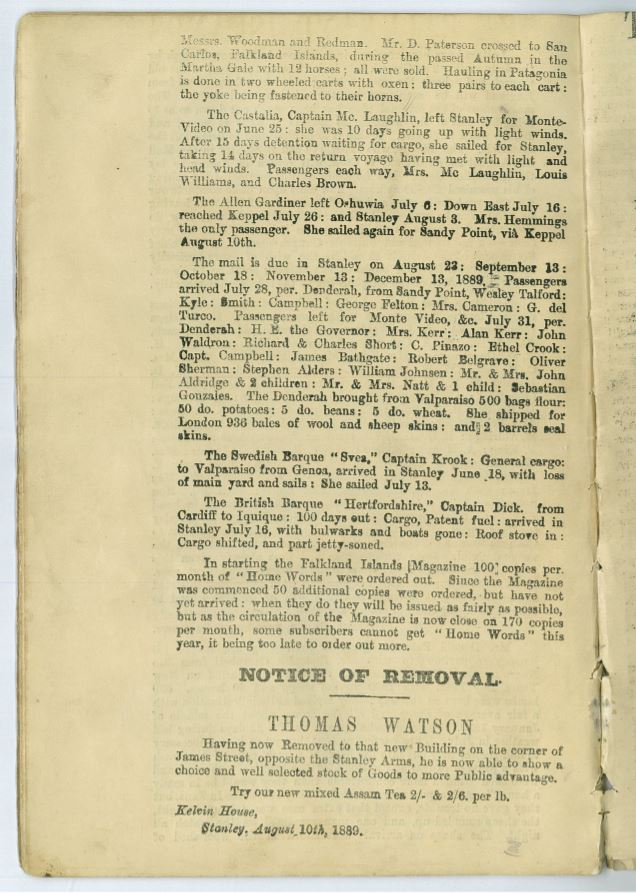
Deep Blue Diver

One Diver's Journey

Powered by Genesis

My Fathers’ Voyages Around…….

February 20, 2021 by Colin Jones

Helenus: Birkenhead to Birkenhead September to December 1955
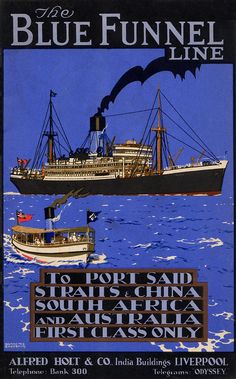
In Ancient Greek mythology, Helenus (Ἕλενος) was a son of King Priam and Queen Hecuba of Troy, and twin brother of the prophetess Cassandra. According to legend, Cassandra had been given the power of prophecy by Apollo, and taught it to Helenus. Cassandra’s prophecies were always accurate but she was doomed to be disbelieved. Like Cassandra, Helenus’ prophecies were always right, unlike Cassandra though, those who heard his prophecies believed him. Helenus vied against his brother Deiphobus for the hand of Helen of Troy, after the death of their brother Paris, in the final year of the Trojan War
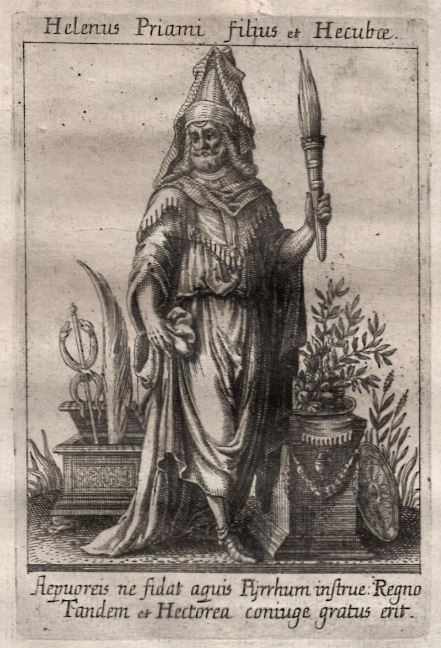
Helenus, Son of King Priam and Queen Hecuba, a Copperplate print depicted in a book of Greek Mythology c1670 (Web Photo)

The ships of the Blue Funnel Line were always named after the heroes of Greek mythology, or at least those appearing in the epics written about the Greek myths, Homers’ Iliad and Odyssey, and Virgils’ Aeneid. I don’t think anyone has truly established a specific reason for the fascination of Alfred Holt towards Greek Mythology, however the Victorian age seems to have had a general respect for “Hellenistic” Greek antiquity, as Thomas Gaisford, (Dean of Christchurch Oxford) says of Greek literature in one of his sermons “….not only elevates above the vulgar herd, but leads not infrequently to positions of considerable emolument” (Gaisford, T. Quoted in “Beyond The Hoi Polloi? Ancient Greece and the Victorians” Broughall, Quentin, J. June 22nd 2015. Source: The Victorianist: BAVS Postgraduates. Online @ victorianist.wordpress.com/2015/06/22/beyond-the-hoi-polloi-ancient-greece-and-the-victorians/ accessed 23/01/2021) Where Mr Broughall goes on to highlight eminent Victorians such as Elizabeth Barrett Browning, William Gladstone, George Eliot, Matthew Arnold and Oscar Wilde as being Hellenists at heart. If nothing else, an eminent Victorian engineer such as Alfred Holt is highly likely to have been immersed in the pre-eminent cultural references of his society peers……..
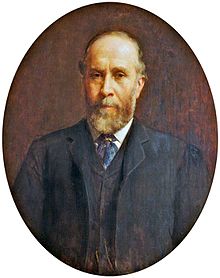
Alfred Holt 13/06/1829 to 28/11/1911 (Web Photo of a painting by R.E. Morrison)

But enough about Greek Mythology & the Victorians…..The journey of my father around the world started, as noted elsewhere in this blog, on the 03rd September 1955 at Birkenhead, actually out of Gladstone Dock No 2 on the Mersey River. It is entirely possible Blue Funnel Cadet Engineer Ian Jones, 18 years old and just over a month off his 19th Birthday, would have arrived on the Liverpool Overhead Railway station platform. Long gone now, the Liverpool Overhead line, a marvel of the Victorian age, terminated at the Southern end of Gladstone dock and would have been the obvious choice for those arriving to join Blue Funnel Ships as crew or passengers from a wide range of Liverpool areas
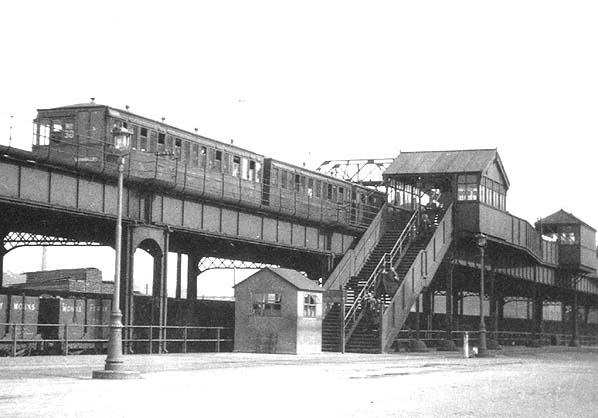
Liverpool Overhead Railway Station, Gladstone Dock South (Web Photo: Copyright Stations UK)

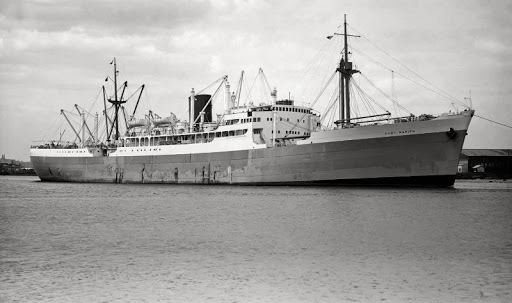
Dad was in for a rare treat, Helenus was bound for Australia, her regular route, and it must have seemed like all Dads’ birthdays had come at once, bearing in mind this would be his first trip abroad. I know the training at Blue Funnel’s Aulis centre would have prepared him for whatever he would meet in Helenus’ huge engine room, but it is harder to imagine what was going through his mind meeting his colleagues and fellow engineers, below decks, as the newest aboard and the lowliest of cadets? Essentially a 1st trip apprentice, exciting and somewhat daunting, I have no doubt. The Helenus was bound for  the Suez Canal and Port Said first, out with a general cargo in her holds and, not as unusually as you might think, Two Locomotives on her decks. Helenus must have been a surreal sight to those walking the shores of the Mersey at Bootle, as she headed impressively out of the Mersey estuary with Two steam trains firmly secured to her decks, a positive manifestation of the embodiment of the steam age!
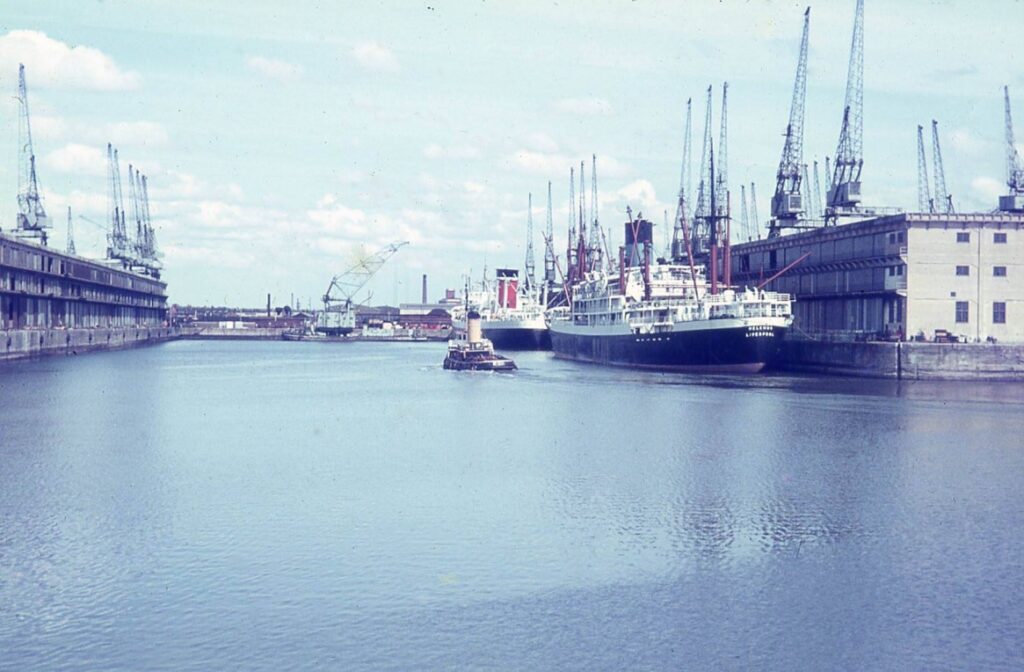
Helenus, loading, Dockside at Gladstone (Photo: Courtesy of Georgie Marsh. Blue Funnel for Old timers)

Port Said was established in 1859, named after its founder Sa’id of Egypt, with a population of around 150 people, it would not be for another 10 years that the Suez canal would open, in November of 1869, allowing fast trade routes from the Mediterranean Sea to the Red Sea cutting out the need to sail the South Atlantic around Cape Horn. It would then take until 1904, when the railway from Cairo reached the port, for real trade to begin and for Port Said to start to attract a significant commercial community of 11000 people, the largest of the European communities being Greek
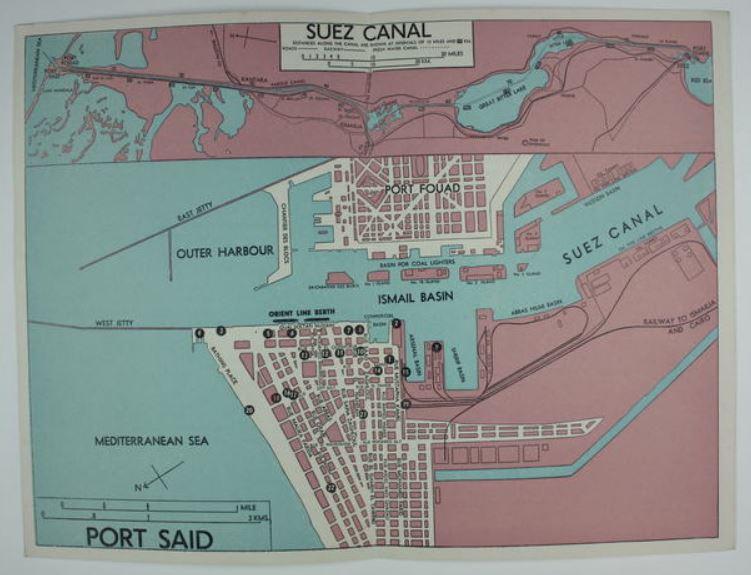
Port Sa’id the gateway to Suez 1955 (Web Photo)

  When my Dad sailed through the Suez en-route to Australia the Port Said Stadium was opening, inaugurated by the Egyptian Minister for social affairs, on behalf of the Egyptian President, Gamal Abdel Nasser, Dad would narrowly miss out on the results of the growing tensions in the area. It wasn’t until 1956, when Nasser nationalised the Suez Canal Company in the so called Suez Crisis, that Britain would join Israel and France to invade the region, battling largely in and around Port Said, to secure The Suez Canal and the right to sail it unhindered. It would be 20 years after that conflict that I met a paratrooper who lost half his leg in the conflict to a mine, Frank Sutton appeared in many of the British Limbless Ex Serviceman’s Association (BLESMA) Adverts in the 70’s and 80’s and was still picking bits of leather out of his remaining leg (remnants from his boot) even then, Frank became a good mate, sharing many of his stories from the day and was instrumental in my choice to join the army
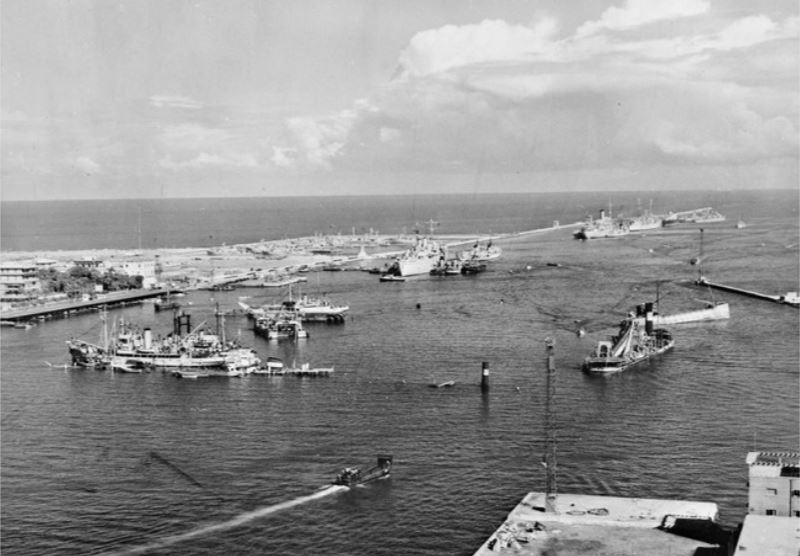
Block Ships sunk at the mouth of Port Sa’id 1956 (Web Photo: IWM Collection)

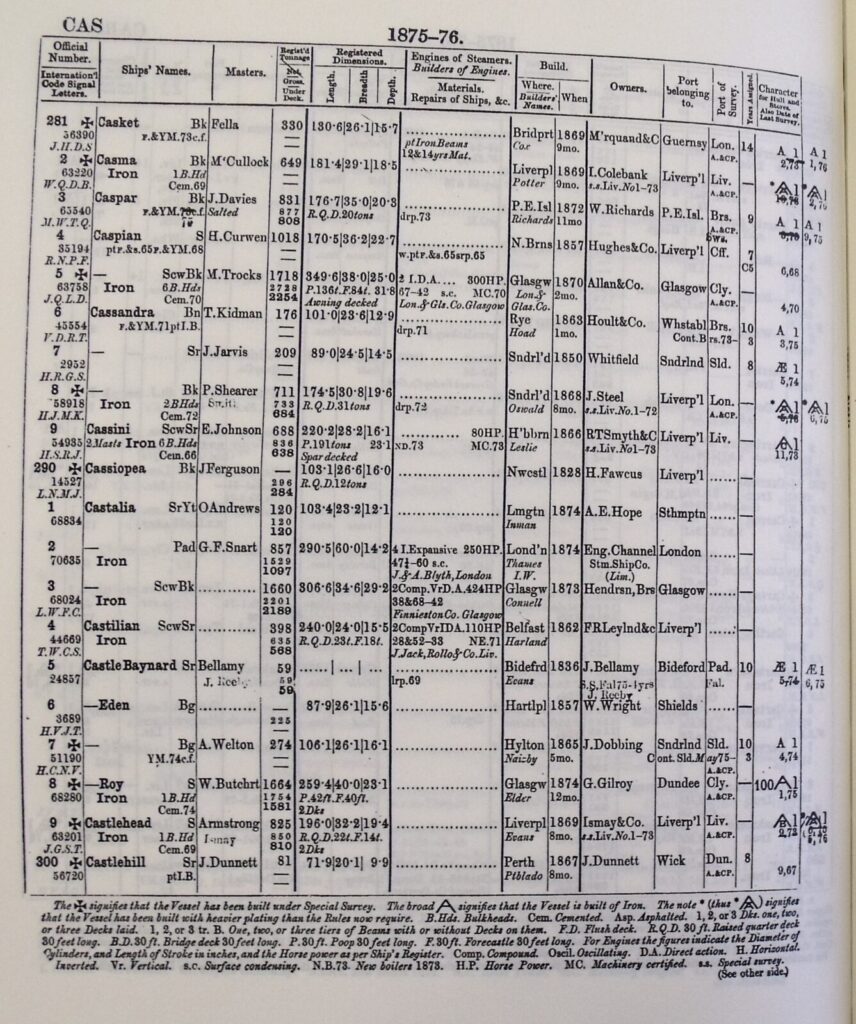
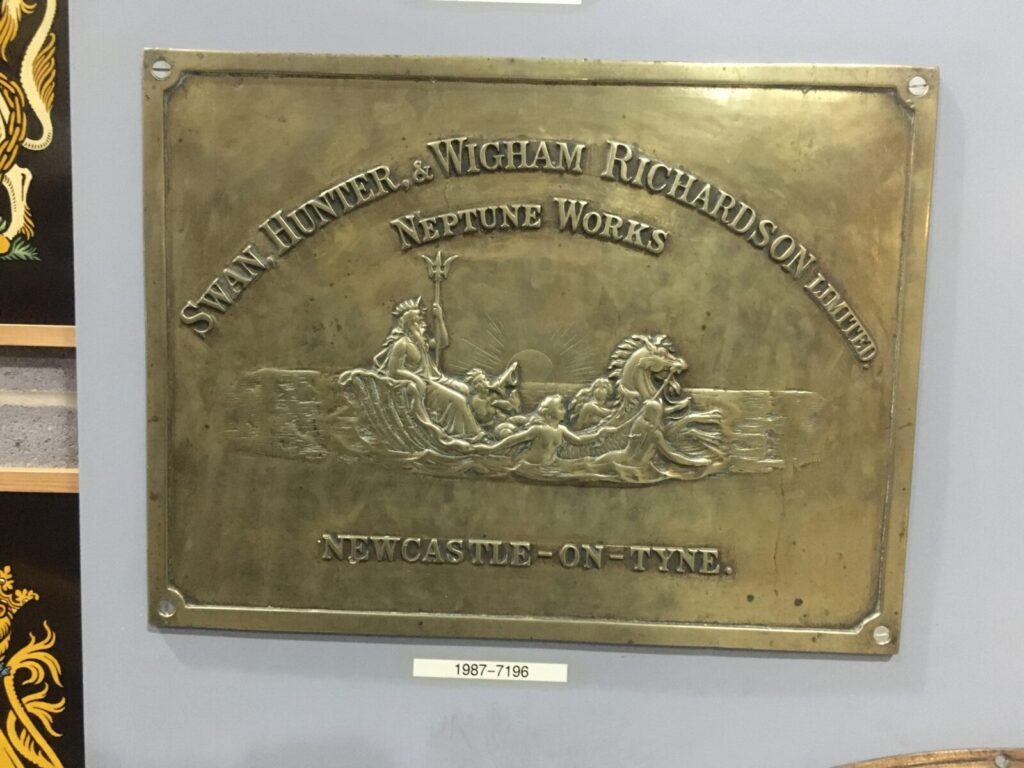
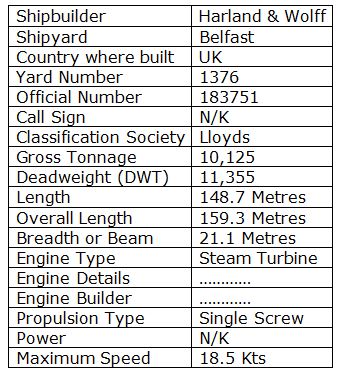
  From Port Said Helenus would have made her way to Aden to bunker up, or re fill with fuel for those who aren’t familiar with some of the nautical terminology. Fueling up a ship of Helenus size would be no small thing, she carried between 2,190 and 2,396 tons of oil fuel, in double bottom tanks, side compartments and settling tanks and carried water ballast in several compartments at the fore peak and aft peak, totalling around 3,500 tons. Helenus was a Harland and Wolff (Belfast) ship, the same yard that built Titanic, however Helenus was a typical Alfred Holt “Lloyd’s A plus” Class Vessel, unlike the Titanic…… for those of you who love facts this is Helenus’ sheet:
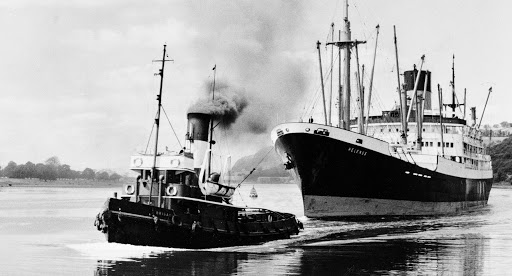
Helenus Under Tow c1955 (Web Photo: Courtesy RHIW.Com)

A little more general detail is provided by Norman Middlemiss in his piece in the on-line magazine Shipping Today and Yesterday (Middlemiss N: “Blue Funnel Line ‘P’ and ‘H’ Classes of 1949/51” in shippingtandy.com accessed 29/01/2021) “The ‘H’ class steel hulls were seven feet longer and one foot wider than the ‘P’ class and were subdivided by nine bulkheads into seven holds and seven hatches. The latter measured 29 by 22 feet, 27 by 24 feet, 27 by 22 feet, two of 26 by 22 feet, one of 18 by 12 feet, and one of 14 by 12 feet. The foc’stle of all of this quartet measured 47.0 feet, the Bridge Deck was of 265.0 feet in length, and the poop deck was 26.0 feet in length. The hulls were of riveted and welded construction and carried insulated compartments for refrigerated cargo, and a deep tank was fitted ‘midships for the carriage of latex and vegetable oils with a flashpoint above 150 degrees Fahrenheit. The cargo handling gear consisted of a heavy lift derrick of 50 tons capacity on the foremast to serve number two hold, four ten tonners, fours even tonners, and sixteen five tonne derricks, a total of 25 derricks, all operated by 25 Laurence Scott winches varying from three to eight tons capacity”
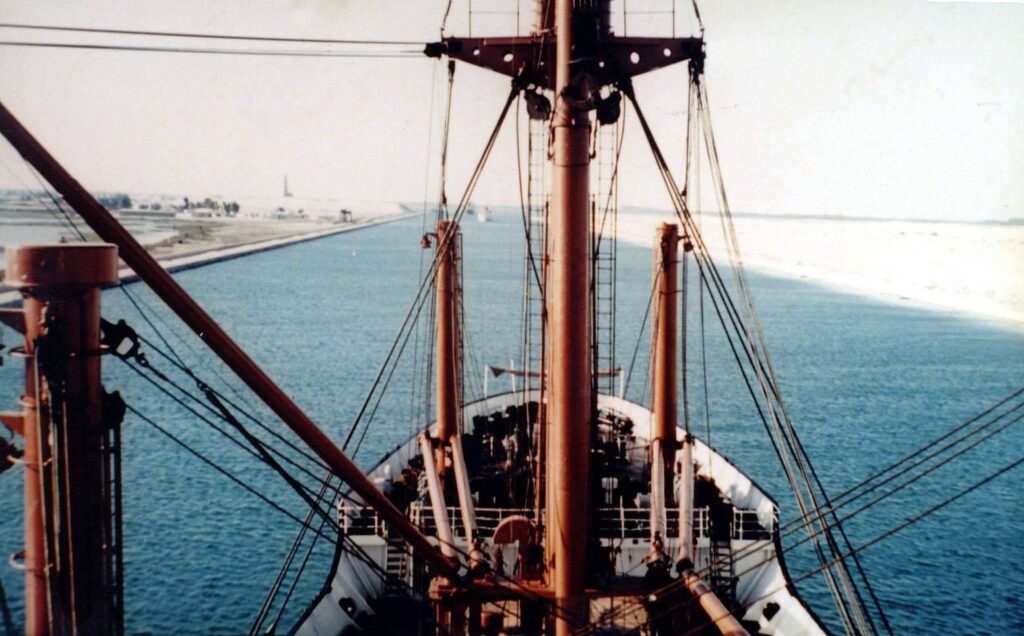
Navigating the Suez Canal from Port Sa’id (Web Photo: Courtesy G. Jones)

Mr Middlemiss goes on to provide the detail missing in the table above in respect to the Engines of Helenus, although I haven’t been able to confirm this, either with Dad’s limited notes and correspondences, nor in the wider Blue Funnel arena. Helenus is noted by Mr Middlemiss as being fitted with “Parsons steam turbines of 15,000 shp at 106 rpm, double reduction geared to a single screw shaft, taking steam from two Foster Wheeler water tube boilers operating at 570 pounds/sq. inch and 850 degrees Fahrenheit to give a service speed of 18.5 knots and a ‘flat out’ speed of over 20 knots. The turbines either had impulse blading or reaction blading depending on use for ahead or astern steaming, and the boilers had air heaters and economisers, together with the necessary fans for forced and induced draught” I had initially thought Helenus may have been fitted with a J. G. Kincaid & Co variant of the Burmeister & Wain Opposed Piston Engine however that was a coincidental piece and does not specifically state Helenus as a platform, unlike Mr Middlemiss to whom I am indebted for his knowledge and detail!
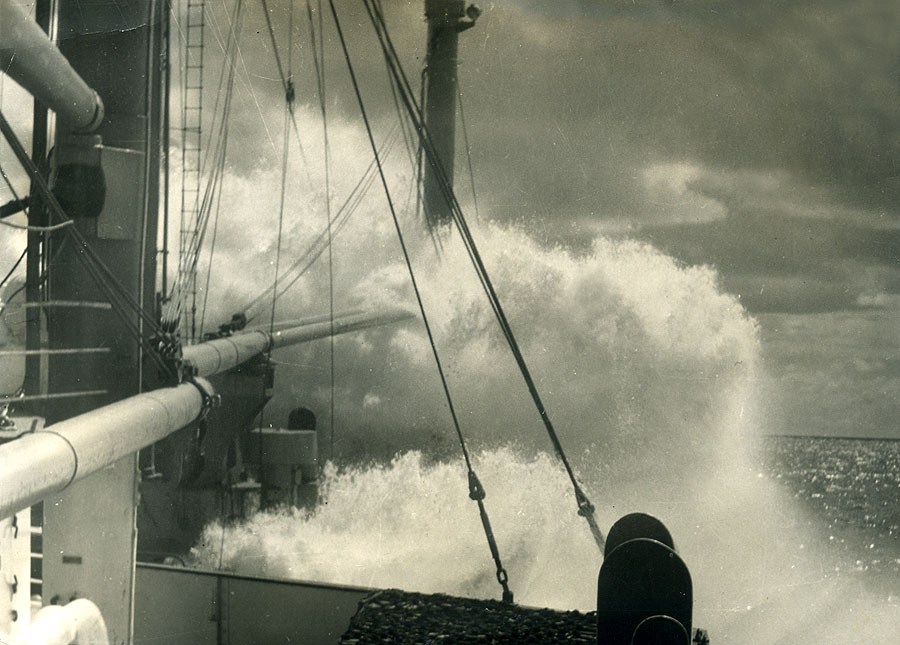
Helenus in the Bay of Biscay (Web Photo: Courtesy of G. L. Williams RHIW)

So what was Aden like in 1955 and what would the young cadet Ian Jones have seen whilst re-fuelling Helenus then? Well Aden began as a British Port mainly kept as a protection from pirates en-route between the UK and India and, following the opening of the Suez Canal, it served as a coaling and fuelling station for shipping up until the fall of empire in India and its follow-on independence in 1947
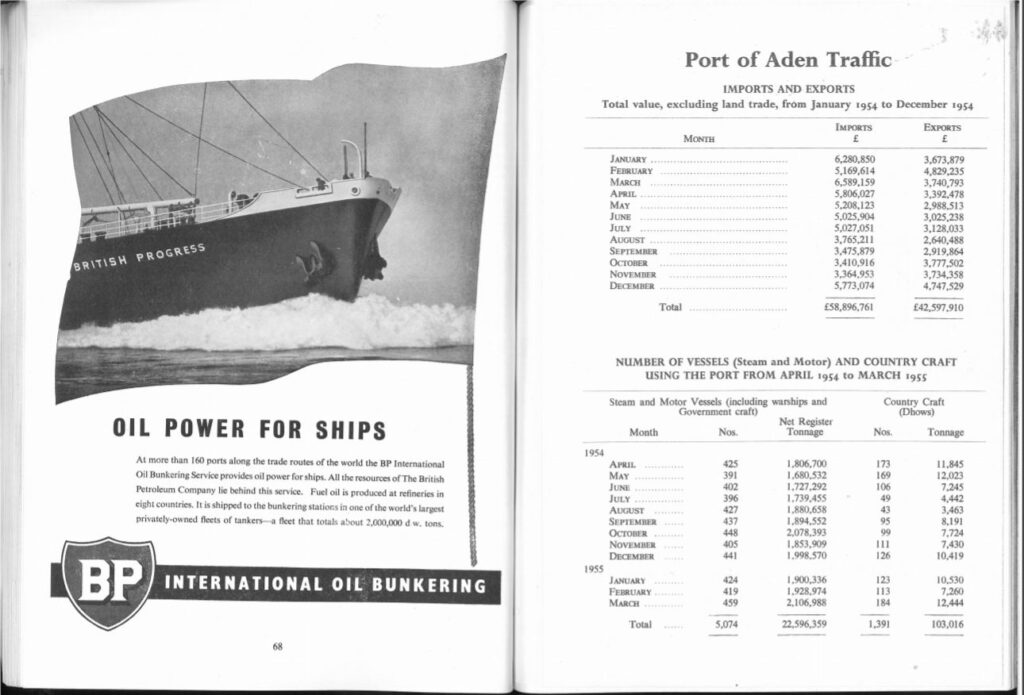
BP Bunkering Services & Aden Port Traffic 1955 (Web Photo: Port of Aden Journal 1955)

The Egyptian President, Nasser, was having a profound effect on the Arab nations and in 1955, although the British still ruled the region, things were (as seen in the Suez Canal incident of 1956) getting distinctly “touchy” all around the area. Aden was no different, the British had a small presence there at the Airfield at RAF Khormaksar near the Port of Aden, where BP had an oil refinery. The “Aden Protectorate” was a huge area nearly as big as England, comprising of the Eastern and Western protectorates, basically “bandit country” awash with local Arab tribal disputes, the British forces in the area trying to resolve tribal differences whilst at the same time monitor the borders between Aden, Saudi Arabia and Yemen. Indeed the British Army were returned to Aden in July of 1955 following tribal incursions by Yemeni armed insurgents, and ambushes, one of them wounding a British assistant advisor to the Western Aden Protectorate, all in all Aden was becoming something of a trouble spot at the time!
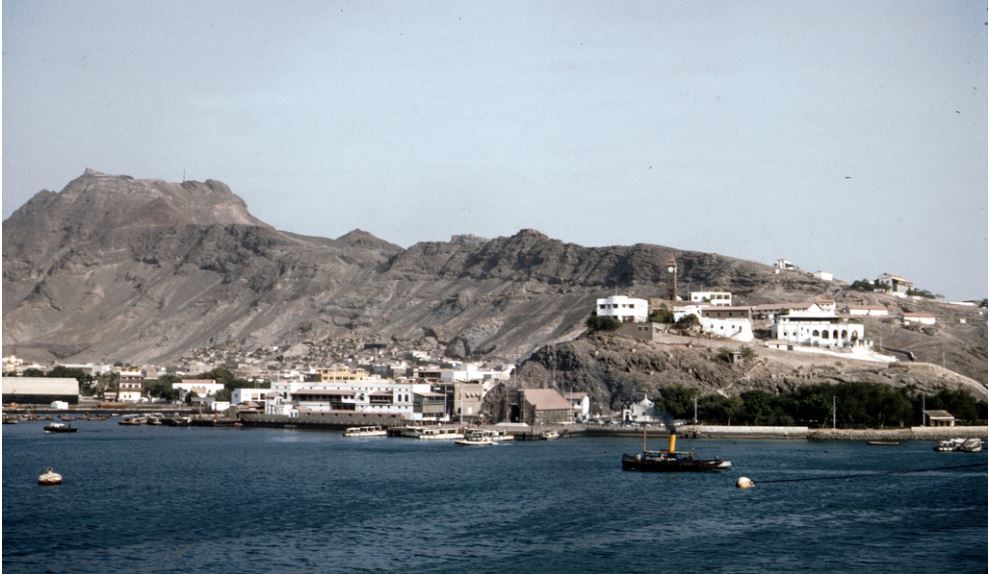
The Port of Aden as Dad would’ve seen it in 1955 (Web Photo: Courtesy M. King)

The British Army took control of Aden officially in 1956, taking over from the RAF regiment who were responsible for the protection of the Airfield at Khormaksar and the Port area up until that year. The RAF Regiment had just lost a wing commander and a levy soldier in an ambush at Wadi Hatib, with many others wounded. Squadron Leader Archibald Stewart commanded the evacuation of those soldiers, winning the Military Cross for his “sterling qualities of leadership under considerable pressure and amidst the chaos of the fight” (RAF Regiment Heritage Centre: “Squadron Leader “Jock” Stewart MC”. rafregimentheritagecentre.org.uk on-line resource accessed 06/02/2021), whilst under very accurate sniper fire. In all eight were killed and seven more seriously wounded before the patrol, guided by Squadron Leader Stewart, reached safety
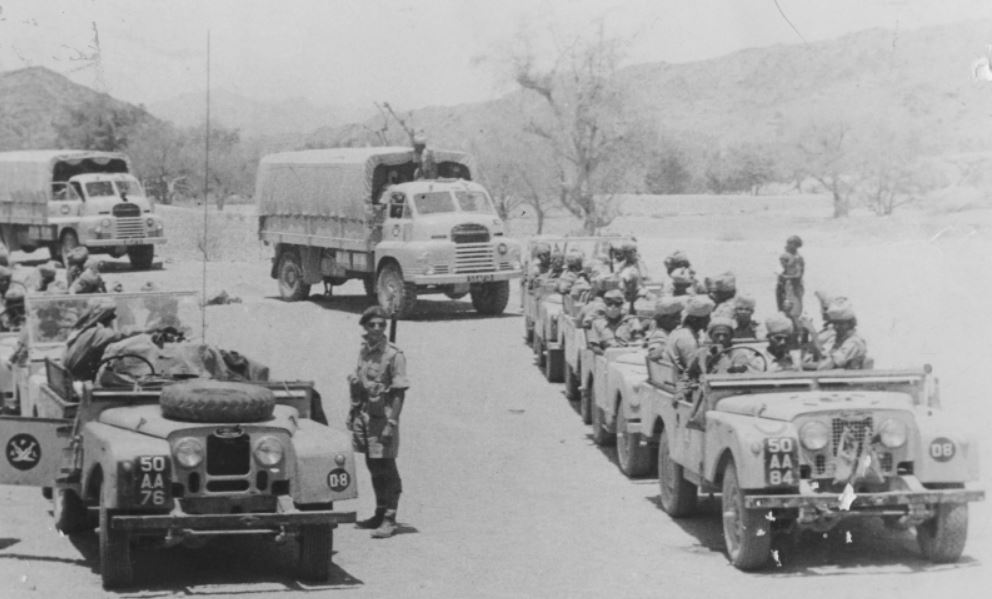
British Troops in Aden 1955 (Photo: Courtesy of Col R. Stewart DSO M.P.)

I doubt there was very much time between bunkering the Helenus and the journey on to Australia. The Blue Funnel line was not a cruise operator and, despite the passengers often carried on her ships right into the 1970’s, there would be issues surrounding passenger safety in the circumstances, and likely restrictions on runs ashore too. I never heard my Father speak of Aden and suppose from that either he didn’t go ashore or, if he did, there was perhaps little of note beyond the bunkering dock and the port area. If nothing else though, Aden would have been the first port outside of Liverpool that my father had set foot in and it would have definitely left an impression following the trip through Port Said and up the Suez 
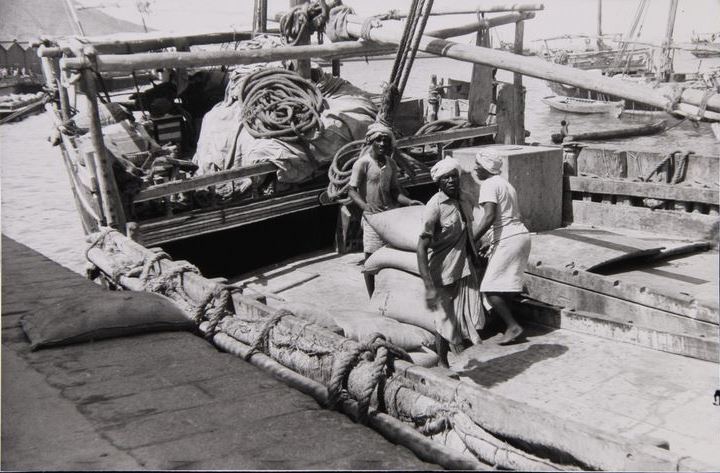
An Arab Dhow Offloading in the Port of Aden 1955 (Web Photo)

 Following the brief stop in Aden Helenus was bound for Albany, finally reaching Australia and the major open ocean stage of her journey, it would be necessary to top off her bunkers again and it seems Albany was the port of choice for Bluey’s on the Australian run to do so. Albany is surrounded by beaches and nowadays is a major tourist location, in 1955 Albany was renowned for whaling, the major employment of locals at the time. Albany only closed its whaling station down in 1978 making it the last whaling station in the Southern hemisphere and, indeed, the last ever English speaking whaling station. Albany sits within King George Sound on the Southern Coast of Western Australia, it would be Princess Royal Harbour Helenus was bound for, with the City of Albany located next to the Port, sitting at the base of Mount Adelaide. The approaches to the port are between Point Possession and Point King through a channel called, oddly, Ataturk Entrance
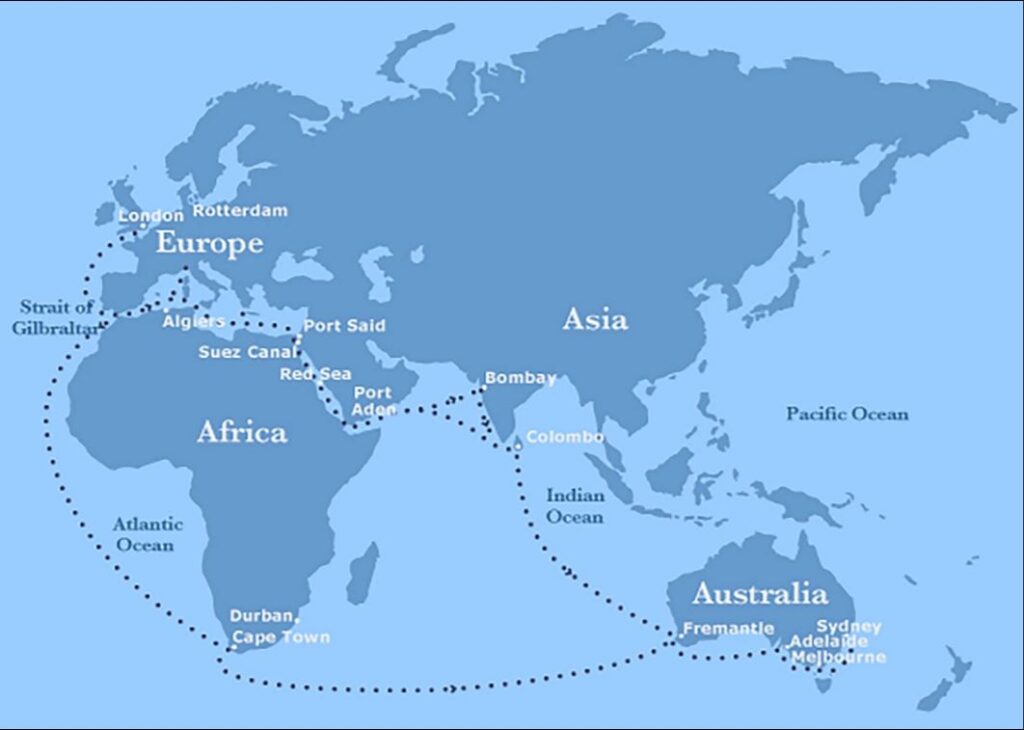
Blue Funnel Routes to Australia (Web Photo)

From my time living in Istanbul I know “Ataturk” to mean “Father of the Turks”, a title given to Mustafa Kemal (born Ali Rıza oğlu Mustafa, in Thessaloniki), by the Turkish people in honour of his defence of Gallipoli against the Australian and British forces in the 1914-1918 war. There is a memorial piece elsewhere on this site in the “Best Dives Ever” section that might lead you to conclude that the Australians named the channel in honour of Mustafa Kemal Pasha, for his humility in victory and his compassion for those who attacked his lands. Kemal Atatürk is widely credited as having said of the Allied Army dead “There is no difference between the Johnnies and the Mehmets to us where they lie side by side in this country of ours. You the mothers who sent their sons from far away countries wipe away your tears. Your sons are now lying in our bosom and are in peace. After having lost their lives on this land they have become our sons as well” It would not be hard to see why Albany would honour such a sentiment and such a man in this way, it is also telling that Albany was the port of departure for troopships going to join the allied armies in the First World War
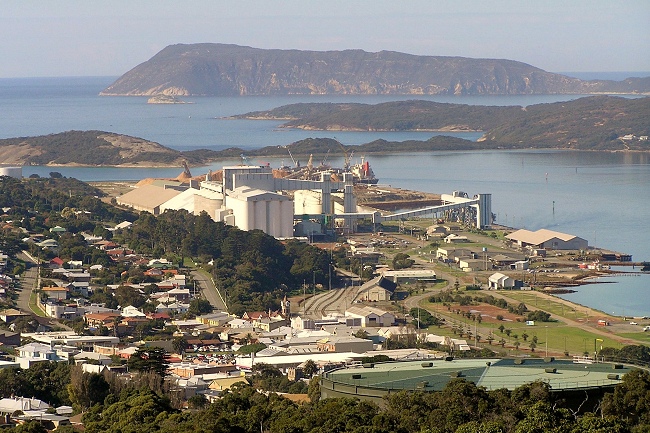
Port of Albany Western Australia (Web Photo)

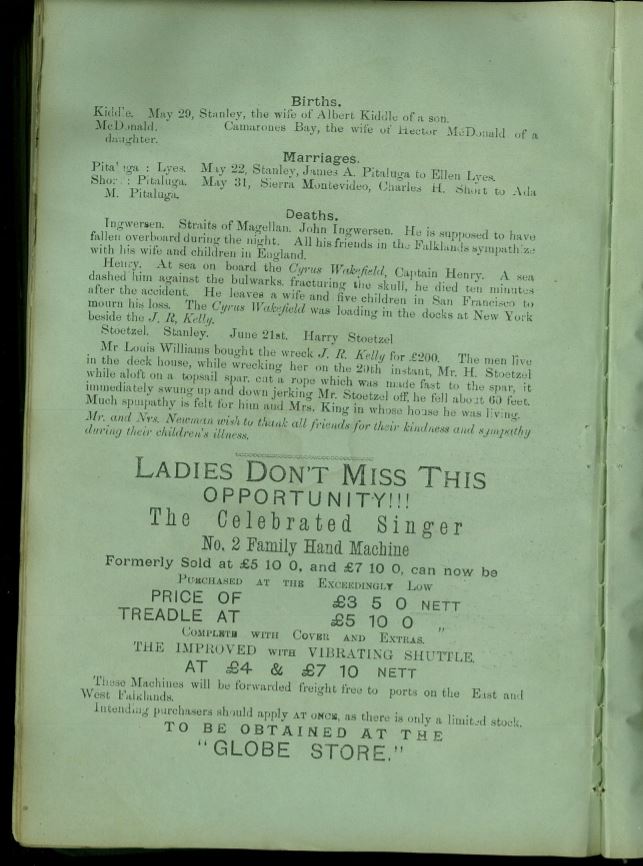
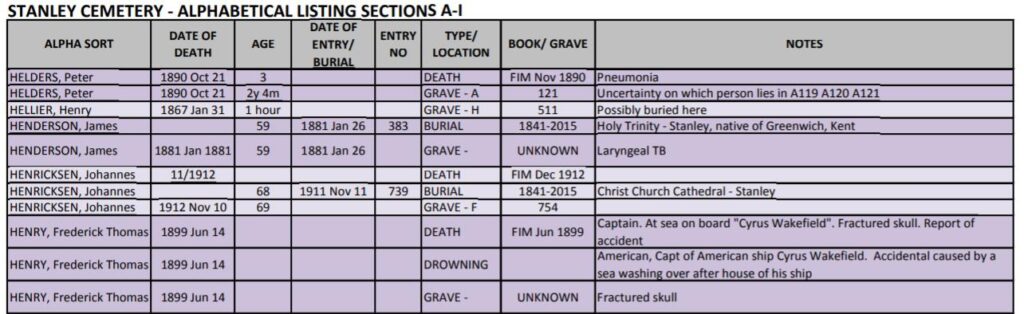
From Albany Helenus was bound for Adelaide, further down the coast, Adelaide was Australia’s third largest city and was prosperous and had benefited from the industry required in World War 2 with US car manufacturers Chrysler and General Motors having factories there. In 1955 Adelaide was Australia’s “Motor City” and its infrastructure was growing to meet the need, new pipelines and a new airport had just opened at West Beach and Adelaide’s’ shipbuilding industry, blast furnace and steelworks, had expanded at the nearby port of Whyalla. At some point during the journey down the Australian South Coast Helenus’ 5th Engineer developed Appendicitis and was put ashore for treatment, leaving a gap eventually filled by John Chapman for the return journey. John held a Chief Engineer’s ticket and, co-incidentally was returning to the UK at the time (E.W.Forshaw 6th Engineer Helenus: to C Jones in “Blue Funnel for Old-timers” Facebook Page)
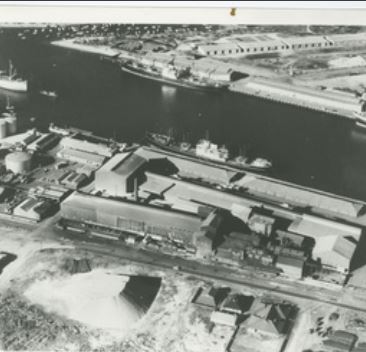
Port Adelaide 1955 (Web Photo: D. Darian. Courtesy of the State Library of South Australia)

  Adelaide had been built to a design proposed by Colonel William Light (his memorial sits on a local hill called Montefiore, looking out over the bay), it is a grid pattern, based on Greek and Renaissance ideas and influenced by the lay of the American city of Philadelphia, with wide avenues and public parks, making it a very pleasant city to live and work in. Unlike Albany in 1955, Adelaide would have had a more urban appearance, a heavier density of population around its shoreline and perhaps more to offer those going ashore between watches, it certainly had some wonderful beachfront along the coast as the photo of Hallet Cove testifies?
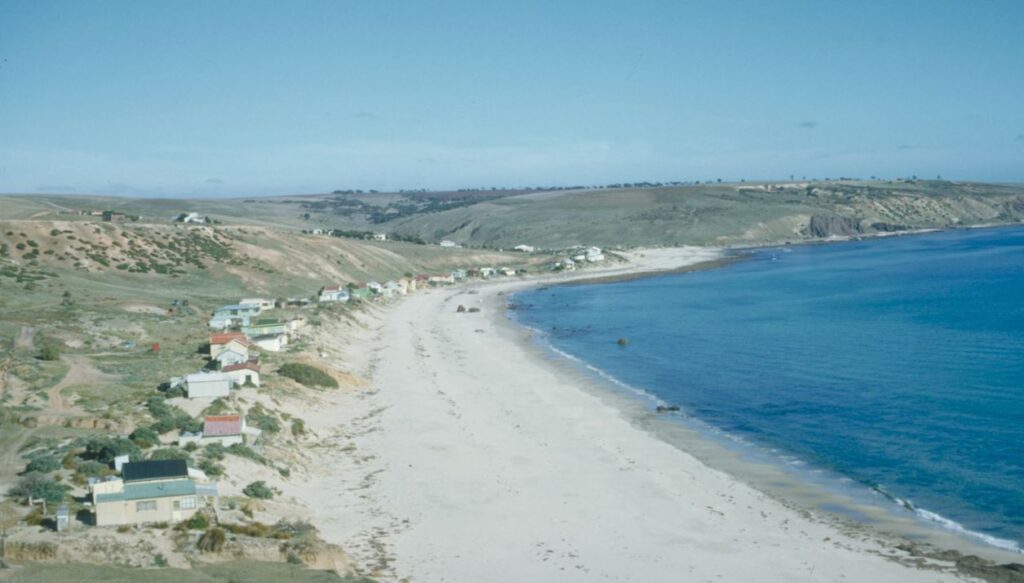
Hallet Cove Beach & Beach Huts 1955 (Web Photo: Courtesy W. Priess)

    Adelaide was to be quickly followed by Melbourne, in 1955 Australia’s first state Governor Charles Hotham was inaugurated, the Melbourne Museum opened and Majestic Class, Light Fleet Aircraft Carrier, HMAS Melbourne was commissioned. Although she had been laid down towards the end of World War 2 (15th April 1943) and launched partially complete in 1945, work on her had stopped until the establishment of an Australian naval fleet air arm (1946), to mimic the British Fleet Air Arm. At that point the “Majestic” along with her sistership “Terrible” (surely not the most appropriate name for a ship…..) were approved to be converted into Aircraft carriers and the “Modified Majestic Class” carriers were born. Dad wouldn’t have seen the HMAS Melbourne on his trip as she didn’t arrive in Australia (Freemantle) until 23 April, St George’s Day, 1956 after making the very same journey the Helenus had taken via Suez, but he would have surely known of her construction and her anticipated delivery
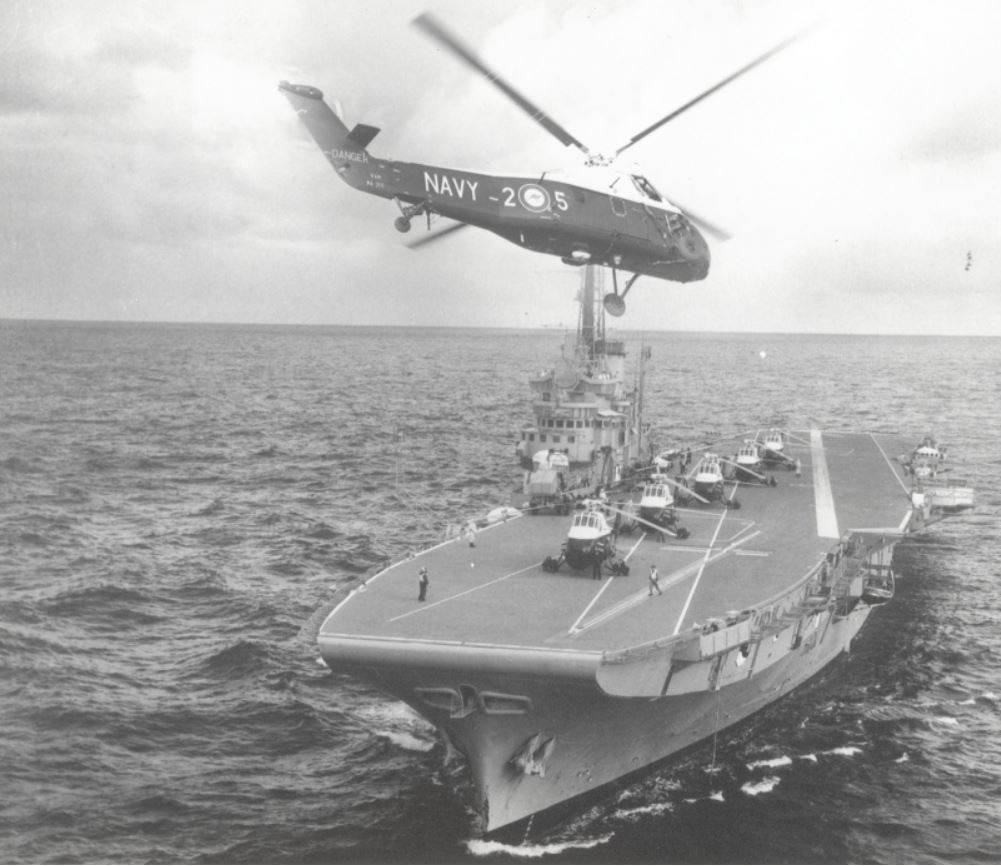
HMAS Melbourne & a Wessex Helicopter (Web Photo: Royal Australian Navy)

Melbourne was a cosmopolitan city and had thrived during and after WWII, essentially a modern and well established city where life would not have been so far from that in Liverpool, home of the Blue Funnel Line and Dad’s home town. The city streets would have been a reminder of home, perhaps enough to make a young lad a little homesick, but perhaps a place to explore and enjoy as a 19 year old half a world away from Leather’s Lane in Halewood, something vaguely familiar, but something completely different to Dads’ actual home
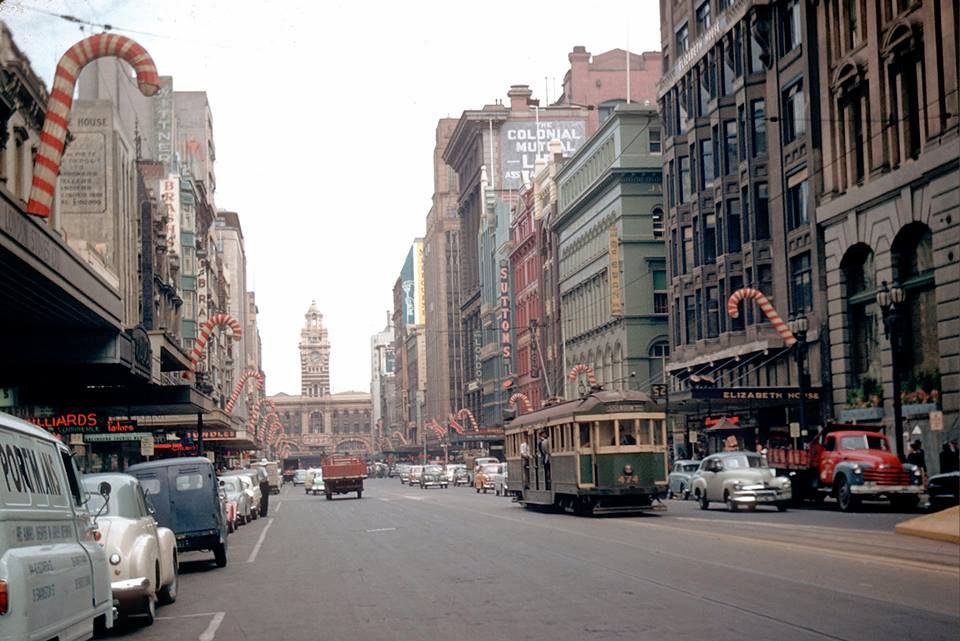
Down Town Melbourne c1955 (Web Photo: Courtesy Heraldsun)

The stop in Melbourne over, Helenus made her way to Sydney, capitol of New South Wales, something that might have amused Dad, half our family being very recent Welsh descendants, my Grandfather Glynn, his father, actually being Welsh…. When Helenus docked she would have been on Walsh Bay in one of berths 1 to 10, just a short walk from Circular Quay, St Georges, as those on Facebook’s “Blue Funnel for old timers” page will attest, and to whom I am especially grateful for the route and cargo details, along with the ports of call and some of the photo’s in this piece. August of 1955 had seen record rainfalls in Southern Australia, not for the first time that year, back in February lives were lost in the Murray-Darling Basin when the Hunter River at Newcastle, North of Sydney, burst her banks. Around Sydney, by August, there was significant flooding after further heavy rainfall, not the weather you’d expect in Australia by any stretch of the imagination. It might amuse those of a certain age to note that Dame Edna Everage, that Iconic Australian Diva, made “her” first appearance on the stage (Melbourne) in 1955, although I don’t believe Australia’s Cultural Attaché Les Patterson, by far the more eloquent of the two, appeared until later
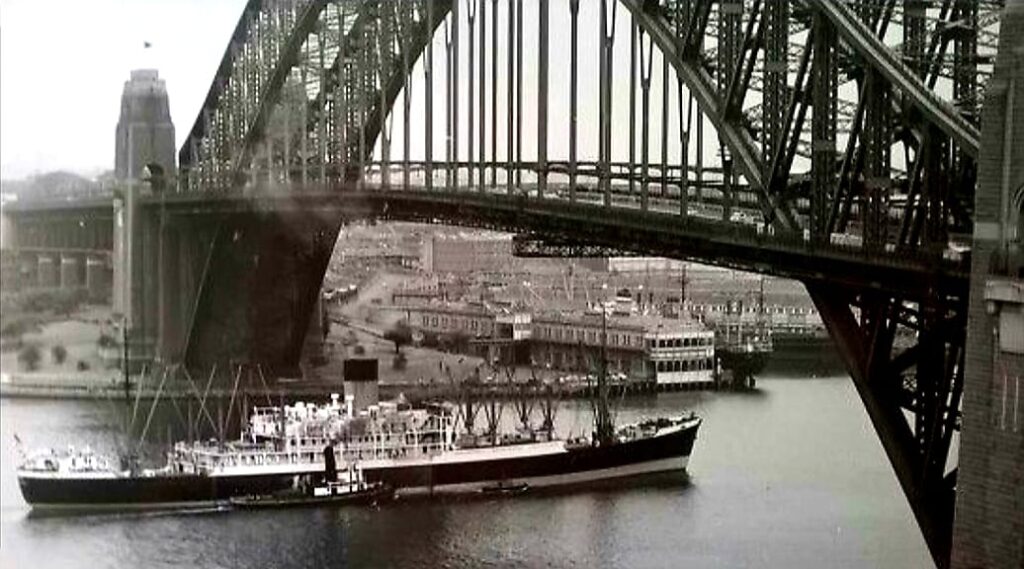
Helenus Enters Sydney 1955 (Photo: Courtesy of B. Kirk “Blue Funnel for old Timers”)

Whilst the iconic Sydney Harbour Bridge had long since been forged and transported from Tyneside, now elegantly spanning the entrance to Sydney Port, there was nothing on the point at Bennelong but the Fort Macquarie Tram Depot. The Depot was eventually demolished to make way for, what is now the most recognizable cultural reference in Sydney, the Sydney Opera House. Work would not begin on that engineering “miracle of its time” until 1959, following Danish architect Jorn Utzon winning of a competition to design “a National Opera House at Bennelong Point” in order to “…mould a better and more enlightened community” (J.J. Cahill, NSW Premier. Addressing a conference to construct an Opera House, Sydney. 1954) The eventual construction of Sydney Opera house would, as public edifices often do, go way over budget, and eventually see Jorn Utzon leave Australia, never to return, in 1966 following payment being wrongly withheld by the Australian Government
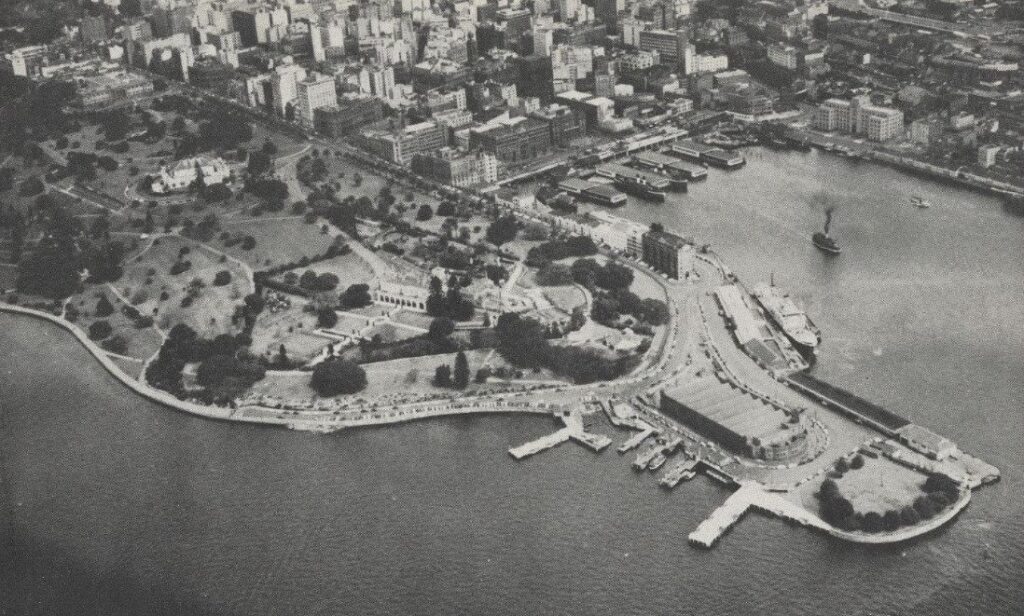
Bennelong Point & Fort Macquarie Tram Depot c1955 (Web Photo Courtesy: Sydney Morning Herald)

Sydney had notoriously begun life in 1788 when Captain Arthur Phillip disembarked his cargo of some 1500 passengers, mostly convicts, in order to take on water from “Tank Stream” and thus establishing Port Jackson, or as it has long since become known, Sydney, as the first penal settlement in New South Wales. The Sydney Port Authority can trace its management of the harbour back to the first appointed harbourmaster in 1811, he would have been responsible for the commerce of the wharf, its privately owned piers and buildings, and the loading and unloading of those ships berthing along the quays
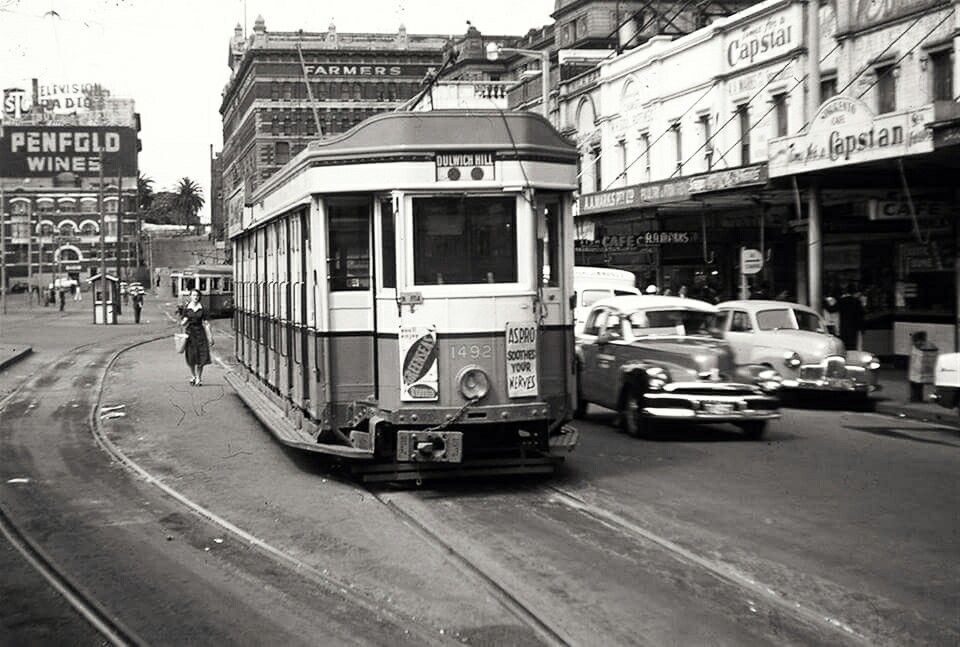
Alfred St at Circular Quay Sydney 1955 (Web Photo: Courtesy Sydney Tram Museum)

It would have been the wharf’s and quays at Walsh Bay where Dad docked with Helenus, looking at the photo of the Blue Funnel dock it is hard to believe that was 1955, if it wasn’t for the high rise flats behind the wharf you would be excused for thinking this was the 1920’s. There were plenty of places to see in Sydney but if the “chat” on the Blue Funnel for old timer’s page is anything to go by then the “Captain Cook” and the “Lord Nelson”, close to the Sydney Harbour Bridge, were popular with Blue Funnel employees, as was the “Ship Inn”, a little closer, situated at Circular Quay. It’s my ambition, one of the “Bucket List” activities I’m determined to get through, to eventually see if any of these places are still there, and have a pint somewhere Dad would’ve undoubtedly visited
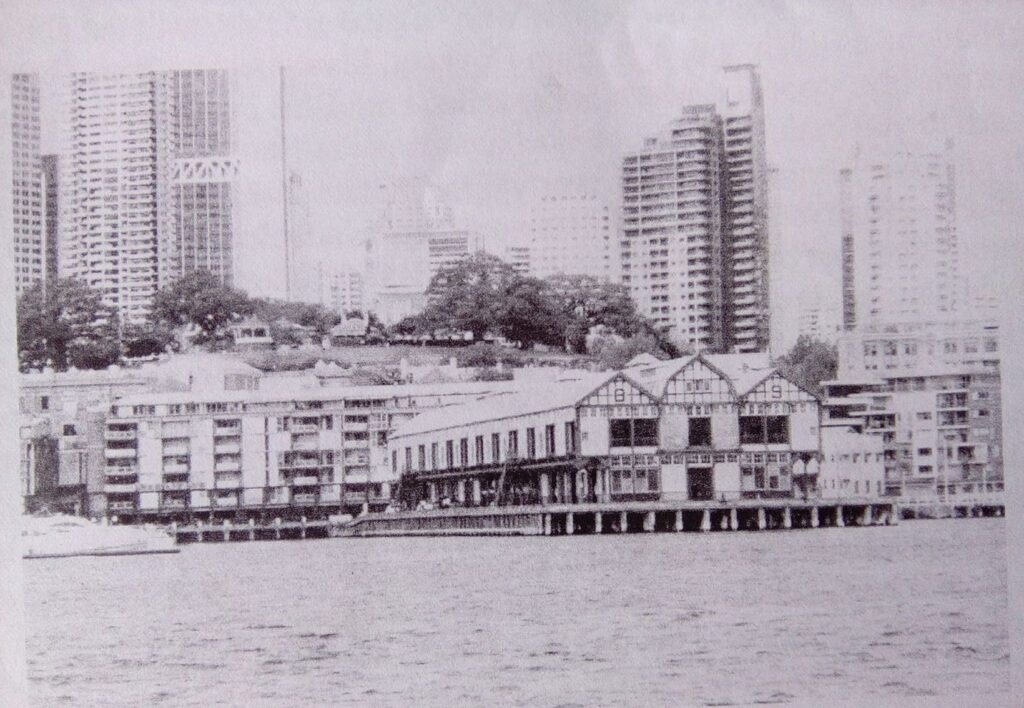
Blue Funnel Wharf at Walsh Bay Sydney (Photo Courtesy: G. Marsh. Blue Funnel Old Timers, Facebook)

Leaving Sydney the Helenus was bound for Brisbane, her last stop before heading back home to Liverpool. Brisbane was a port on the rise in 1955, it had been established as a river port back in the years following Captain Cook, surrounded by sheltered Salt Marsh and Mangrove, the river basin must have been a convenient source of fresh water at the time. It would not be until the building of the Dry Dock at South Brisbane in 1876, that Brisbane could take advantage of the shipping visiting Australia, needing maintenance and repair following epic journeys from all over the globe
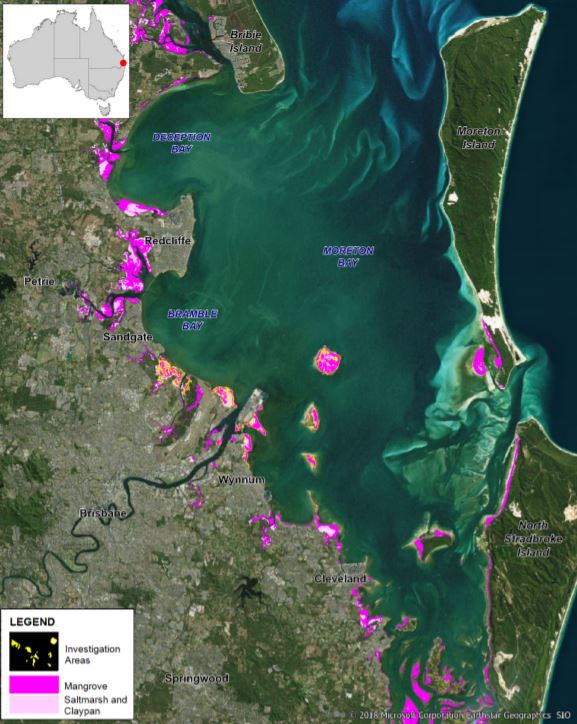
Brisbane Mangrove Survey 2016 (Photo Courtesy: portbris.com.au)

Brisbane’s Dry Dock completed in 1881 with the spoils taken from the construction being used to construct parts of Brisbane town streets, it would not be until the 1940’s and World War II that the dock was extended downstream, and Cairncross Dock was added. By the 1950’s Brisbane had a large city hospital, an impressive Museum and Art Gallery and a popular surf club at Mooloolaba on the Mooloolah River and by 1955 Brisbane was a well-established port of call for the Blue Funnel line ships. Global Industry had arrived at Brisbane, Caterpillar, the American construction equipment giant was opening its factory there, and things were getting bigger and better for Brisbane! Did Dad visit the Surf Club or perhaps the Museum…..?
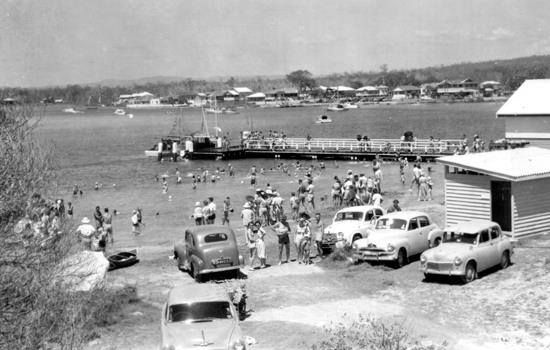
Mooloolaba Beach on the Mooloolah River 1955 (Web Photo: Courtesy Pinterest)

I won’t ever know if Dad got to Mooloolah River, but if there was sufficient time ashore, without the worry of watches and keeping Helenus’ engines and transmissions in pristine condition, they are just the kind of places a 19 year old was likely to want to see in 1955! I am grateful to Eric (E.W.) Forshaw of the Blue Funnel Old Timers Facebook page for the information on Dad’s 1955 trip, Eric was 6th Engineer on the trip and would have at least had a passing acquaintance with my father, although just how much I don’t know and Eric doesn’t remember. I suppose a cadet engineer on his first ever trip abroad would be more of a liability to those responsible for the smooth running of such a complex and prized ship as Helenus, but everyone has to learn, and cadet’s, like anyone else, are only as good as the training they receive
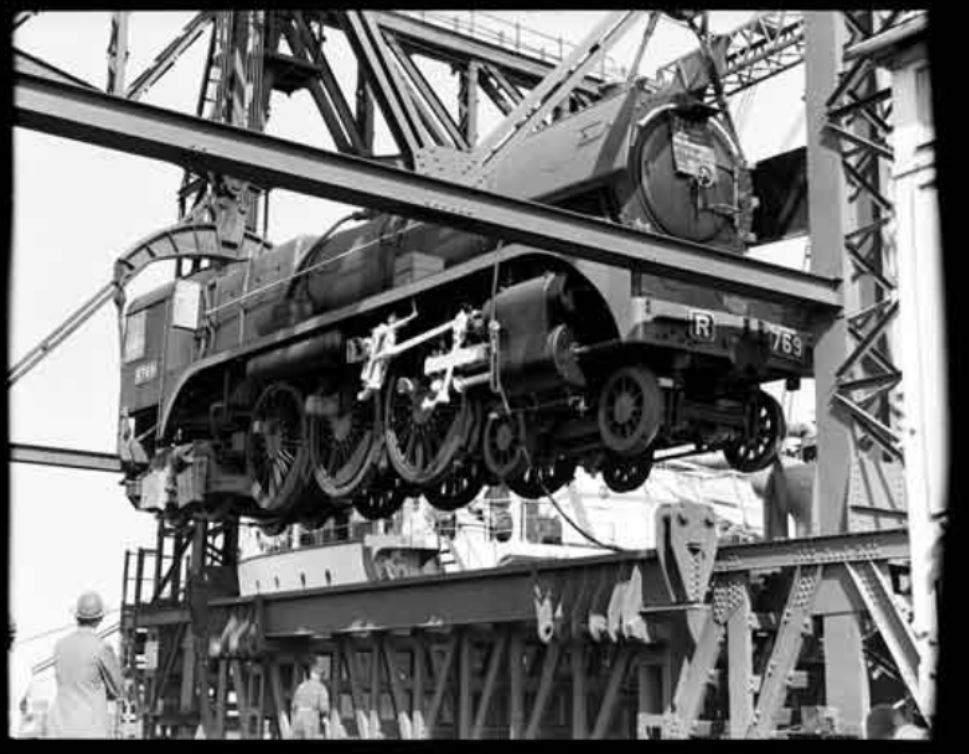
Unloading a Loco in Australia c1955 (Web Photo Courtesy:  Blue Funnel for Old-timers)

The blue Funnel Line was known for producing the best of mariners, whatever their position aboard, from able bodies on deck, to engineers below deck and watch officers, even masters on the bridge….I have no doubt Dad was trained well, and I know he loved his time aboard Helenus, of that I have never had any doubt! So, It was done, the journey had reached its end point, now all that remained was to “turn her about” and make the trip home to Gladstone No2 Dock in time for Christmas…..
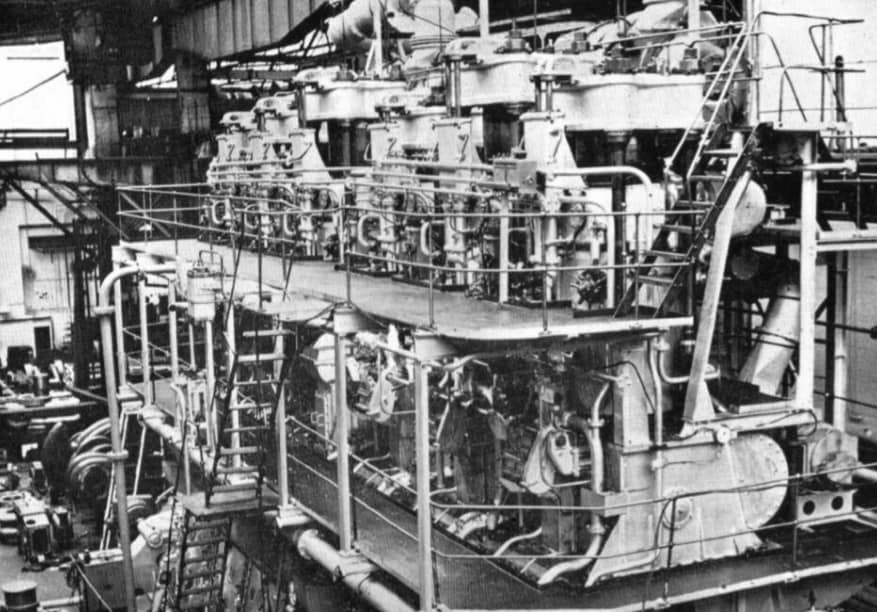
One of the Blue Funnel Engines (Diomed) Dad would come to know (Photo: Courtesy of Blue Funnel for Old timers)

Well that would depend on the ports of call on the way back. with the locos delivered safely ashore and the various other cargoes collected, dropped off, and taken between ports of call along the Australian coast, Helenus job was far from over, there would be cargoes to take back to ports on the return journey, wool, chilled Beef and tinned fruit are all mentioned by Eric Forshaw, and more “general cargo” besides, Helenus would call at those ports she had already docked at for the return from Brisbane to Sydney
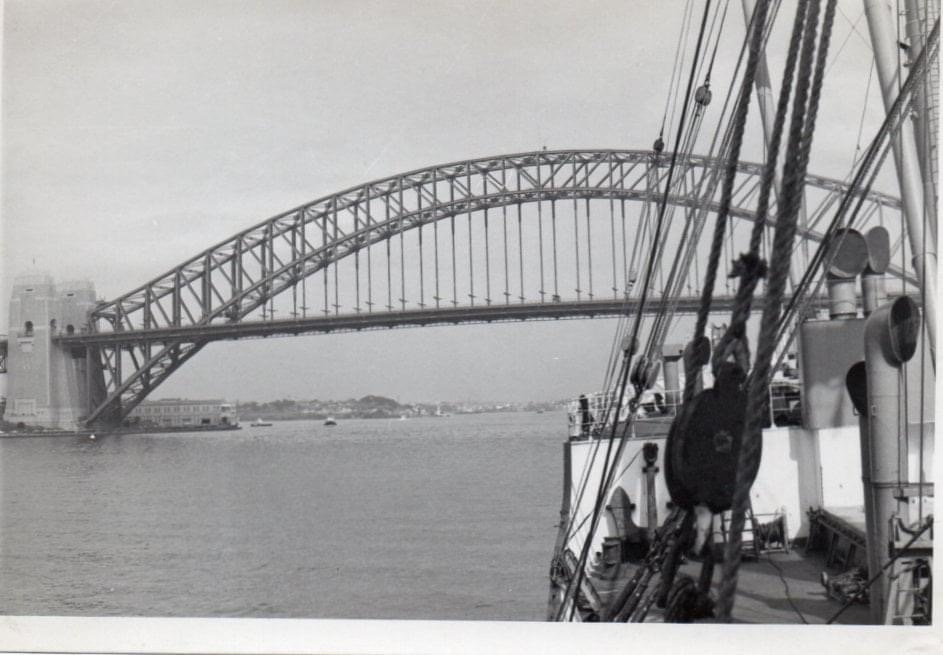
Sydney Harbour on the return journey (Photo Courtesy: G. Marsh Blue Funnel for Old-timers)

From Sydney to Melbourne, then Adelaide and Albany, then back across to Aden and Port Said, the only real difference being a call into Genoa, now Eric doesn’t elaborate on why Genoa was included but it must have been cargo related to make such a change whilst going back, I doubt Dad minded one bit, another port, another country to see and all this on your first trip out of the UK, for a cadet of 19 the Blue Funnel Line was everything a Liverpool lad might wish for, and more……..
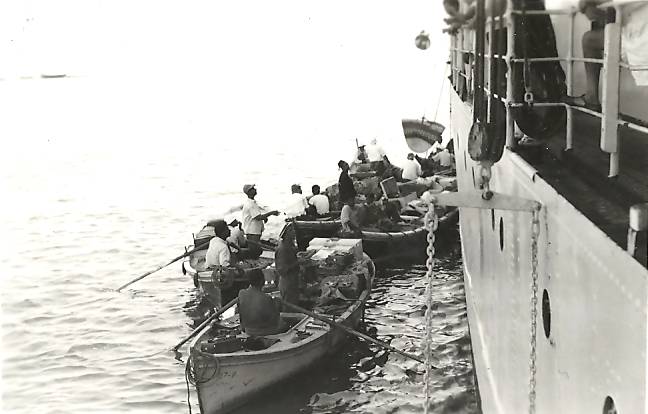
Traders hawking everything imaginable from “Bum Boats” at Aden 1950’s (Web Photo)

Genoa, one of the most important ports of the Mediterranean sea, and capital of the region of Liguria, is the 6th largest city in Italy and would have perhaps represented the height of European chic in 1955. Ever a nation of fashion conscious and erudite young people the Hollywood film stars of the day, at least the female film stars, were largely Italian, Silvano Mangano, Gina lollobrigida, Sophie Loren, Claudia Cardinale…. Where better for a 19 year old from Liverpool to get ashore hoping to bump into a film star…..of course that didn’t happen, otherwise I wouldn’t be here and this story would have been a very different one, but I have no doubt that is what every young man going ashore in one of the most glamorous countries of the world would think. Earlier that year, in February of 1955, Genoa had suffered a storm the like of which had not been seen in Italy for generations, wrecking 500m of the ports quayside and sinking an American ship Camas Meadows, battering her against the quayside until she holed and capsized at her berth and just a day later the Nordanland, a Swedish ship carrying Calcium Carbide exploded when her cargo became contaminated with sea water and turned into Acetylene gas, sending her to the bottom
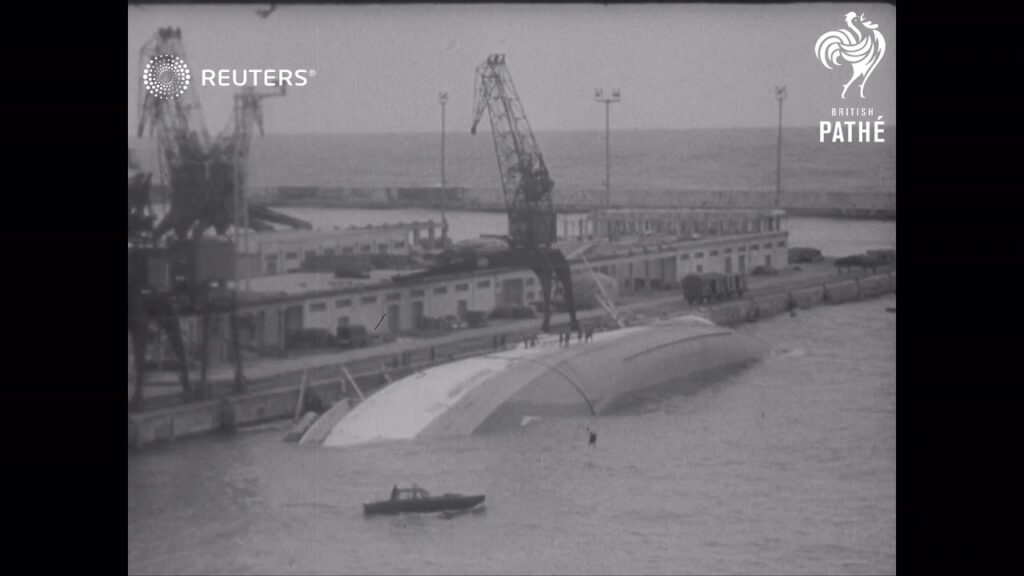
The Camas Meadows Capsized in Genoa Port Feb 1955 (Photo Courtesy: Pathe News)

  When Dad docked in Genoa it would have been the early days of December (perhaps at a push the dying days of November) of 1955 and work would have been underway, perhaps even completing to repair and make good the storm damage. Genoa being Italy’s most important port, that would have been a priority, but it is likely the hulk of the Camas Meadows would have still been a morbid attraction. Genoa might have had something far more intriguing to see if Dad had a mind, a short trip up Via San Lorenzo, to the Gothic Cathedral at the city’s centre, would have given Dad sight of something many have searched for in vain for centuries, the Holy Grail…..or so it is claimed by those believers of the Cathedral’s Treasure Museum, better known there as the “Sacro Catino” this chalice, hexagonal and all of Green glass has been there since Guglielmo Embriaco brought it to Italy from the conquest of Caesarea in 1101 AD
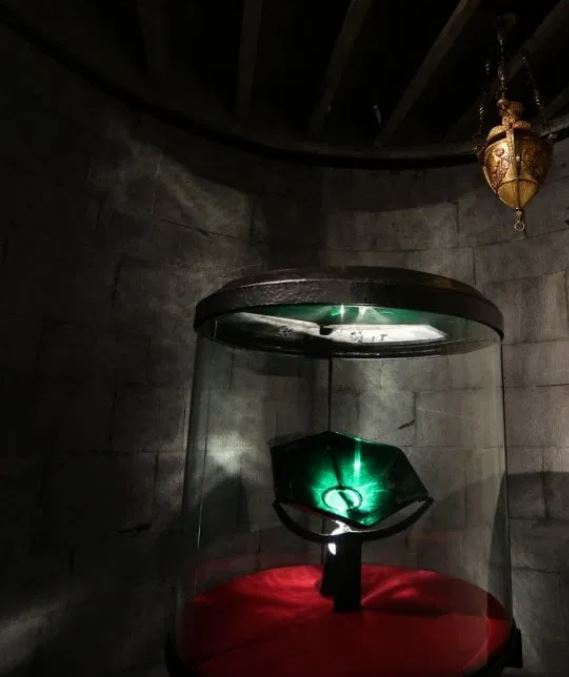
“Sacro Catino” The Holy Grail of Genoa (Web Photo Courtesy: genovagolosa.it)

So Blue Funnel Engineering Cadet Ian Jones, at 19 years old,  of Leather’s Lane in Halewood, Liverpool, has now officially travelled the world, and in the space of a mere 3 months, his first away from home, seen the miracle of the Suez Canal, and traded with Arabs in far-away Aden, the last outposts of Empire, he has met Poseidon crossing the equator and stood at the other side of the world, drunk Beer in the pubs of Sydney, spoken in hushed tones in Cathedrals, and rubbed shoulders with Italian Film stars, he has found the Holy Grail and is now homeward bound on the last leg of his journey, to sit by the four bar electric fire in the living room at my Grandfather and grandmother’s home and tell them of all he has seen as Christmas 1955 draws the family together……to listen to tales of Blue Funnels, the ships of Liverpool…..and the oceans of the world
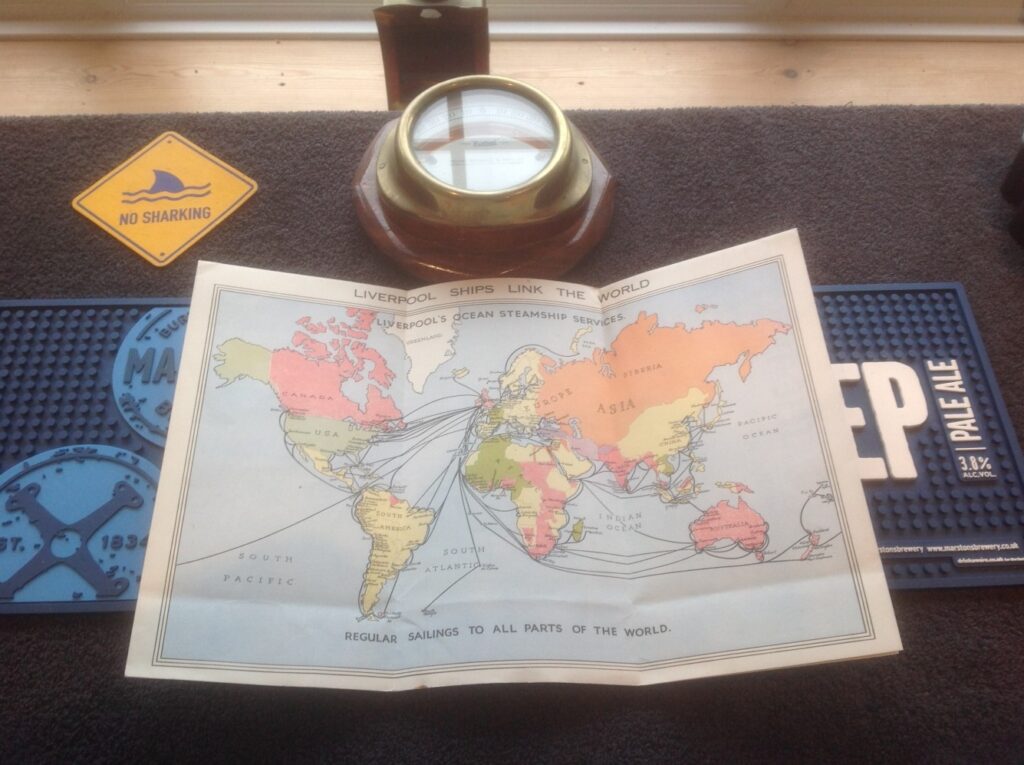
Blue Funnel…..The Welsh Navy: Pride of Merseyside!

In concluding this piece, with my hand on my heart, I am immeasurably grateful for the assistance of many with the writing and content of this piece, namely: Col R. Stewart DSO, M.P for Beckenham, for his permission to use pictures of his father Squadron Leader Archibald “Jock” Stewart M.C. in Aden

Also to Eric William Forshaw, for his recollections of the Helenus trip to Australia and for the information on ports of call and cargo on her journey in 1955

Additionally to Georgie Marsh of the Blue Funnel for Old Timers Facebook pages for his kind permission to use his photos of various Blue Funnel ships and memories from the time

I will remain indebted to those who have supplied or posted pictures used which have no formal attribution, having often been with me for many years providing insight into my Fathers Journeys around……. Thank You All!
Filed Under: Blue Funnel Line

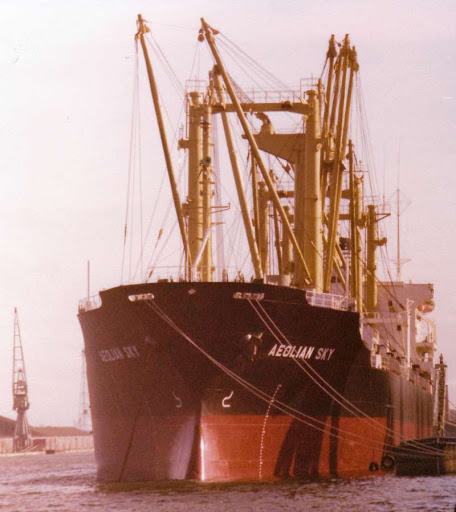
The Aeolian Sky

January 17, 2021 by Colin Jones

David, Goliath……. and Inconvenient Truths

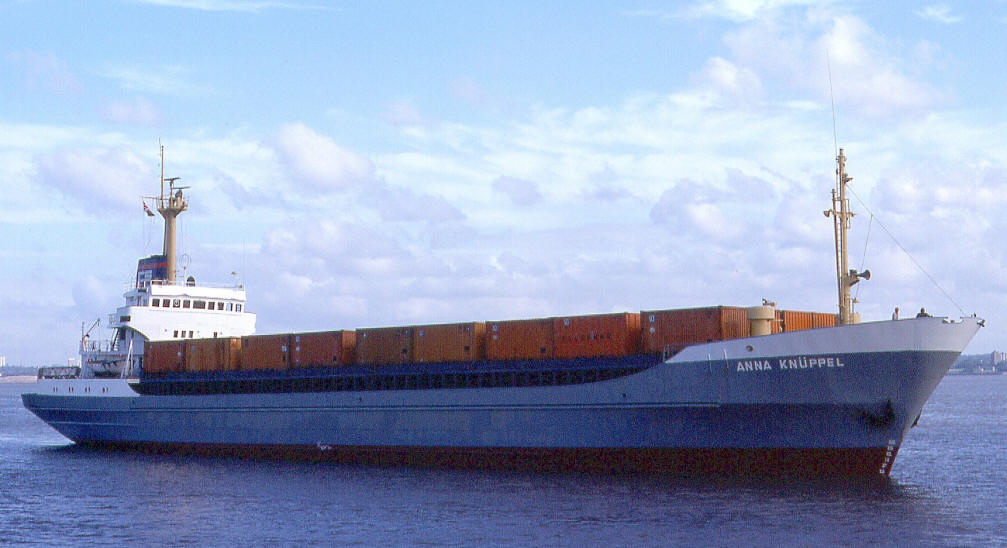
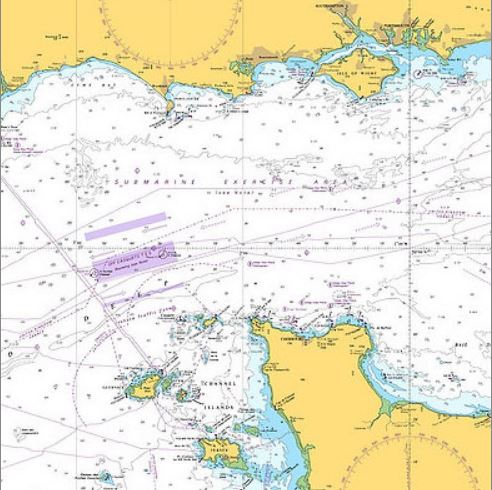
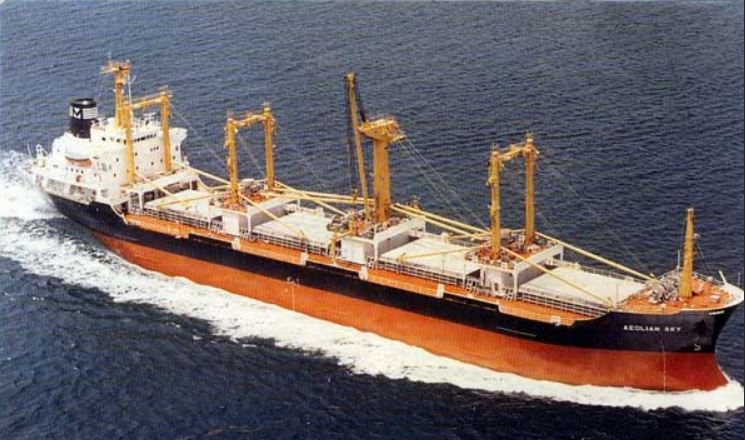
The Aeolian Sky was a modern titan, 148 metres long and 14,000 Tonnes, as she navigated the English Channel November 02nd of 1979 heading West. The Storm coming in from the south-west was making the Channel an increasingly nasty place to be, but the Sky was shrugging this off easily, her size making the weather little more than an irritation. The Aeolian Sky was sailing out of Hull, bound for Dar es Salaam, Africa, and had not long left Rotterdam, The Anna Knuppel was   heading in the opposite direction, back to Hamburg and the Anna Knuppel would perhaps not have been feeling quite as at ease, at 84 Meters and 2497 Tonnes fully laden, the weather would not have been so easily brushed aside as she made her way East. Neither ship’s captain would have taken the weather lightly, the English Channel is one of, if not “the” busiest waterways of the world and the shipping lanes, whilst easier to navigate using today’s electronics, were not by any means an easy sail even in good weather back in 1979   

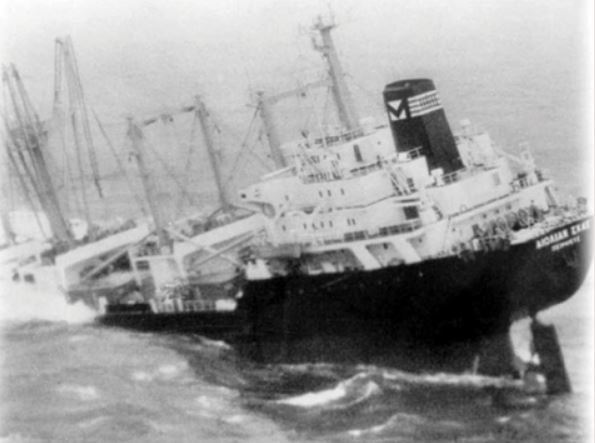
The Aeolian Sky, a modern Titan (Web Photo)

This being a diving blog, and the section you are reading being dedicated to shipwrecks, the conclusion is inevitable, however the circumstances and the outcome are perhaps not quite so predictable….. Given the size differential between the Aeolian Sky and the Anna Knuppel (some 11,000 Tonnes), and the conditions at the time, and given that the Aeolian Sky was a brand new ship out of the Japanese shipyard at Hashihama, built by the world’s pre-eminent engineers (using the most modern technology possible and valued at £3 million, a huge sum in 1978 when she was launched), one might have expected the rather diminutive Anna Knuppel to have simply been ploughed under the immense bow of the Aeolian Sky, but fate is fickle indeed………

The Immense Bow of the Aeolian Sky (Web Photo)

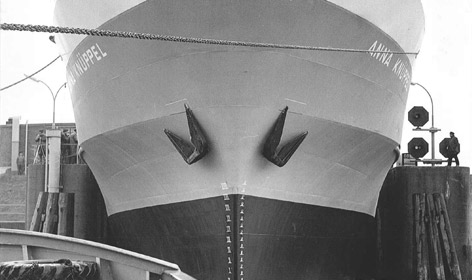
When the fates of the Aeolian Sky and the Anna Knuppel brought them to the exact same place and at precisely the same time the resultant impact left the Aeolian Sky, behemoth that she was, mortally wounded, and the Anna Knuppel battered but unbowed. The Anna Knuppel would not only live to see another day, but stand by the stricken Aeolian Sky to give assistance, should it be possible in the storm in which they were both caught, on that dark and fog shrouded night, somewhere round 04:30 am, just before the dawn on 03rd November

The German Coastal Vessel Anna Knuppel c1978 (Web Photo)

As dawn began to break the situation looked optimistic to begin with, the Captain of the Aeolian Sky signalling for assistance and the French dispatching the tug Abeille Languedoc, out of Cherbourg, to undertake the towing of the wounded Aeolian Sky. Assistance came from the UK too, in the form of a Royal Navy helicopter from Lee on Solent, which managed to lift 16 of the crew between the Aeolian Sky and a Dutch Navy vessel, the Overijssel, before experiencing engine problems and being forced to return to the mainland

The English Channel: Channel Islands to Portland (Web Photo)

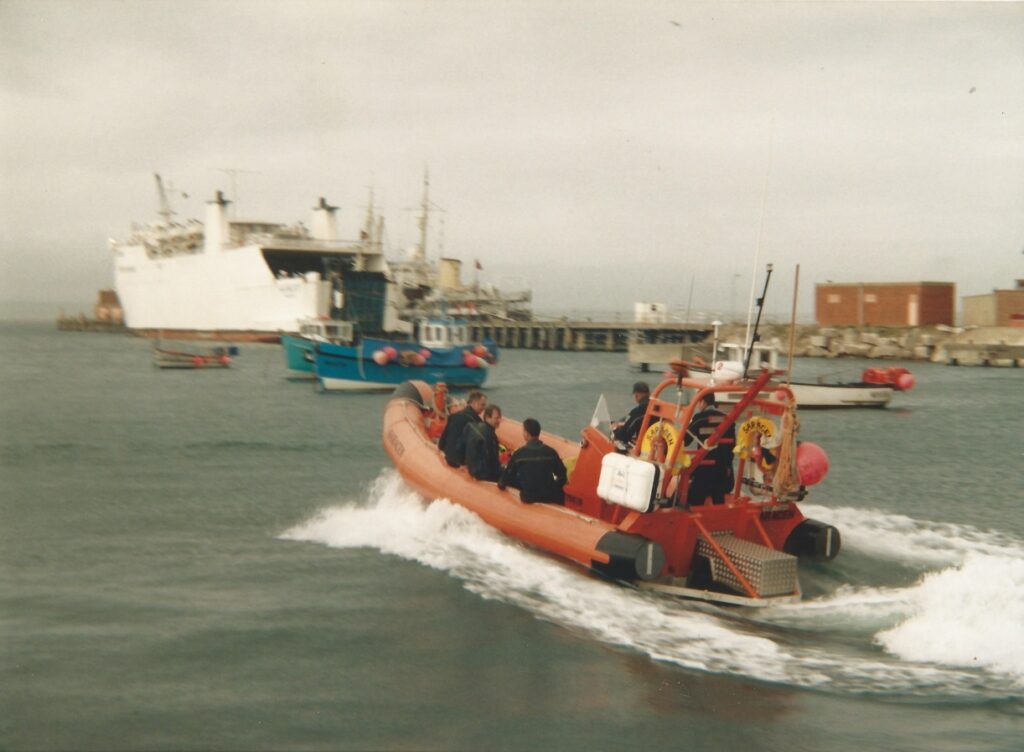
  The Abeille Languedoc arrived at the Aeolian Sky somewhere around 8 am, some 4 hours after impact and sent a salvage inspector across to her. Inflatables were used to ferry most of the remaining crew, less the Captain, the salvage inspector and a couple of crewmen, to the Abeille Languedoc. Those staying aboard would make fast a tow-line and help on her journey towards the safety of Southampton. At this point the bows of the Aeolian Sky, where the impact had occurred, were swamped and for’ard deck cargo was coming loose and floating away. The tow-line from the Abeille Languedoc was secured to the stern of the Aeolian Sky, even at that point it was becoming evident there was a possibility that the Aeolian Sky would not survive the journey to Southampton and might sink while under tow. There were calls made to the coastguard at Dover and, at some point, in what I would see as a very inconvenient truth, the port authorities at Southampton refused entry to their shipping lanes, believing the Aeolian Sky might flounder and block entry to the port, a potential disaster in terms of the trade into and from Southampton and a huge financial risk to the port authority and indeed potentially the city itself   

The Aeolian Sky, at this point beyond saving, off St Aldhelm’s Head, Portland (Web Photo: Dorset Life-on line)

It took a day for the situation to go from impact, through potential recovery into a spiral of inevitability for the Aeolian Sky, and, whilst finally under tow to Portland, having been again refused entry, this time to Portsmouth, on exactly the same basis as her refusal from Southampton. Sinking further by the bows off St Aldhelm’s Head around 12 miles from the safety of Portland harbour, still in the midst of the South Westerly gale, the Aeolian Sky was finally abandoned to her fate and slipped below the storm lashed Channel seas. Might the Aeolian Sky have been saved should Southampton or Portsmouth port authorities have been more accommodating? The Abeille Languedoc was forced to change towing direction once both Southampton and Portsmouth refused entry, meaning that, with the storm coming in from the South West, she was now fighting to make headway with the not inconsiderable stern of the Aeolian Sky making that far harder than running with the wind in the opposite direction…….  I have yet to see anything from that day to this in terms of an enquiry, I am sure there was an enquiry, it is unthinkable that there might not be in the circumstances, however neither the Aeolian Sky nor the Anna Knuppel were UK registered vessels, but we shall see, I will keep looking!
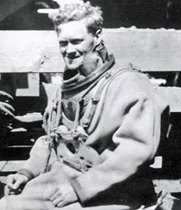
Off to Dive the Aeolian Sky, Portland, Dorset

The Aeolian Sky is one of the best dives I have done off Portland, her size and her cargo make her one of the most interesting and her depth makes her achievable for most sports divers, whilst still offering technical divers plenty to see over extended dive durations, using decompression to enjoy longer dive-times. My first time diving on the Aeolian Sky was 13th of July 1997 off one of Budgie (Eric) Burgess’s ribs out of the Breakwater Hotel, I remember a good journey out on what was a bright day with calm seas on the way, a good job considering the Sky lies some 11 or so miles off Portland, the little Red Book recalls: “Aeolian Sky. A Greek freighter that went down in 1972 after an engine room fire popped some plates from the hull and the pumps packed in. Originally lay upright within 6m of the surface till blown in half for clearance, Stern (Aft) section now over on Starboard side. We dropped to 29m and there was at least 5m left to the sea bed (H W Springs) then up and around the damaged area – she’s huge – it took 5 minutes to recognize where we were on her, huge damage to the area but companionways still intact – can’t wait to return 36% Nitrox 50% deco buddies Michael- Tim- Carl”……How wrong can you be? I had asked about the Aeolian Sky when Budgie suggested we went out to her, but hadn’t had time to ask Budgie anything of her history. At that time I was only just getting into the history of the wrecks I was diving, the interest had been sparked, but there was no internet (that would take until 1983 to be “real” and 1990 before Tim Berners-Lee invented the world wide web…) and research was either local dive-guides, which weren’t cheap, or word-of-mouth. The information in my log came from our skipper on the RIB out and over the site itself, clearly not a diver himself and going on what others had probably told him along the way. Either way I clearly should’ve bought the Dive Dorset guides or the Dive Wight and Hampshire, either of which I think had a piece on the Aeolian Sky. My next and last dive on the Aeolian Sky was 02nd April of 2005 and I remember it very well, the ride out on a local RIB (not one of Budgie’s), was bloody nightmarish, I was on my twinset and the rib was full. I had ended up towards the bow and slightly twisted in an awkward position in order to hold on, as an over-enthusiastic young skipper seemed to target every wave on the rather choppy sea of that day. The persistent and rapid raise and crash of the RIB bow, coupled with my rather poor seating, and difficult hold on the lifeline running the length of the hull, left me delighted to roll back into the sea off Portland that day and my log records: “Portland Dorset Aeolian Sky. Horrendous journey out by RIB seasick and damaged back! Wreck was very low viz (1m max) and difficult to locate any references but stern – before the bridge is suspected. Air in 230 out 100 Buddy Jim” I really was pre-occupied with the damage I had sustained out and on the way back in, I had to lie flat on my back for well over an hour before I even considered properly de-kitting. The Sky is another wreck I really should go back and experience in a far better way!
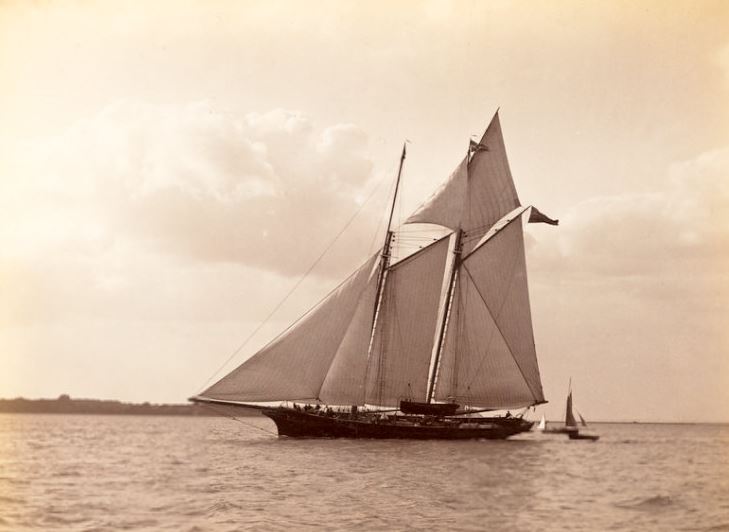
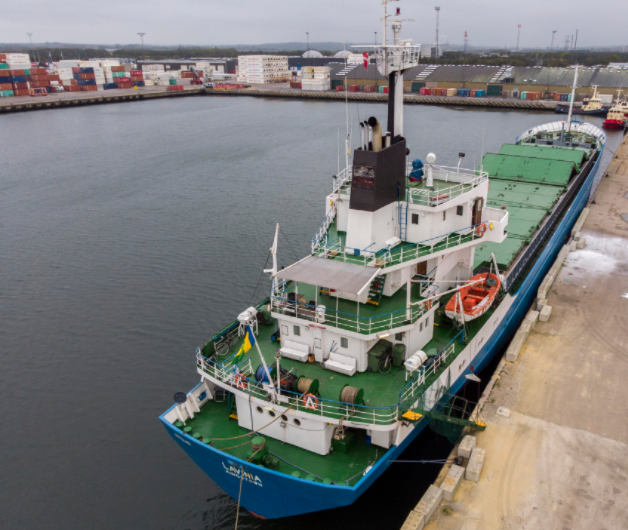
Lavinia, formerly the Anna Knuppel alongside in Falkenberg, Sweden (Web Photo: Shipsforsale Sweden)

  If you fancy owning a piece of history you might want to take a look at the Lavinia, on Ships for sale Sweden https://shipsforsale.com/en/ships-en/shipid/1019/cargo-tank-ships_8_lavinia where you will find, for a very reasonable £500,000 you can sail away your very own genuine historic ship, perhaps you might even negotiate a small discount if you mention the work inevitably done on the Lavinia’s bow, following her brief appearance on the world’s stage and her giant killing role in the demise of the Aeolian Sky……..

Seychelles Islands 100 Rupee Banknote (Web Photo: Dorset Life)
The Treasure of the Aeolian Sky (Web Photo: Dorset Life)

How two such ships collide in a storm, whilst navigating the shipping lanes of the world’s busiest waterway, is only one of the unexplained mysteries of the Aeolian Sky. For weeks rumours of a treasure aboard her set the South Coast diving community alight, millions of dollars were supposed to have gone down with the ship, local divers were keen to see if they would be the first to find the fortune and get rich doing so. The rumours were true, the Aeolian Sky was not only carrying a mundane cargo of chemicals, Land Rover parts and steel pipes, she had two railway engines, diesel locomotives bound for Tanzania…….and she was also carrying a secret treasure on behalf of the Government of the Seychelles, 60,000,000 Rupee worth of their currency which had been commissioned from, and printed by, Bradbury Wilkinson and Co. Ltd of New Malden in Surrey, and it didn’t take long for those notes to start appearing locally…..  The first notes were handed to the authorities by a fisherman from Lulworth, he had picked up 4 of the Seychelles 100 Rupee notes at Christmas of 1979, it didn’t take long for the authorities to act, a team of commercial divers were sent down to the Aeolian Sky to recover the 12 wooden boxes of banknotes from a cabin, some believe the Captain’s cabin, others the Purser’s accommodation and even the medical bay has been whispered to have been the location. Whichever location it actually was, that information remains with the loss adjusters, the authorities and, no doubt the commercial divers assigned to search the wreck. The approximate Stirling value for the 12 sealed boxes of notes was £4.5 million, a huge amount, no matter, the serial numbers were known and recorded and would have been cancelled almost immediately by the Government and Treasury of the Seychelles Islands. Still the notes would have found some value, if not just as souvenirs of the time, perhaps sufficient numbers of notes might have been “laundered” by unscrupulous means? Who knows, the mystery still surrounds the wreck, the divers found only open, empty rooms wherever they searched, had someone beaten them to the prize or had the sea claimed them to follow the currents of the Channel to the Gulf Stream and then where………?  

The Bows of the Anna Knuppel, Unwitting Executioner of the Aeolian Sky (Web Photo)

Filed Under: The Wrecks

FSAC The Red Sea

December 20, 2020 by Colin Jones

MV Princess Dalal

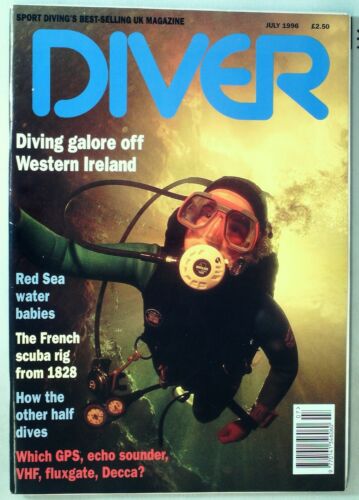
  I had been dreaming of a Red Sea Dive trip for as long as I had been hearing about Egypt, the wonderful clear warm waters and the exotic sea-life, the turtles, the dolphins and of course the Sharks……but mostly for the shipwrecks. In my mind were the images of Thistlegorm from the Jaques Cousteau films I’d watched with my father so many years before. I had no perception then of the colour of the water nor of the vibrancy of the corals and reef fish, we had a Black and White television at the time, how could I have had, but I had diver magazine to read and had buried myself in every issue I could get hold of, whilst sat in my dreary bunk in Tidworth learning to dive with the Army. The expectation, built over the years, was of a wreck paradise, a place ships came to display their deaths in glorious technicolour, and I had wished many an hour away in my mind’s eye diving on the wrecks of Abu Nuhas and Gubal. I was determined that I would dive the Red Sea despite Ellen’s reluctance to go to Egypt “My Nan says it smells awful, and she’s been, why would I want to go there?” I knew I would not persuade Ellen to go with me, and I wasn’t sure I could persuade Ellen to let me go there either…….. but I was determined to try!

Diver Magazine Cover July 1996…..Ireland and the Red Sea! (Web Photo)

To be honest I didn’t have to try too hard, despite her reluctance for me to go at first, Ellen, bless her, relented and sanctioned the trip if I could find people to go with me from FSAC, I was elated, I knew there would be someone who wanted to go, but Stoke on Trent was not an affluent city, would the others in FSAC be able to find the cash? I knew I would be spending the last of the money left from a small Army pay-out, compensation for the leg I’d damaged in Ireland, which essentially put paid to an infantry career. The injury had finally convinced me I needed to get out of the Army, I wouldn’t be able to do what I had joined to do, and I wasn’t going to spend time trying to forge a career watching others enjoying themselves whilst I was sat behind a desk…..no way! I put my idea out to the others in the club well in advance of when I was planning the trip, I didn’t want to go in the hottest times, nor in the coolest, I reckoned October was about right from what I’d been told, it was 1996, round Christmas when I started to ask the guys in FSAC “who was up for it?” the response was encouraging and around a dozen said they were interested……..lessons learned, but more of that later! I wanted to do the best I could to reduce the price of the trip and tried everything, booking “numbers” on a scheduled trip, was there a discount for 10 or 12 divers? How about flights, surely the airlines would do a deal for a group buy on tickets? Then how much was the operator going to charge and who would do the best deal? I knew how to organise groups of people to reach objectives, the Army had taken care of that, it was the wider admin piece that was the bigger challenge, how to get the best deal you could, for the most competitive price, that was what I was about to learn, and learning came quick and painfully too!

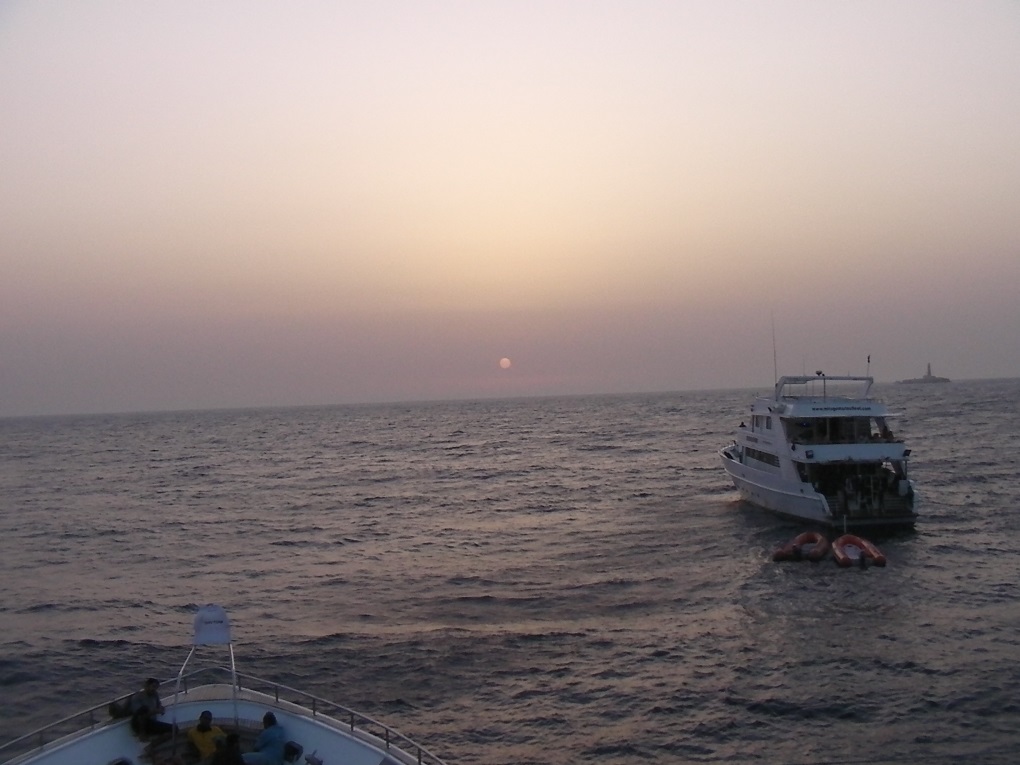
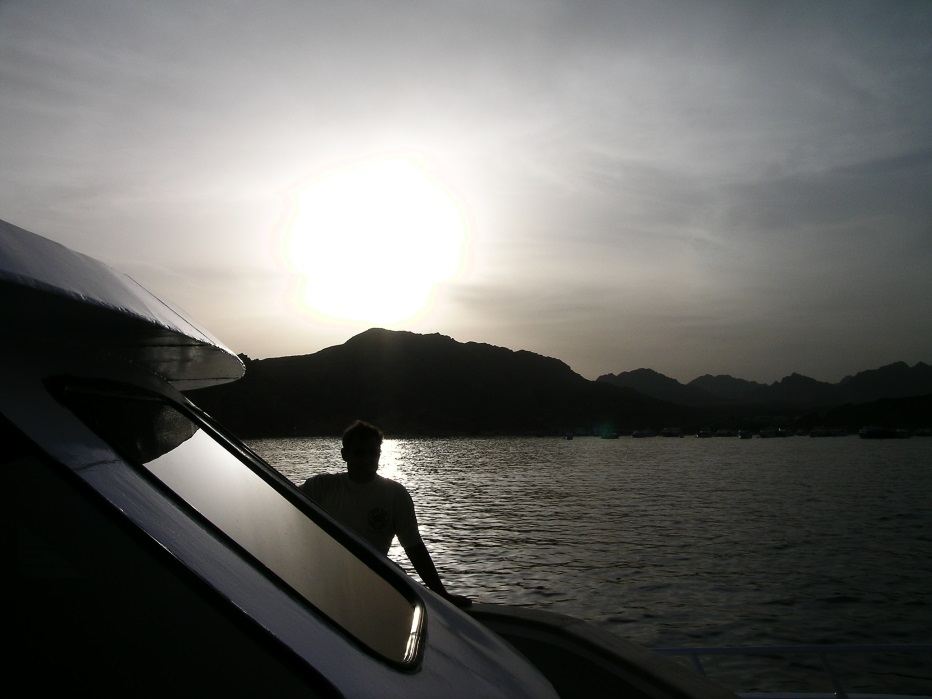
Sunset over Sinai and the Liveaboards of the Red Sea

The planning assumption was, whenever I could be reasonably sure I could get time off work and get everything sorted in good enough time. I’d figured others would need to be in the “summer Holiday” period too, otherwise the typical “Potters” holiday periods prevalent in Stoke on Trent, would mean those signing up would be under pressure from families and work too….I needn’t have bothered, despite all the preparation for this it was looking more and more likely pricing would kill interest, these were not the “idle rich” I was training at Deep Blue Diving and the members of Fenton Sub Aqua Club were like me, largely just managing to afford to get some diving in! The airlines would offer a “free seat” over every 10 divers booked, the Boats would offer “instructor free” over every 10 divers booked and the package operators would offer 1 diver free over every 10 divers booked, it seemed this was already sewn up good and proper, you had to book 10 divers and then you got to go free, or you could offer a 10% discount on a standard trip price from a magazine or agency if you booked for 11 divers…….That meant all 12 of those who had expressed an interest needed to book, and deposit, if I was going to get anything off the deal…..what were the chances, well……. nil…….. exactly zero! I knew that more than one of the divers was far more chat than action, I guessed he wouldn’t be alone in a “baker’s dozen” and so I decided to stick with the best value trip we could book and that turned out to be on the Princess Dalal, an older Hurghada live-aboard, but one that was in good enough order and looked reasonably comfortable, from the agency pictures and “happy Diver” comments ….so I booked, we had achieved 5 deposits from 12 “definites”…..I was glad I hadn’t offered a discount on the trip, simply put, I’d have been paying towards some of the trips had I done so! When it came to the actual flights we had another two drop-outs, nothing to be done, I wasn’t training sheikh’s and millionaires and one of the divers had sadly been made redundant, you couldn’t hold it against them…….. sometimes shit just happens!

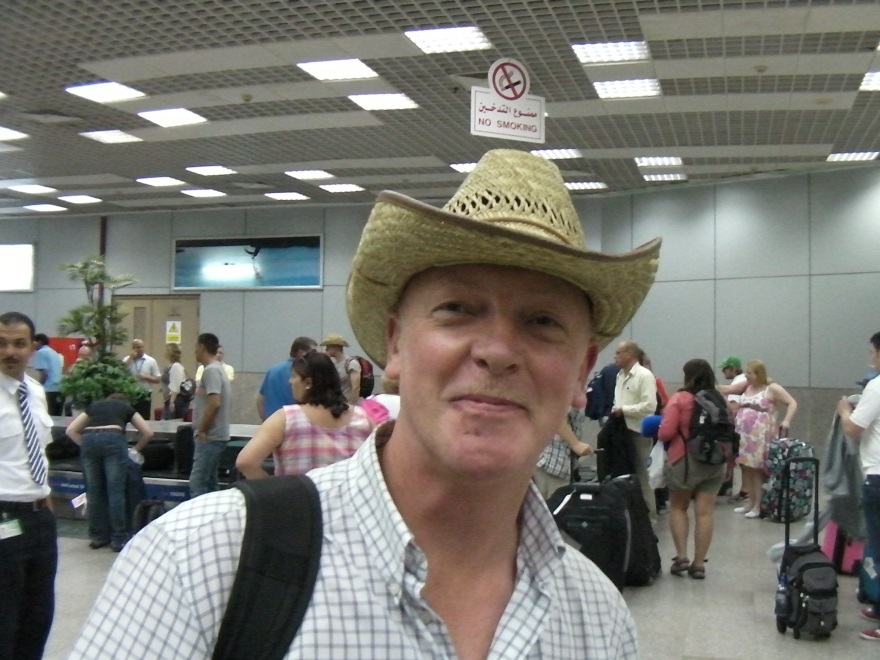
When arriving at Hurghada it is best to affect your finest Shit Eating Grin!

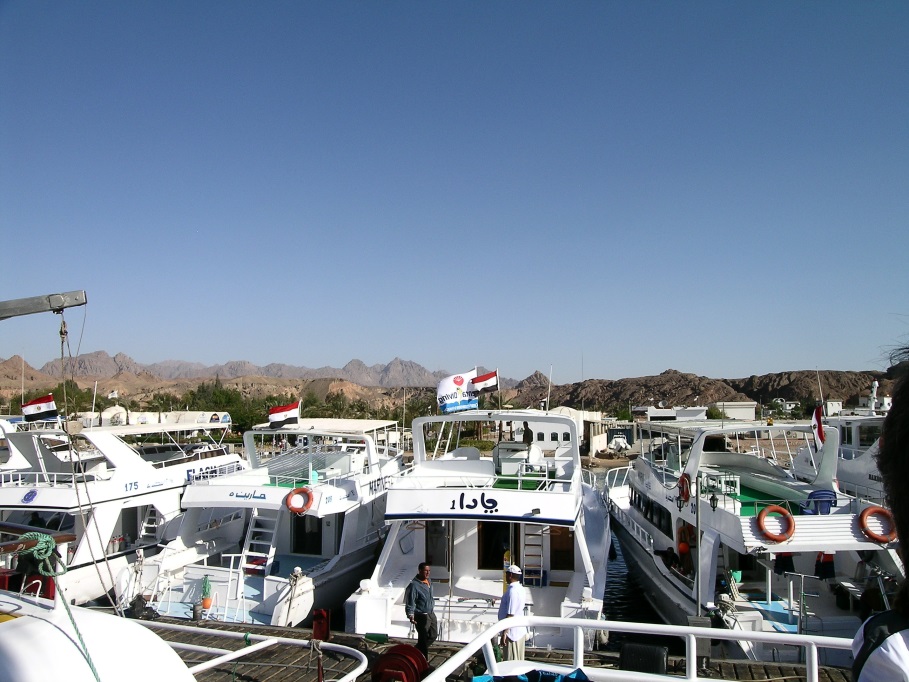
  I put a brave face on it (as you can see from the photo) and, after a short transfer from the airport, the taxi from the airport took us quayside at the working harbour in Hurghada and a sea of Liveaboards, first you have to find your boat, luckily finding the boats is not difficult, wander the line until the name leaps out at you, as long as it is written in English, the staff will generally help with the rest. We boarded the Princess Dalal, and settled our kit in as the dive guides and crew suggested. This was not something I had done before, nor was it something Colin Woodhall or John Keeling, (the other two divers from FSAC who joined the trip) had done before either. It was to be a learning curve for all Three of us, but we were elated just to be in Egypt, land of the Pharaohs, home of the pyramids and resting place to the best shipwrecks in the world…….

“……wander the line until the name leaps out at you, as long as it is written in English…”

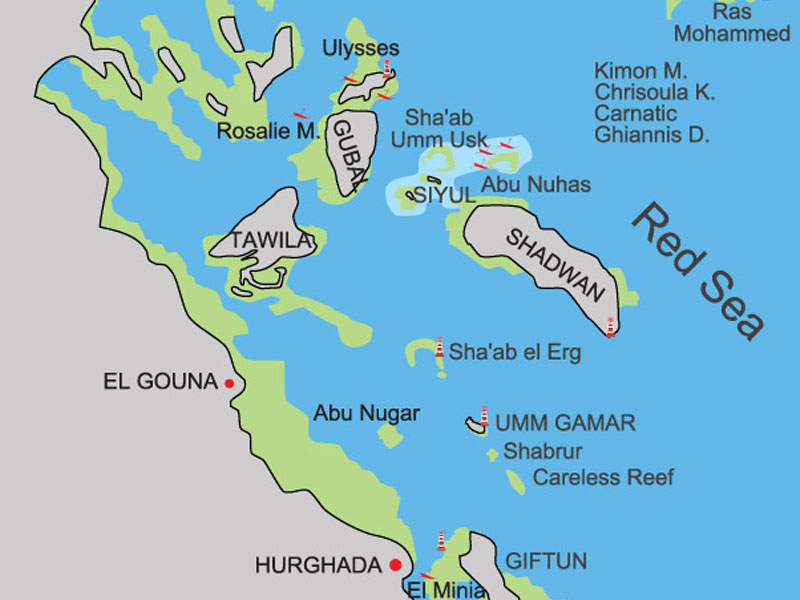
The staff gave us our assigned cabins, they were by no means luxurious, but they were cosy enough and the beds were clean and made, there was space enough for our personal kit, not that you needed much more than shorts and T shirts all week, but you needed somewhere for a bag and your wash kit and the little stuff like sun cream…..I was a Ginger even though I was practically bald even then, and being “kissed by Fire” is one thing…..it takes about half an hour to be burned to a crisp by even the gentlest Sun light…… and who the hell want’s that on your first Red Sea dive trip? We managed to stash everything away and made it up on deck for a couple of hours to have a Sakara or Two before heading down to the bunks to get some sleep and to let the crew cast off in the night and head us to our first dive site North of Hurghada…..Sha’ab-el-Erg

The Northern Red Sea Region out of Hurghada (Web Photo)

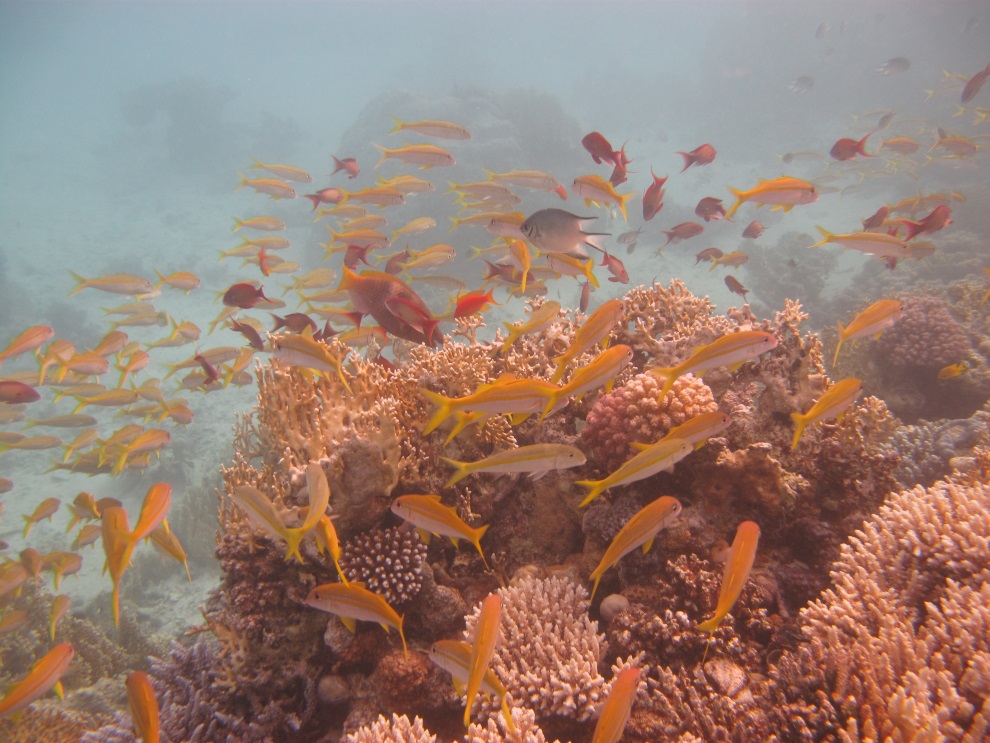
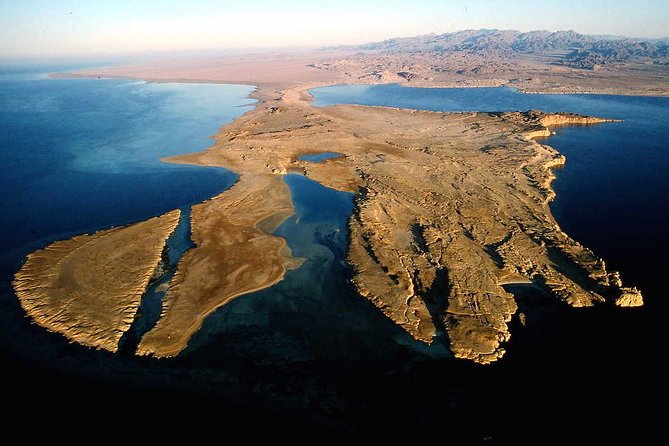
Sha’ab-el-Erg is a horseshoe shaped island poking out of the Sea opposite El Gouna and it has been a haven for Dolphin sightings for as long as I have been reading of the Red Sea, there are also occasional Manatee sightings too, as you might hear in another section of this blog if I ever get to tell that story…….. This would be a check-out dive, a settler into the rhythm of the rest of the week, and an opportunity for the dive guide, a lovely German Fraulein called Renate, (I hope she recognises the trip if she ever happens on these poor ramblings….) to assess who was going to be ok to be left to their own devices, and who might need closer attention in the forthcoming days under the crystal clear and beautifully warm waters of the Northern Red Sea! My log records: Red Sea-Liveaboard-“MV Princess Dalal” – Straits of Gubal- Out of Hurghada to Shab-Al-Erg Reef – Basically a check-out dive – fish life included – Pipe Fish Blue Spotted Ray – Clown Fish/Anemone – Glass Fish – Cardinals – Parrotfish – Triggerfish – Smooth Trunkfish – Yellow Tang the list is endless & incomplete by far great dive W Temp 28’ air in 210 out 110 Buddy John Keeling  You can clearly see I had taken out a Red Sea Fish Identification slate, one of the submersible plastic guides common for just about every dive destination on the globe, at least those that are regularly visited by tourist divers. The slate became a reference point for any unusual fish we might want to discuss, but there truly were far too many to keep looking up whilst you dived, far better to remember the main differences and look them up once you were writing up your dive in your log!

Far too many fish to look up whilst you dive….. (Photo Courtesy of Derek Aughton)

From Sha’ab-el-Erg we slipped our moorings after lunch and made our way further North to Siyul between Gubal and Shadwan Islands, at a reef area called Siyul Kebira, another almost horseshoe like reef although smaller than Sha’ab-el-Erg. This was another reef and I was getting restless, we were on the Red Sea, we had dived….and I hadn’t seen a wreck yet….what if I died in my sleep….I had to suck it up and be patient, another lesson learned and not one I am good at even today, (despite my “trying” and lots of encouragement from Ellie!) it’s just not in my skill-set

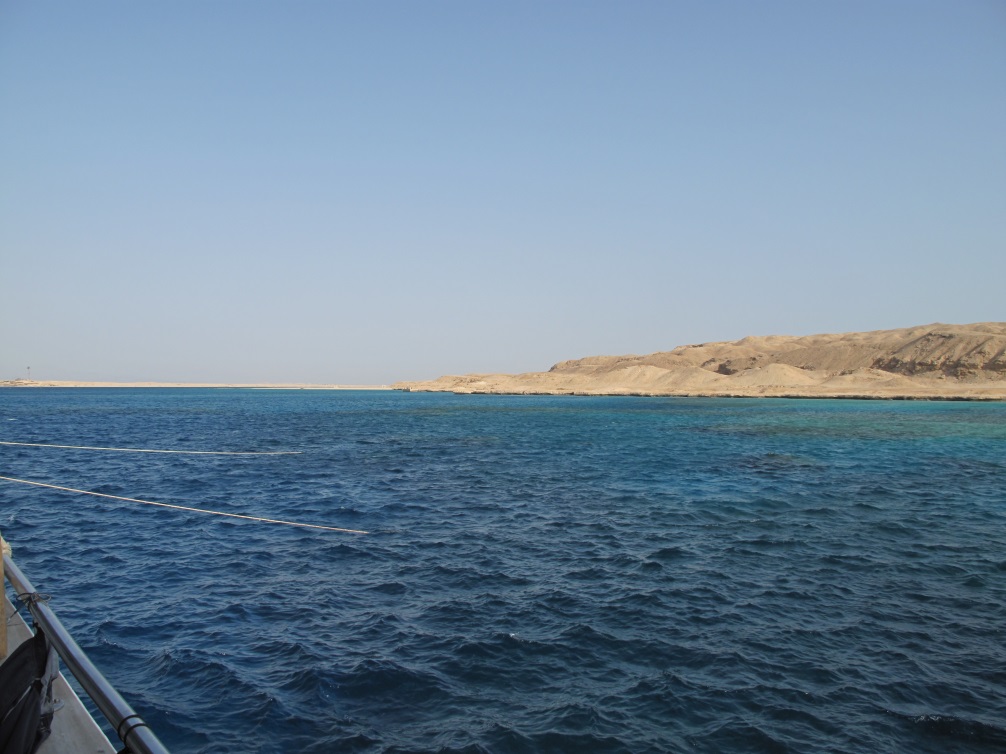
Blue above, Blue below…..Moored up at Sha’ab– el– Erg, El Gouna, Northern Red Sea

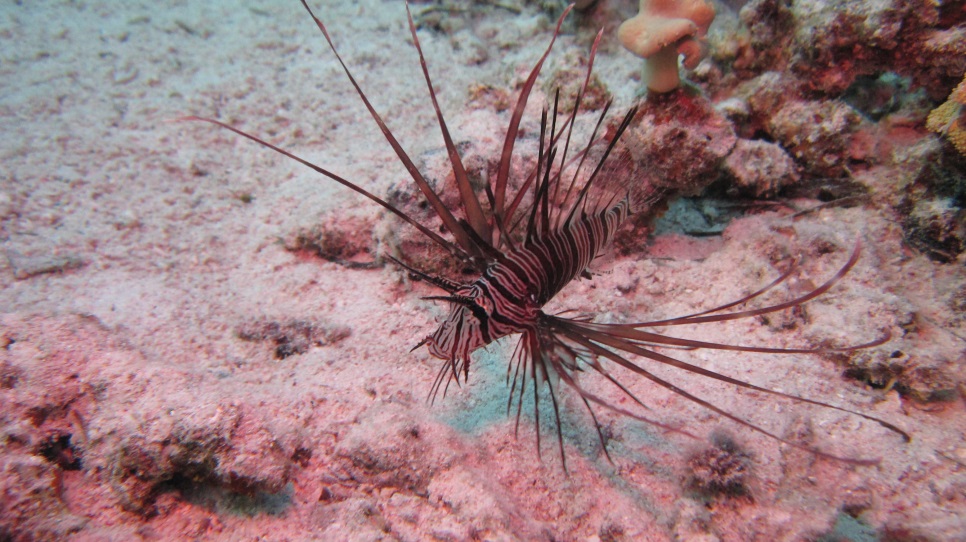
The log book reads: “Red Sea Liveaboard Reef “Siyul – Kebira” Down to 30m Plenty to see – memorables included Lionfish, Clownfish, Grouper (small) Pipefish, Turtle (from the safety stop away at 20m ish) too much to identify W.Temp 28’ air in 210 out 130 Buddy John Keeling” I had at least seen my very first Turtle, it had been grazing below me lazily whilst I had made my last few meters towards the shallow stop, it had remained around 20m from me, undisturbed, enjoying its algae and munching unhurriedly through its day, wonderful to watch. I had also seen my first Lionfish, Majestic and untouchable, its “banners” flying in the warm current, the modern scourge of the Oceans as it proliferates from its habitual home in the Red Sea out through the world’s seas apparently unstoppable, how long, you might ask, before the first of its kind is seen under Swanage Pier?

The Lion Fish “… Majestic and untouchable, it’s “banners” flying in the warm current…” (Photo Courtesy of Derek Aughton)

Our next dive in the same area was that night on Sha’ab Umm Usk, although my log book calls it Shaab Ummush, which will most definitely be me having heard the name and putting my own spelling on it, rather than the dive guide cocking up the pronunciation! I never asked, so we will never know, even though the guide was, as previously noted, of German origin and therefore having a slight accent, her Arabic far better than either my Arabic (woeful to none-existent)  or my German (laughable to infantile, at best) therefore entirely forgivable! My log book has the dive as: “Night Dive – Liveaboard – “Shaab Ummush” hunting coral and fish – lots to see – 2 Lionfish together very pretty – plenty of Urchins & many Shrimps just Two Red eyes gleaming – Two pretty tube worms, beautiful colour of corals W.Temp 28’ air in 210 out 170 Buddy John Keeling” I had at the time a UK400 hand lamp, it worked very well, I had taken some night dives at Stoney cove and I rated the UK400 as a good, reasonably priced light, far more affordable than those with battery canisters, and far more practical than the rechargeables when on a boat I thought. I was anticipating poor opportunities to use a charging point, with a full boat all wanting electricity at the same time, which turned out to be about right then, and sometimes even these days! But I was getting bored of reefs, even at night, I wanted wrecks, even joking with the dive guide at the next dive briefing “I swear….if you say “reef” another time I will have to murder you”…..I needn’t have worried, we were off to Abu Nuhas the next morning….and wrecks….several wonderful wrecks!

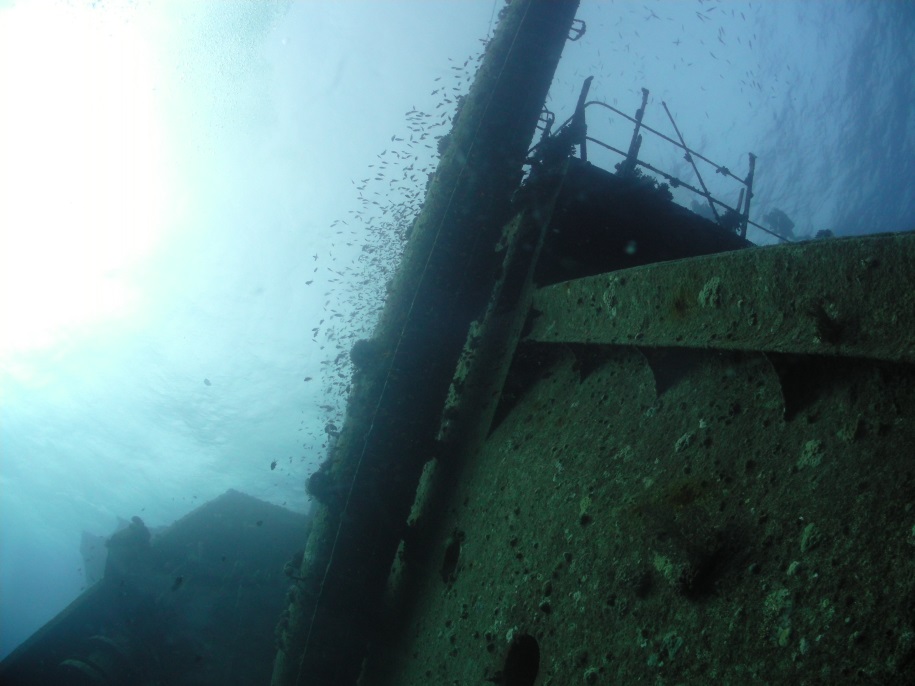
Deck Winches on the Giannis D, wrecked on Sha’ab Abu Nuhas (Photo Courtesy of Derek Aughton)

The wreck of the Giannis D is iconic, look at any 10 shipwreck photos and her stern is likely to be in at least one of them, so the shot here is deliberately different, her Stern deck winches before the bridge area and her funnel, which still carries the “D” on either side to this day. I absolutely love this wreck and those of you who have spent any time on here will know that, eventually, Giannis will get a bigger piece of her own sometime soon. This was my very first Red Sea wreck and the excitement before we fell backwards off the little RIB, tender to the Princess Dalal, was special….I literally could not wait to dive the Giannis D, the dive brief just after breakfast had been anticipated for years, I had doubted I would ever be able to afford to dive the Red Sea, to be waking to the most beautiful Blue Sky over Abu Nuhas on the third of August of 1997 was one of the most memorable days of my life!

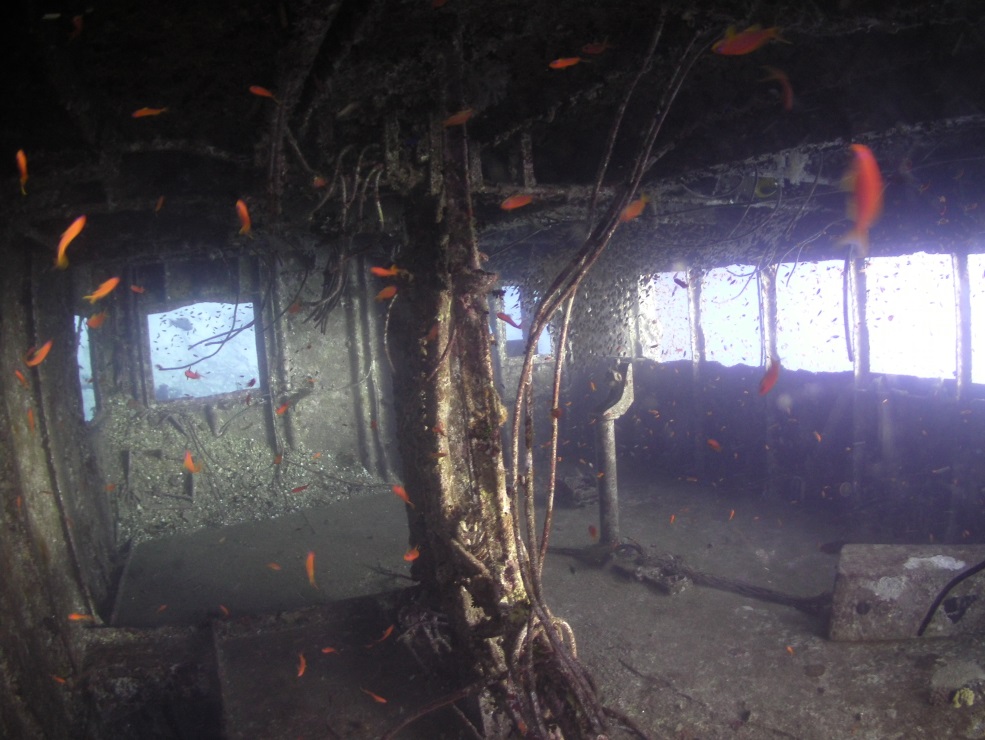
The bridge of the Giannis D, her helm post still in place and glass fish everywhere (Photo Courtesy of Derek Aughton)

My little Red Wreck Log describes the dive: “03/08/97 GHIANNIS D The ideal wreck, the stern leans at 50’ or so & is broken away from the bows, a Greek freighter who ran into Abu Nuhas on 19th April 1983, so she’s still in fine condition an easy penetration as light is everywhere the engine room is marvellous the huge engines stretching forward with easy access then out and round the stern, along the Port companionway & up onto the bridge area finally out along the huge gantry fabulous dive” Barely a comma to be had, as if, breathless from the dive, I had just downloaded without pausing……bar a little decompression stop on the bridge gantry, and de-kitting for lunch, that’s not far off true! I had never seen such visibility on such a modern wreck before, save for spending hours in the depths of Blue Funnel ships around their engines and generators with my father as a child, I had never seen the sheer splendour of a wreck sunk in gin clear water, with all its tragedy and its majesty, there to see if you had the kit and the inclination…….and I had both! This was the best 35 minutes I had spent, anywhere, in a very long time and I wanted more, in fact I didn’t want anything else……

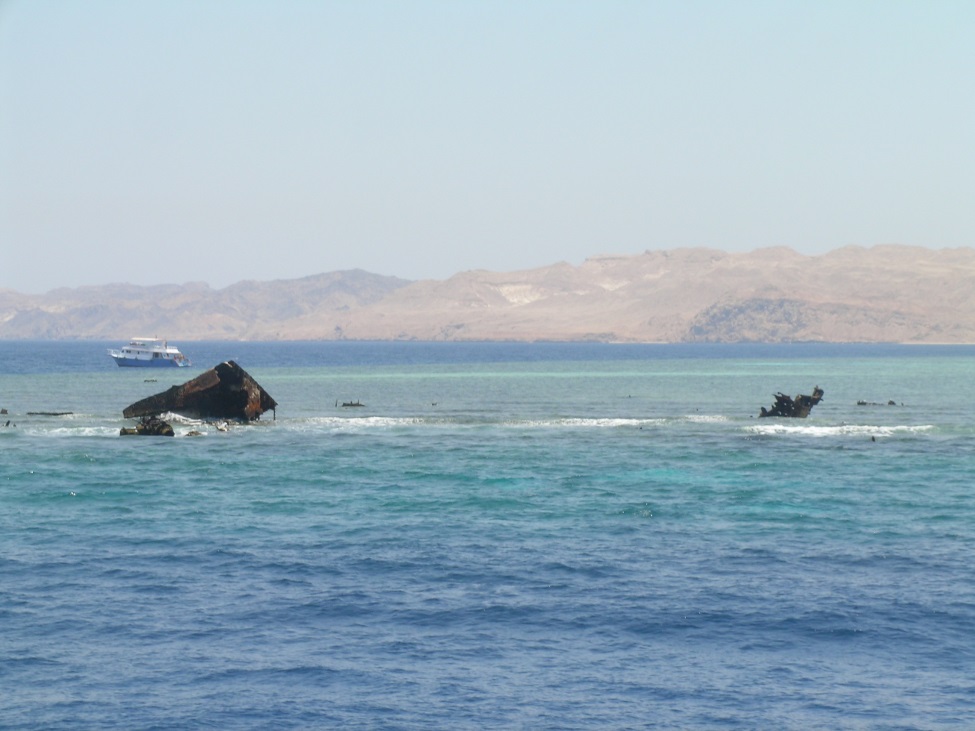
Wreck Debris on Abu Nuhas with one of the day boats on the outer bank

And then there was the return to reality, the next planned dive was Sha’ab el Odf, now I’d had a taste of the quality of wreck in the Red Sea, to be told we were diving another bloody reef was almost unbearable….but there were more than me on the boat and the itinerary was wrecks and reefs, it’s a shame it was easier for the guides to drop some of the less experienced on more simplistic dives, than to risk them in wrecks it seemed. I’d just have to suck it up, looking at maps and charts of the area today, it isn’t possible to find any mention of a “Sha’ab el Odf”, although from the direction we were headed it is likely this was just another dive on Sha’ab Umm Usk, perhaps on a different side at least. My log records the dive at least with dignity, despite my overwhelming disappointment: “REEF DIVE (Liveaboard) SHAB EL ODF viz down due to haze but still at 10-15m notables were huge fan corals – table corals and many soft colourful Very pretty with a large Napoleon Wrasse about at start and finish of dive. Two table sized Angel Fish (Huge) & many Glass Fish & smaller. A poorer dive than other reefs tho’. W Temp 26’ air in 210 out 120 Buddy John Keeling” You can feel my frustration in every word…….

Ras Mohammed National Park, Beautifully Shot (Web Photo)

And so we made our way to Ras Mohammed, which apparently is one of the most beautiful dive sites in the world, I was gutted, the only thing there I had any interest in was the “Yolanda” wreck, famed for her abandoned toilets sat randomly on the reef, oh and the chance of seeing sharks. I liked that idea and it was rumoured that we had a chance of Tiger Sharks, at least if we got out off the reef edge a little, so our Fraulein guide advised…. Now Tiger Sharks interested me, they were big animals, clearly “striped” in a subdued fashion and known to be aggressive, seeing those in the water as a potential meal, if they were mature adults. Who knew, maybe this would be a dive that re-ignited a love of reefs, for a while at least…… “04/08/97 Reef Dive (Liveaboard) Ras Mohammad too much to see & document a beautiful wall that went on into the abyss – Tuna – Barracuda – a White Tip reef shark Many of the reef fish were larger than previous reefs – a Grey Tip reef Shark off in the Blue after Tuna and the scour site of the Yolanda – long since gone down a huge scour – only toilets & baths remain air in 210 out 50 W Temp 26’ Buddy John” So no Tiger Sharks then, but the large enough shadow of the Grey Tip, a big adult, was impressive, I’d enjoyed catching a fleeting glimpse of  her steering out to seaward to avoid us!

The Porcelain Remains of “Yolanda” (Photo Courtesy of Derek Aughton)

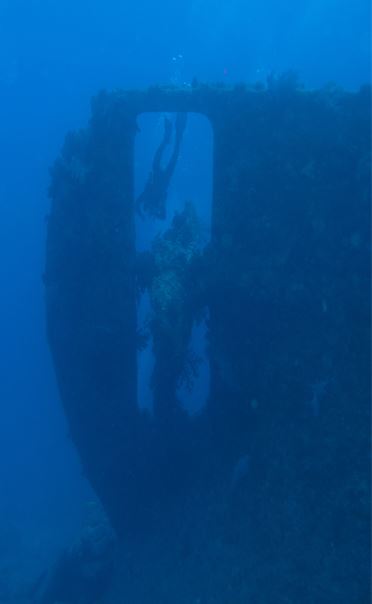
It was the 04th August of ’97 and I awoke to the usual early morning call to breakfast and passed a couple of the crew in prayer, as I went out to see the sunrise over Beacon Rock, an experience I will never tire of. There is something of the mystical about powder Blue, shallow water, and ragged, sand yellow and buff low lying rock outcrops, risen a few bare metres from the sea. They evoke every Arabian dessert scene you ever saw in any film, from Ice Cold in Alex to Jarhead……. This was an auspicious day to awake moored off Ras Mohammed…..it was another wreck diving day! This day opened with the SS Dunraven, launched in 1872 the Dunraven, having left my home town of Liverpool in January of 1876 bound for Bombay in India, carrying a cargo of Steel and Timber (which was exchanged for a return journey carrying cotton and cloth), ended up on Beacon Rock as a result of navigational error. The captain clearly believing he was further up the Gulf of Suez and not, obviously, expecting a reef barring his path. Although attempts were made by the crew to re-float the Dunraven they were to no avail and she sank later that day. My log records: “DUNRAVEN an English steam/sail ship that ran onto Beacon Rock in March 1876 and sank very quickly (portholes still open when found). She turned turtle & is largely empty her cargo having fallen & settled into the coral sand. We dropped to her stern & prop at 30m then entered her Starboard side (Left from Stern) then made our way through twisted broken metal along her propeller shaft to her boilers encountering Lionfish & large shoals of Glass fish. Looked round the boilers on the ceiling then went for’ard to the second section to impact area where it is obvious why she foundered” It was another Red letter day in the Red sea….I loved the warm water, the amazing visibility and the wealth of historic wrecks just lying there awaiting exploration. I wasn’t by any means the first to dive the wrecks here, but every one could’ve held my attention for a dozen dives so far, I was in that special place where life is so good it just can’t last!

The Rudder on Dunraven (Photo Courtesy of Derek Aughton)

Could the trip get any better……..yes it could, and it did, the very next dive the next day was perhaps the wreck that started everything for me back in the 70’s sat in the front room, on the floor of the family bungalow in Ainsdale, with my father, Ian, watching Jacques Yves Cousteau find and dive on the Thistlegorm! I didn’t know it at the time, if you’d have told me then that I would dive the Thistlegorm many times I would have laughed at you, the thought of a scrote from Liverpool, off the Sinai peninsula, days out into the Red Sea, scuba diving, would have been unthinkable at the time, never mind diving on a shipwreck discovered by Jacques Cousteau…….unbelievable! Jesus, only the rich could afford holidays abroad, and most of those were in Europe, only bloody explorers like Cousteau got to places like Egypt! But here I was, and the excitement, kitting up on the back of the Princess Dalal, was unbearable, I simply couldn’t wait to get in the water, I had been reading about the Thistlegorm for as long as I could remember and I knew this dive would be unforgettable….The little Red Wreck Log records the dive: “Thistlegorm Bombed at anchor by a Heinkel HE111 She went down fairly fast after ammunition blew her apart. Sunk 06.10.1941 She was en route to North Africa to re-supply Montgomery’s Desert Rats. We dropped on to her mid-ships and made way to the stern past the bomb shattered area behind the bridge along the deck gunners quarters & along the stern companionway round the prop & over the guns then on to the bridge to the Captains bathroom then a tour to the bows over the holds Magical dive”

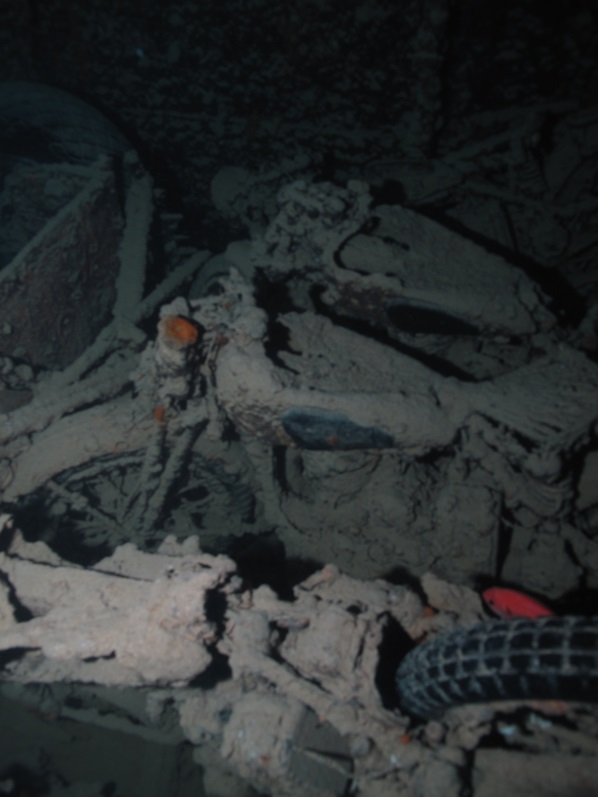
Thistlegorm’s Motorcycles, BSA’s in this shot I believe (Photo Courtesy of Derek Aughton)

Thistlegorm is the jewel of the Red Sea, an iconic shipwreck with diving royalty connections in Cousteau, despite having been located by him in 1956 Thistlegorm’s location was not divulged to the wider diving community until the 70’s, since then has become perhaps the most dived shipwreck in history. The Princess Dalal spent the day over the Thistlegorm and we dived her in the afternoon of the 05th August 1997 too, again the Red Wreck Log records: “Thistlegorm this time down to the bridge & into the holds, a great root around finding the trucks and fuel tenders, dozens of pairs of boots, there’s one empty area below the bridge don’t know why, so many rifle boxes you can’t believe it but I missed the motorbikes somehow. Everything was so clear and identifiable the loco tenders on deck & the jibs and winch gear. We wandered off to the loco on the Port side & then back in via the ammo boxes & the half-track (Bren carrier) then up the bridge to watch & deco!” This was another magical dive and one I will never forget, half way down the deck run, to the shot line on the bows, John swam up and showed me his gauge, he was lower than I’d have liked for deco and, as I had plenty left, (being something of a fish on air consumption by this time), I felt it would be better to have John on my octopus, at least for the swim back to the shot and up to the 6m safety stop. All went well, John sat behind me on my 2m alternate hose and away we went, after reaching 6m John swapped back to finish off his own air down to around 20 bar and we exited the water, John leading the way up and me following

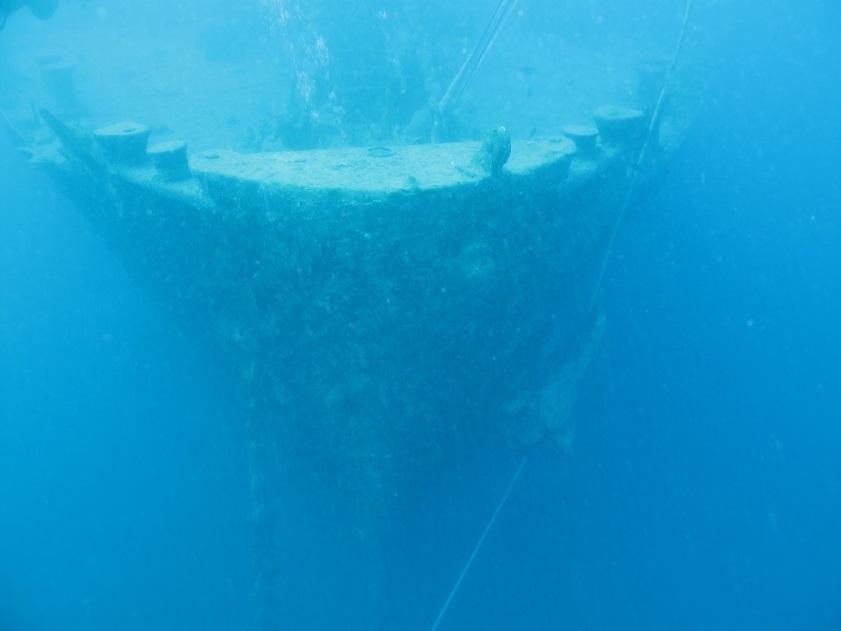
Thistlegorm’s bow, how beautiful a wreck can be…… (Photo Courtesy of Derek Aughton)

Now there are a million and one things you can see on Thistlegorm, there are so many opportunities to photograph or film on this wreck that you know where this is going by now I guess……There will be dedicated wreck section piece on Thistlegorm, despite literally dozens of articles and half a dozen books on her going into great detail, but I will cover her to the extent I have enjoyed her in the wreck section, and if you can’t wait, then go to my best ever dives and take a night dive around her with me!

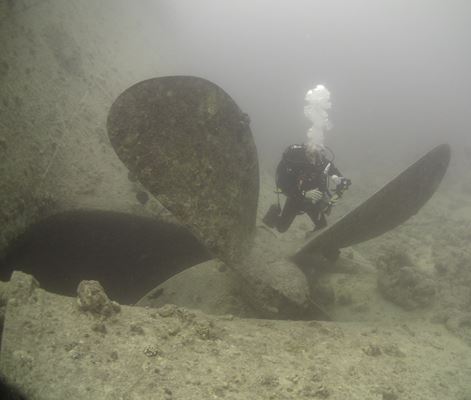
Thistlegorm’s Prop (Photo Courtesy of Derek Aughton)

  I very nearly didn’t hold it against our dive guide, Renate, when we moved away from Thistlegorm to moor off Gubal Island, but the morning dive was another reef…. Now there were others to cater for on the boat and this wasn’t a “best of Wrecks” tour, so I had no real say in anything and had to, again, “suck it up” and plod round a reef. I have nothing against reef diving, I have enjoyed many reef dives however I realised a long time ago that reefs, often majestic and full of exotic marine life, were usually what ships ploughed into to become wrecks in the first place, ergo: If you dived the shipwreck first, your decompression could be in amongst the marine life and the coral brains and tables and the gently dancing soft corals and anemones…….why would you seek out a reef on its own, without a shipwreck, when there were practically hundreds of them rammed into the prettiest reefs across the worlds seas……? Anyhow, for what it’s worth the dive log records: “Reef Dive (Liveaboard) Gubal Soraya Notables were one huge Moray whose head was 12” deep, two smaller Morays living on top of each other, huge shoals of Glass fish & other small fish (Red) one tiny White Moray 12” long & very pretty soft corals air in 210 out 110 W Temp 25’ Buddy John” The huge Moray being the abiding memory of the dive but the tiny White Moray being a real high point too, odd the difference in size, but the difference in colour holding completely the same thrall in this case!

Sunset over the Red Sea…..Simply Beautiful

The afternoon dive was to be another wreck and I was again thrown into that “can’t wait to kit up” state….This time the Chrisoula K, for years known as “The Tile Wreck” because of her cargo of Italian floor tiles, still evident in her holds. The Chrisoula K was a German built in Lubeck, however, when she sank in August of 1981 she was owned by a Greek company and registered from Cyprus. Chrisoula K is one of the Abu Nuhas wrecks and very popular, being largely intact, the little Red Wreck book records: “CHRISOULA K The “K” was a 1954 made Greek cargo vessel carrying stone block & Lentils en-route from Italy to Jeddah when she hit Abu Nuhas at speed breaking in Two. We dropped to the stern and swam in between the blades of the prop and rudder then round to the holds, she’s on her Starboard side and is rotting heavily we swam through the main hold taking in the bronze spare prop & the stern accommodation then back in to the engine room midships and through the whole of it & out to the hull a great dive which we continued” An odd way to end a dive log entry, until you realise the dive took in Two wrecks, the “Seastar” was next and we swam from Chrisoula to “Seastar” where the next little Red Log continues recording: “SEASTAR a continuation of dive 272. Seastar was a cargo ship carrying Lentils and stone slabs when she hit Abu Nuhas in 1976. Navigation aids were removed during the Arab/Israeli war so nav-error is probable. We came across her at mid-ships and had a good look over her length from the deck area she’s over to her Starboard side but angled at about 20’ there are stone slabs all over her decks, the rigging is pretty intact off her bows she would warrant another longer look, a pretty wreck” Now how the dive guides got this so wrong at the time is beyond me, but what we all logged as the “Seastar” was almost certainly the “Kimon M”, also known for years as the “Lentil Wreck”, as the actual Seastar is a little further to the South of the Kimon M and is down at around 90m

Kimon M “…..she’s over to her Starboard side but angled at about 20’…..” (Photo Courtesy of Derek Aughton)

  There was a feeling of elation after this dive, not just a Red Sea wreck….but Two… I was on cloud nine, running the dives back in my mind over and over again, the engine room of the Chrisoula K, the holds of the Kimon M…… two wrecks, both navigation failures of one type or another, both dying within 50 meters of each other barely 3 years between them, the Kimon M going into the reef in December of 1978, the Red Sea, for me had truly become “shipwreck heaven”! But it wasn’t long before I came back to Earth with a bang, we were on our way back in, the week almost over and there was to be a final dive of the trip, it would be a reef dive at Careless reef which I couldn’t help thinking of as “couldn’t care-less” reef as I was finding it very hard to have to leave Abu Nuhas. Well, leave we did, and after watching the clear night sky and the stars overhead, it was breakfast, the last dive brief from Renate, and down to the reef for a fare-well to the Red Sea and all its glory, the log book reads: “Reef Dive (Liveaboard) CARELESS REEF A magnificent last dive to finish the week over two coral outcrops forming a wall. Notables were Scorpionfish, Barracuda, Four White Tip Reef Sharks, one of 5’ long the others around 4’ Very majestic, large Moray eel, bigeye, boxfish and a myriad of others a fine dive. W Temp 25’ air in 210 out 60 Buddy Renate”

And that was it….done, all that remained was to wash off the dive kit and pack before the sorry journey back to Hurghada port and then, after a night on board the boat and breakfast……. on to the airport. I knew only one thing…….I would return, no matter what I had to do to get here, I would definitely be back!

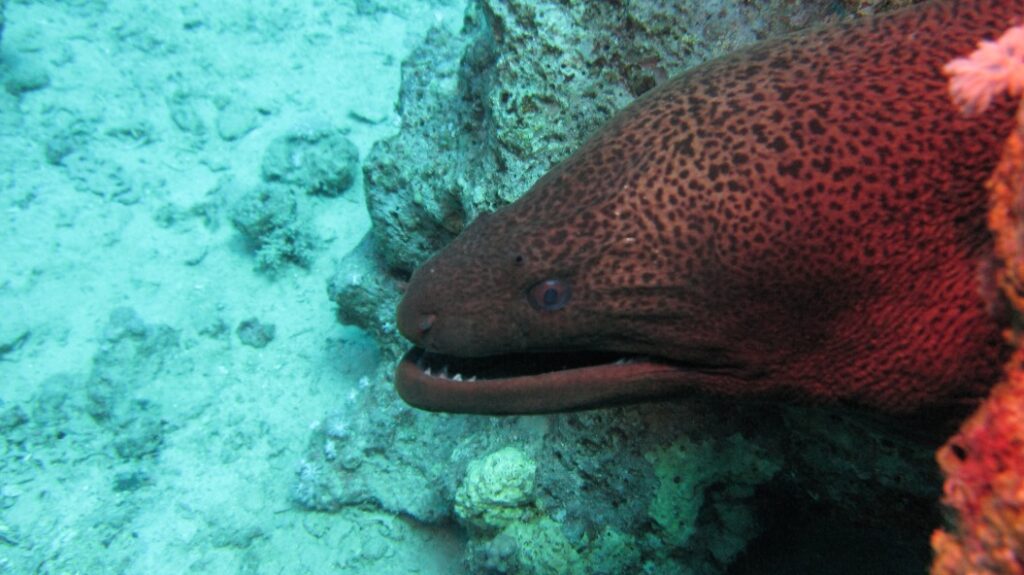
Careless Reef Moray Eel in its lair (Photo Courtesy of Derek Aughton)

Filed Under: Fenton Sub Aqua Club

D Day 06th June 1944

November 11, 2020 by Colin Jones

The Bombardon & Tug………. of Mulberry’s & Men

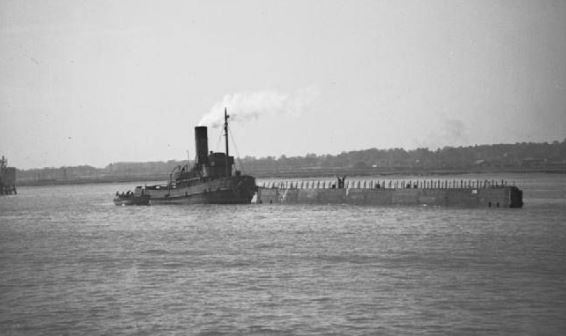
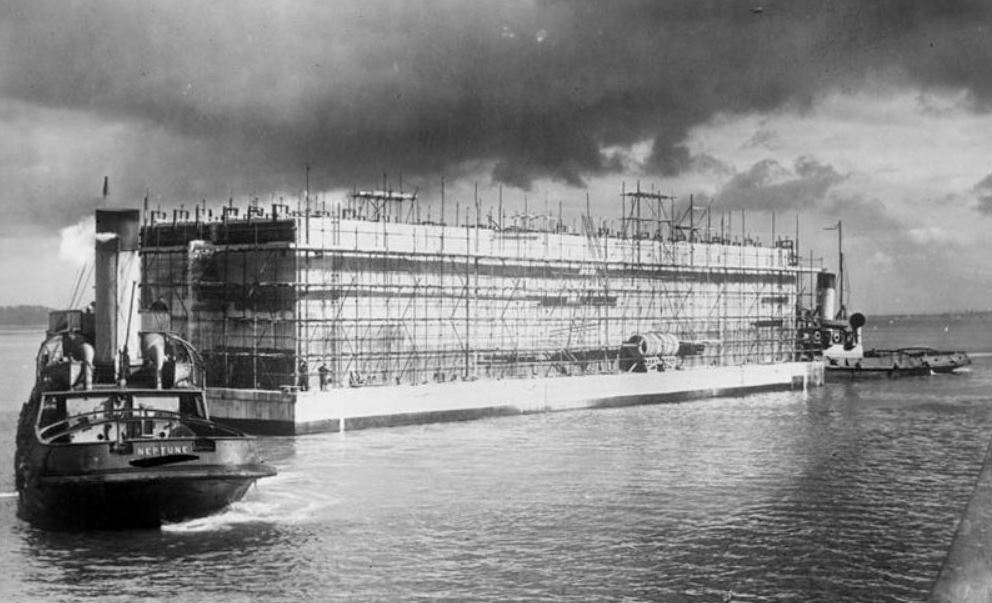
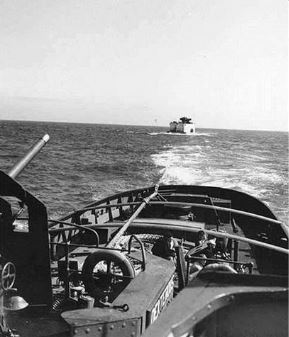
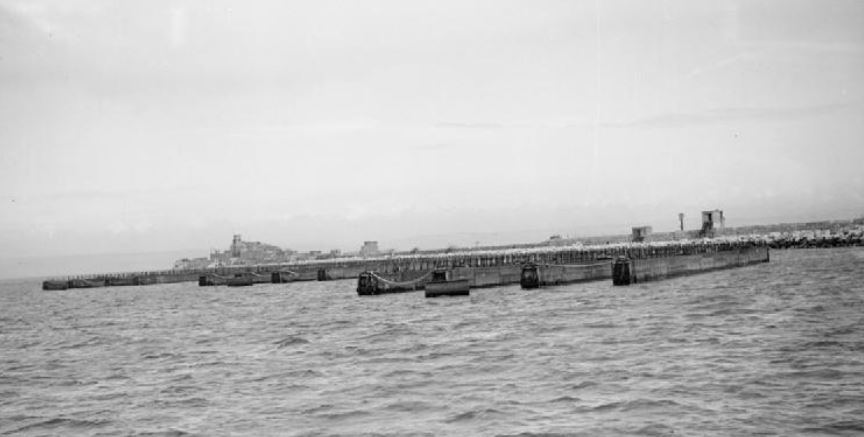
Bombardon & Tug 1944 (Web Photo Courtesy of: www.thinkdefence.co.uk)

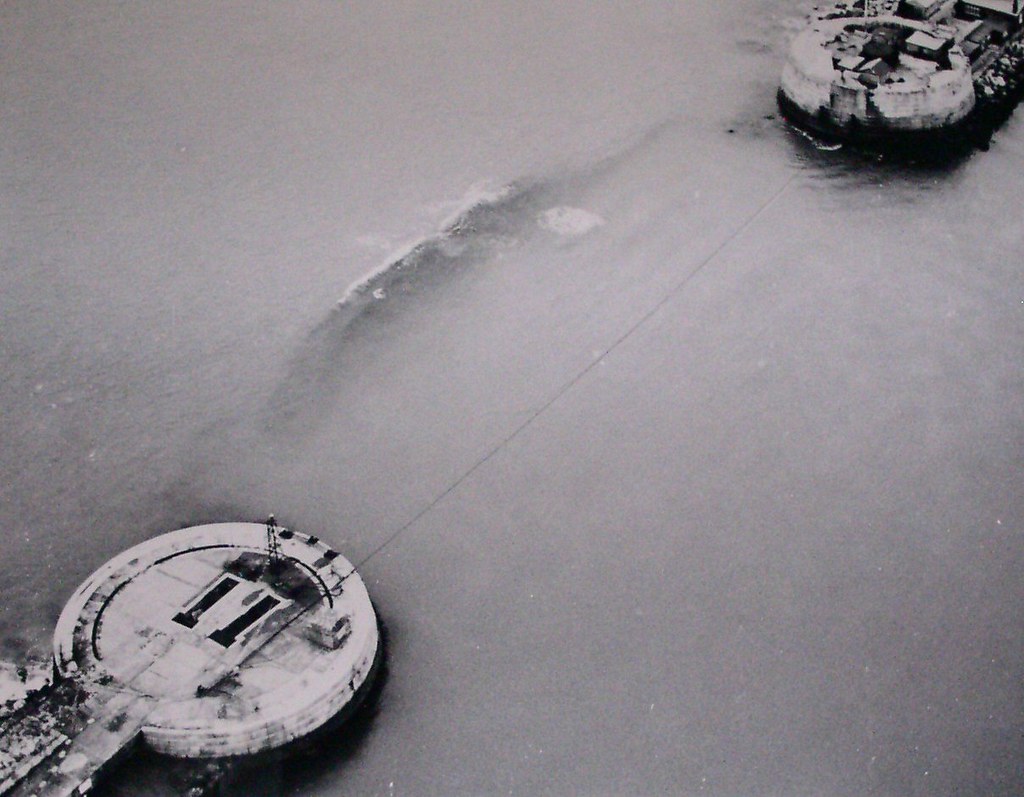
  This is a dive I have taken several times and one that holds a personal family investment of a scale I can only reflect on, the dives carried out on the wreckage of two of, perhaps, the second world war’s most pivotal, if unsung historical pieces. Lying in 16m of sheltered sea at the base of the harbour wall, the Bombardon & Tug are a tangible link between my step-father, Vic Marley, and I on many levels, but more of that later……… Some of you will have read the opening lines of this dive in the “Training” section of this blog, a smaller and only partial telling of the bigger picture as I hope will become evident as we progress this piece, and look a little closer at the sea bed in Portland harbour and, perhaps it’s most important but little celebrated wreck site

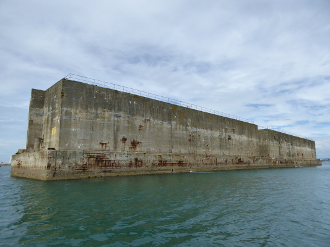
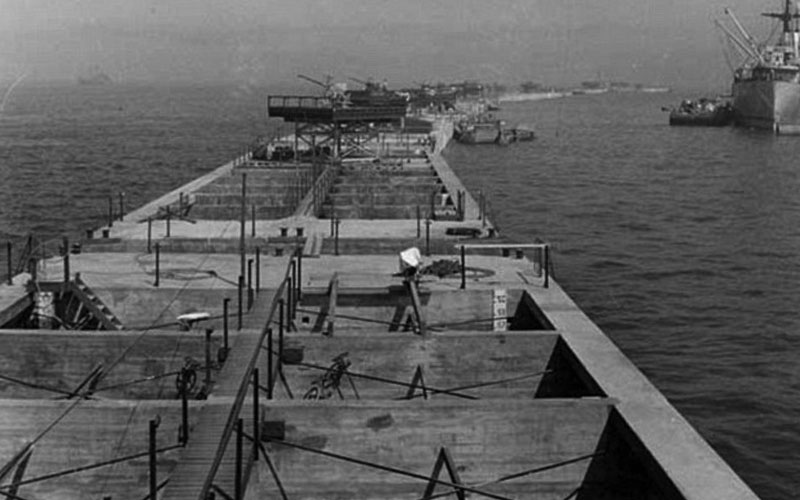
The Phoenix Caissons, Portland Harbour (Web Photo)

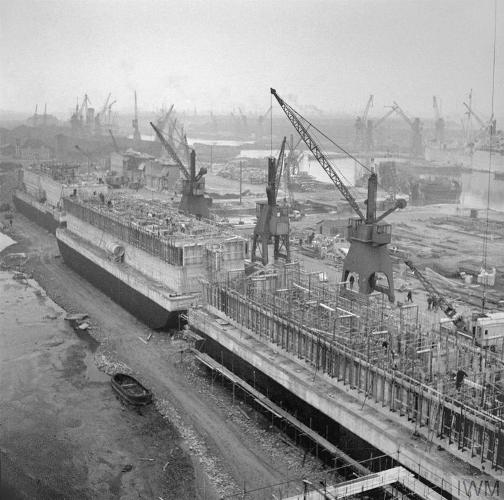
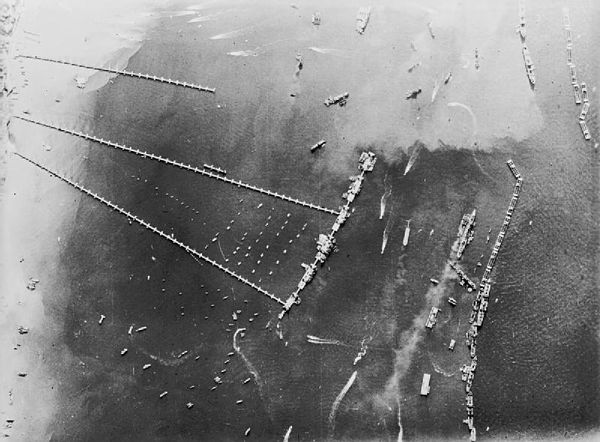
  Anyone who has dived from the Breakwater shore or the Aqua-Sport Hotel will be very familiar with the Caissons floating just off the Left side of the beach and a couple of hundred yards out from the Aqua-Sport Pier. These would be hard to miss no matter how poor the weather may be, standing some 10m from the water a feature of the harbour for as long as I have been diving Portland. Set in the harbour since April or May of 1944 and expected to be part of “Operation Neptune”, the Allied code-name for the D Day invasion of France that took place 06th June of 1944, the equipment required for the re-taking of Europe from the Nazis had to be in place in Normandy to supply the beachhead for that invasion to be effective Somehow the Caissons at Portland were left behind, I have no idea why, perhaps they were late into the operation and everyone had already deployed, perhaps they were “surplus to requirement” (unlikely), or maybe their “ride” across the Channel didn’t make it to Portland to tow them….who knows (and I’d love to update this piece if anyone can enlighten me?) but what they have become, in glorious isolation, is an iconic reference to an operation of staggering audacity and one that ultimately set Europe free, a visual and physical reminder of the largest seaborne invasion in human history! I suppose the Caissons themselves need some explanation too, they are clearly huge, visibly made of concrete or some such material at first glance, making it difficult to imagine exactly “what” their purpose or function might be…….When I called Operation Neptune one of “Staggering Audacity” I meant it quite literally, the ingenuity of those who planned a massive and violently opposed beach landing knew the success or failure of the enterprise pivoted on the ability to sustain, and therefore re-supply, those fighting through the beachhead and into the heartlands of Normandy and on into Germany itself

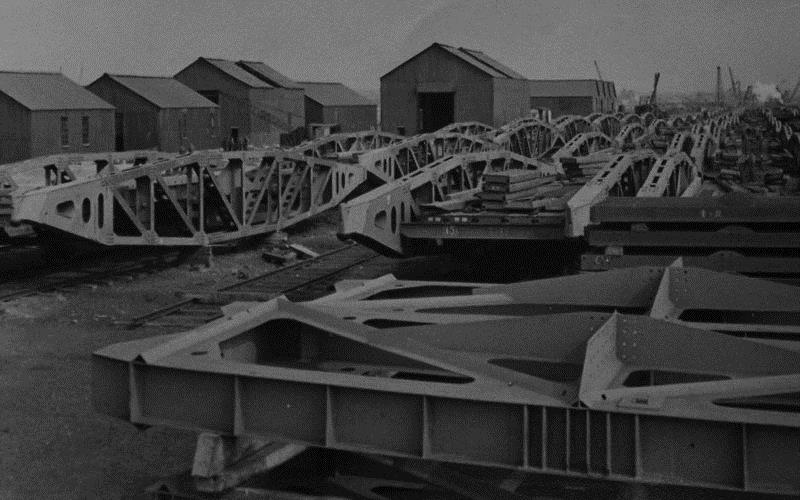
D Day Caissons (Phoenix) In Construction On The Thames 1944 (Web Photo: Believed Origin, Imperial War Museum)

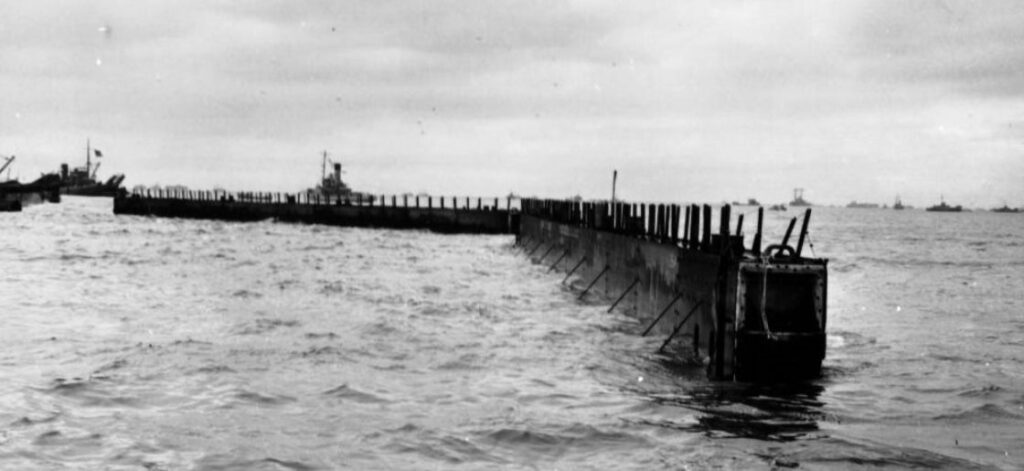
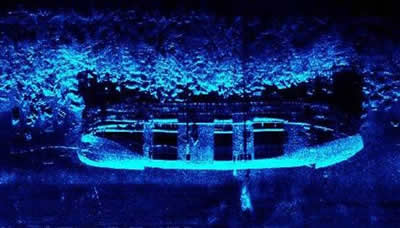
The story I have always heard in regards to the sinking of the Bombardon and “Tug” is that the tug was towing the unit in the harbour during a storm and the bombardon floundered, perhaps due to a leak or just instability, and that she dragged the tug down with her. I have tried over the years to verify that story and, despite the “power of the Internet” have yet to confirm any part of it. The lie of the two vessels isn’t definitive, although if the Bombardon did drag the tug down then I would have expected them to remain in line with each other, clearly not the case when you get down there as the Tug is lying with the Bombardon close alongside, the Tug facing towards the centre of the Bombardon

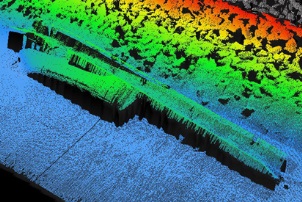
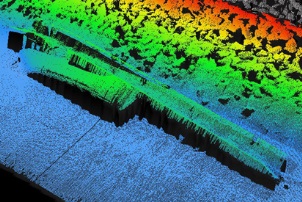
Sonar Scan of the Bombardon & “Tug” or more likely “VIC” Portland (Web Photo)

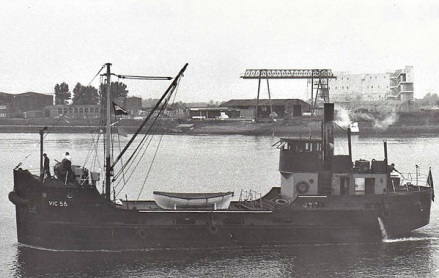
Of course that doesn’t categorically say the sinking was not the result of the Bombardon dragging the Tug down with her, it just is somewhat at odds with the lie of the wreckage. Then there is the “Tug”, since the diving I did on the units there has been speculation that the craft alongside and almost under the Bombardon is more likely a “Vic Lighter”, a variation of a Clyde “Puffer” commissioned or requisitioned by the Navy for harbour duty during the latter stages of the war. It is true, both “regular” Tugs and Vic Lighters were likely to tow Bombardon units, those who have posed the VIC as more likely have had a far better look around the vessel than I managed over my dives, and the sonar scan would certainly point towards the hull shape of the typical Clyde Puffer, or “VIC”, the Navy abbreviation for “Victualing Inshore Craft”!

Typical Clyde “Puffer” (Steam Tug), VIC 56 (Web Photo)

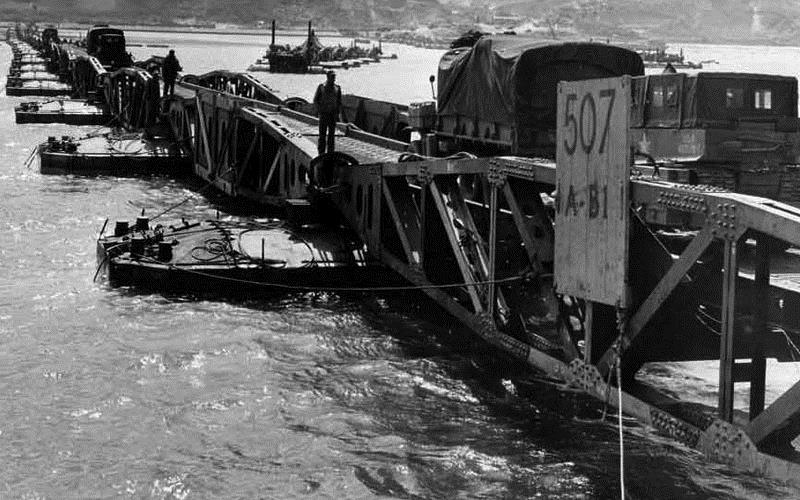
  I have dived the Bombardon and Tug several times over the years and always found it fascinating, and somewhat confusing, I have never quite shaken off the belief there is a “whale” down there along with the Bombardon. It might be that my memory fails me but the belief persists as between the tug itself and the Bombardon unit the metalwork seems too “open” and “latticed” to me to just represent the Bombardon alone…..but it is a very long time since I dived Portland and the Bombardon, and, at that time I had no real appreciation of what actually comprised the “Mulberry” harbours, my dive log records: “…The Bombardon & Tug Nitrox IANTD Inst Cse Drills in zero viz (kicked silt) Then around the wreck for a look, she tipped the Bombardon over & towed the tug down which rests on its side with ½ in silt, great swim up between the two of them, Atmospheric & would have liked more time to ferret about but it was great to hang on 5 min deco above the barge & see the outline disappearing in the murk.” That dive was on the 03rd May of 1997 and my buddy was Don Shirley along with an IANTD Nitrox student of Don’s called James

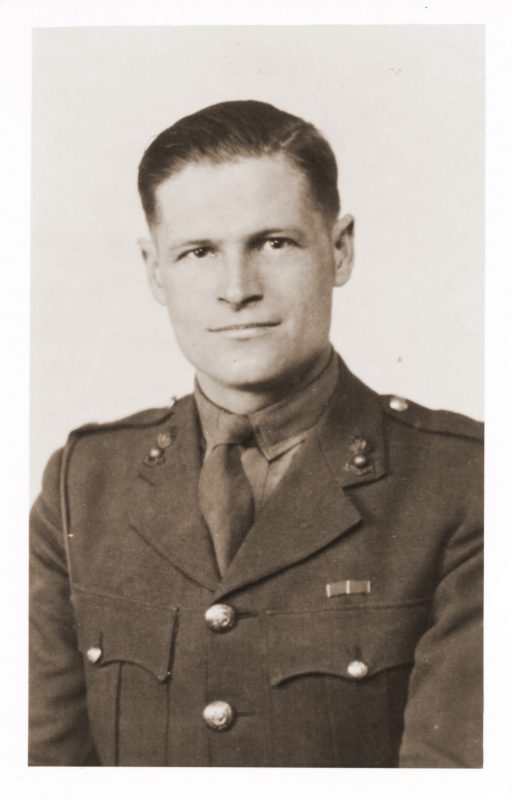
Major Allan Beckett 04/03/1914 to 19/06/2005, Designer of the Mulberry “Whale” & “Kite” Components (Web Photo)

The next dive I took on the Bombardon would be over two years later in September of ’99 off Budgie Burgess’s Maverick, with a buddy and great friend of mine Mark Hill, one of the early divers of FSAC detailed in another section of these ramblings! That dive was recorded as: “….Bombardon & Tug, Refreshing to get on one I’ve only “skimmed” before. The unit has holes in along its side and shelters Bass among other life (Wrasse etc) Large Bass on the odd glimpse we got plus a large shoal of Pollack. The Tug lies next to the unit and would warrant more time than we had to look round properly – next time!” Neither of those dives was sufficient to be honest, I need to go back and take another dive at some time. Unresolved in my mind is still the Bombardon structure, I now know the full structural make-up of the Bombardon unit and it is so frustrating to have a picture, residual in my mind, that says there was a distinctly different shape and structure between the tug and the Bombardon itself, I just can’t “categorically” coalesce that into the reality of a “Whale”…….I just know the Bombardon did not have the significantly “open” appearance of the lattice effect of the whale units, even after so long underwater, but that is what I distinctly recall on the dives…..perhaps it really will be “next time”! 

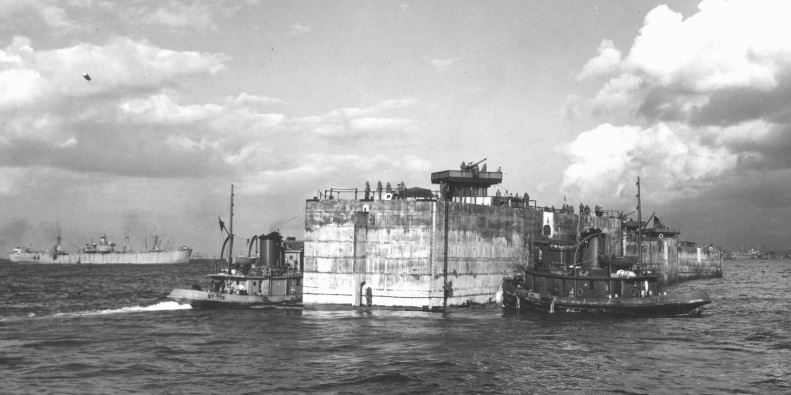
Typical D Day Tugs position a Caisson (Web Photo)

  June 06th 1944, all the French ports were heavily defended and well garrisoned with German troops. Rommel, the German Afrika Corps Field Marshall of Tobruk and El-Alamein fame, the decorated “Desert Fox”, had been placed in charge of Germany’s “Atlantic Wall”, the defences placed coastally and stretching from Norway almost to Spain, designed to throw any assault back into the sea, and, whilst he was quite late to that endeavour, he took the task very seriously indeed. The obvious points of approach were heavily defended with combinations of anti-landing steel-work, mines, heavy artillery and inter-sectional fields of fire covered by multiple machine gun and infantry positions, considered practically impregnable to all intents and purposes…..at least that was the impression

“…heavy artillery and inter-sectional fields of fire”

The problem was clear from very early on, and was articulated by Winston Churchill himself in a memo, referred to as the “Mulberry Minute” contained in, or following his memo “Piers for the use on Beaches” of the 30th May 1942, which also adequately reveals the 2 years of preparation that went into the final operation: “….They must float up and down with the tide……..the anchor problem must be mastered. Let me have the best solution worked out. Don’t argue the matter. The difficulties will argue for themselves…..” (Wikipedia: In “Allan Beckett, The Mulberry Minute” Online. Accessed 14/10/2020) 


Hugh Lorys Hughes 16/04/1902 to 16/07/1977 (Web Photo)

That was only part of the problem, but probably the most important, along with the fact the beaches in question had shallow gradients, necessitating long roadways between sufficient depth of sea to dock supply and troop ships, and the sand of the beach. Churchill knew from bitter experience at Gallipoli (see the “Best Dives” section of this blog) that beach landings were monumentally difficult to prosecute and sustain, without sufficient docking facilities for the attacking forces, he had himself submitted a plan to take the islands of Borkum & Sylt (offshore of Holland and Denmark) using caissons sunk and filled with sand during the first world war in 1917, to effect re-supply and troop landings, although that was never undertaken at the time. It would take another 25 years, a second global conflict, and the problems of Normandy landings to bring a similar, ingenious design to the forefront, almost overlooked for a second time, a Welsh civil engineer named Hugh Lorys Hughes submitted a design for the use of floating, sinkable “Caissons” as part of a jetty to the war office. If it hadn’t been for his brother, Alain, a commander in the naval reserve, who championed the design to the war office, the Mulberry system may never have been initiated

Floating, sinkable “Caissons”……Hugh Lorys Hughes 1942 design (Web Photo Courtesy of: www.thinkdefence.co.uk)

  So we have the Allies preparing for the invasion of France, the Germans defending some 2400 miles of coastline, and engineers designing the means to deliver a sustainable military operation on a scale never seen before, from the sea to the beach, a gathering storm the like of which the defending German army could only imagine, a storm Erwin Rommel had imagined in very real detail, and was determined to stop in its tracks, on the beach, before the attacking troops could even escape the beach

February 1944 Erwin Rommel (Front, Left) Inspects the Atlantic Wall Defences
(Web Photo: Deutsche Bundesarchiv)

Johannes Erwin Eugen Rommel was one of Germany’s best, not just a soldier of both wars, Rommel was a published military strategist (Oberstleutnant Rommel: “Infanterie Grieft An” Published 1936, (Written when Rommel was a Lieutenant Colonel, roughly translated as “Infantry Attacks”)) Rommel’s personal belief was that the Atlantic wall was just a fantasy, and that Hitler had conjured it out of “cloud cuckoo land”. Rommel had watched in 1940 as the German army simply by-passed the French Maginot line, another massive static defensive “wall” built to prevent Germany invading France, modern asymmetric warfare or “Blitzkrieg” had made such emplacements a thing of the past, a dinosaur, Rommel knew the Atlantic wall would fall, but his job was to defend the beaches and he set out to do so

Generalfeldmarschall Erwin Rommel 1942 (Web Photo: Wikipedia)

Rommel knew “first-hand” how to prosecute a military attack, and therefore how to defend against one too. Rommel knew his best defence over the 2000 miles plus of the Atlantic Wall, an almost impossible task, was to win the beach, essentially pin down and destroy the attacker as they tried to cross the open beachhead. The guns placed to defend the beaches of Normandy were sited to fire across the beach…….. not directly out to sea, that meant fewer troops would be needed to man fewer defensive weapons, as any fire from the guns would cover the beach out to the effective range of the weapon itself. Rommel set out to destroy any ships attempting to land troops, to do so he had stakes driven into the beach topped with mines, any ship using high tide to get in close to shore would not see the stakes, they were laid deliberately to be under the surface towards the high water mark

February 1944 Rommel Reviews Beach Defences
(Web Photo: Deutsche Bundesarchiv)

  So the scene is set, the German defences in place and all that remains is planning the Allied assault…… I have already said that Operation Neptune was a staggeringly audacious plan, to assault Normandy Beaches at low tide, (bringing everything necessary to deliver massive military force in a sustained attack), across twenty odd miles of English Channel, to arrive in broad daylight in June of 1944, relied on two years of planning and a year of practice. When it came down to the time to risk everything for real, it all came down to a gamble on a weather window predicted with spectacular accuracy by the meteorologist (Group Captain) James Stagg, who, despite conflicting reports, advised the American General Dwight Eisenhower to delay through the 4th and 5th of June due to cloud cover and high seas. Stagg was under extreme pressure to get things right, tens of thousands of lives depended on it, Stagg predicted a lull in the weather on the 6th of June and advised Eisenhower it was the only opportunity…….Stagg was right, the 6th of June 1944, although marginal in terms of conditions, offered reasonably clear skies for air cover and choppy, but manageable seas on the French side of the channel

Towing a Caisson: ….Manageable seas on the French side of the Channel…
(Web Photo Courtesy of: www.thinkdefence.co.uk )

So how was all this to be put together and what were the pieces of the “whole” puzzle? Well, the battlefield looked exactly like this from the air:

D Day 06th June 1944 Arromanche Beach, Normandy, France
(Web Photo Courtesy of: www.thinkdefence.co.uk)

  The breakdown of constituent parts into “systems” gives us the outer defences against the sea,

The Bombardons:

(Web Photo Courtesy of: www.thinkdefence.co.uk)

A line of floating units linked together to take energy from the incoming tide and achieve this by dispersing the waves as they impacted the outer line of Bombardon “+”’s floating at the limits of the landing areas, the Three arms of the + invisible as the main of an iceberg is, the uppermost arm of the “+” showing as a vertical barrier to incoming waves

Then there were the Mulberry (Phoenix) Caissons:

(Web Photo Courtesy of: www.thinkdefence.co.uk)

Another line of units, sunk in place to provide an outer harbour and dock where liberty ships and merchantmen could dock and unload equipment and ferry vehicles and stores, ammunition and men ashore

Then there were the Lobonitz Piers:

(Web Photo Courtesy: www.thinkdefence.co.uk)

These ingenious pieces of the puzzle acted as floating pier supports allowing roadways to connect and to maintain safe passages at any state of the tide, rising and lowering on the pier pillars seen in the photo as the tide ebbed and flowed

Finally there were the roadways themselves:

(Web Photo Courtesy of: www.thinkdefence.co.uk)

These were the floating “Beetles” anchored with Allan Beckett’s ingenious “Kite” anchors at each corner, holding them in place with greater “bite” than any other anchor type available weight for weight. Then there were the “Whales” at either side of the roadways, the skeletal framework holding the roadways together and sitting upon the Beetles in lengths up to a mile out to sea

The D Day Memorial at Arromanche, a replica of Allan Beckett’s “Kite” Anchor (Web Photo)

And so the systems finally come together and form the road to the freeing of Europe, very viscerally and literally built upon the bodies of those who gave their lives and their futures to secure a future for those they would and could never know…………

Mulberry Deployed 1944 (Web Photo: Courtesy US Navy Archive)

It should not be forgotten by any generation what awaited the young men assaulting those beaches, the defenders were well placed, well supplied and knew the Allies were coming…..they didn’t know exactly where…or when….but they knew they were coming, and that the only real way to stop them…….was on the beaches of Normandy

German soldiers man an MG42 and wait……. (Web Photo: Deutsche Bundesarchiv)

  But before any of these technological marvels of their time could deploy, the beaches had to be secured, those golden stretches of sand covering some 50 or so miles of Normandy coast. And so disembarkation began, the first waves of troops aboard landing craft, ferried to shore having descended nets over the side of their transport ships, driven against an ebbing tide towards Gold, Sword, Juno, Utah and Omaha beaches, the code names given to Longues-sur-Mer (Gold), Saint Aubin-Sur-Mer (Sword), Courseulles-Sur-Mer (Juno), Pouppeville (Utah) and Sainte Honorine-Des-Pertes (Omaha), some more heavily defended than others, the American 1st Infantry landing at Omaha taking by far the worst casualty’s. It was wave upon wave of allied troops across these 5 beaches that secured sufficient hold to enable the deployment of the Mulberry harbours and the steady re-supply of those ashore facilitating the relentless push off the beaches and on….eventually to Berlin, D Day was a beginning….the beginning of the end of the Third Reich

Omaha Beach 1st Infantry assault from a troop Landing Craft (Web Photo: Wikipedia)

That “choppy but manageable sea state” had done nothing for my step father, a Royal Marine Commando of the Forward Artillery Observation detachment. Berthold Victor Marley (Vic to everyone then and after), had hated his early deployment in the Navy. Vic had been assigned to motor torpedo boats, fast craft designed by Vosper Thorneycroft and high powered, ideally suited to Channel patrols and picking up downed pilots and crew from fighters and bombers shot down by the Luftwaffe over the channel, or attacking Nazi shipping foolhardy enough to be close enough to England’s South coast to be chased down and torpedoed in hit and run manoeuvres……. But Vic was constantly sea-sick and his role as radio operator and signaller on the little craft was a constant nightmare, when Vic heard the Navy wanted volunteers for Commando training, and that meant no more MTB’s, he didn’t hesitate. I know something of the training for special forces and the Commando training was no cake walk, up to Scotland with long arduous marches carrying heavy kit in poor battledress was no joke I’m sure, but Vic passed the exercises and got badged up, I don’t know if that stirred something more in him, or if the training team saw some quality beyond the Green Beret earned in the glens and hills around Lochaber and Achnacarry camp, perhaps it was his skill with radio signalling, but it wasn’t long before Vic was assigned to Forward Artillery Observation, an elite amongst an elite…… part of 4th Special Service Brigade formed in March of 1944, specifically for the D Day invasion

Vic & Doreen Marley on the Rhine Valley, Germany in Peacetime c1990

  Vic didn’t speak of his D Day experiences so this is second hand and from my late mother’s conversations with Vic’s own mother and sister…… Vic had a lasting back injury which was treated by state of the art tech of the ‘70’s, a heat lamp, which gave some degree of relief of the pain from a broken piece of his spine, the result of his eventual extraction from the beaches of Normandy. It turns out Vic, at just 19 years old had parachuted into Normandy (Operation Tonga at Ranville we believe) before the landings, at night, with the assistance of free French resistance in the area, squirrelling himself away, along with colleagues from forward artillery observation, dropped a mile or two behind enemy lines off Sword Beach (in the general “Roger” area by Ouistreham) in order to call in the naval bombardment and radio in corrections to the navy gunfire trying to shatter any opposition to the beach landings

Operation Neptune Bombardment Plan (Web Illustration: RN 13_472 D Day PDF)

    That part went well, a couple of days later, when the allies had overrun the positions, Vic had to break cover and identify himself to the friendly forces without getting himself shot, and then it was back to the beach to re-join the war effort in another theatre…. That’s where it went wrong, gaining a place on a ship returning injured troops to the UK, Vic’s ship was torpedoed, or perhaps struck a mine, his back was damaged in the explosion, and the ordeal of getting up three decks and out of a sinking ship put him in a body cast, when he eventually got pulled from the water by a fellow marine and found himself back in Southampton after waking in a hospital following surgery……. I believe it was almost a year in and out of various plaster body casts before Vic was discharged from the service, his war over, as indeed was the main of WWII by that time, just one story amongst hundreds of thousands of the day, but one that represents a couple of days in the lives of the men who won back the freedom of this country with courage, tenacity and personal sacrifice…….

Rest Well Sir, Thank you for your service! At the going down of the Sun….and in the morning  

V B Marley RN 15/07/1924 to 29/10/2012

RIP
Lest We Forget…….

Filed Under: The Wrecks

Fenton Sub Aqua Forays

September 24, 2020 by Colin Jones

The First FSAC Dive Trip

From its fledgling start in July/August of 1996 Fenton Sub Aqua Club, the home of Deep Blue Diving as a diver training company, had become more and more popular with those having trained with Deep Blue Diving, settling in to Fenton Manor Pool, and finding the opportunity to bring their kids along, test out new equipment buys, or just chill and discuss diving with the others around them and see what we were up to at the weekend…..whatever, it seemed Fenton Sub Aqua Club would offer more than just training and would eventually become a small part of Stoke on Trent culture….if you knew where to look!

Fenton Sub Aqua Club: John Playing “Pass The Mask”

  I encouraged a mixed approach to the pool, originally there were a few club members joining us whilst lessons were being carried out for Deep Blue, this meant we had a strict, “you can watch but do not get close or interfere” policy which was self- policed by the club members and very much based on personal space for those in a lesson scenario, if they were tasked to swim the length of the pool with the Divemasters, then all others in the pool moved out of their way, if any were a little slow to do so then the Divemasters would “herd” offenders and have a word with them at the surface. It all worked very well and as the club membership started to grow we divided the pool up on the surface using lane lines, half the pool for the club, the other half for trainees. This had the benefit of giving the trainees a little exposure to other divers entering and already in the water, adding to the need to have an “overall situational view” not just a forward focus, after all, it wouldn’t be the first time I had seen a diver surfacing at Stoney “landed on” by a diver entering the water without paying sufficient attention to what was below him or her…….. On non-training nights it was not occasional that members would “drop in” on the Divemasters whilst snorkelling, or just swimming the pool, and signal “out of air” just for the opportunity to do a lap of the pool in the tow of a diver attached to their alternate air source, something I encouraged as it prepared our divers to always be ready to “donate” and never to question why, an edge I think over those who adopt a less supportive view of that behaviour   

Ambushed for Air, not unusual at FSAC…

There were exclusive club nights too, when members could relax and have the pool to themselves, and I put on summer Barbecues and had mates from the training and equipment suppliers bring up dive “toys” on special occasions so club members could try-out new kit, Force fins, computers, underwater scooters, even a re-breather on a couple of occasions, with the help of Simon and Fluff from Stoney Cove. On a couple of days in the year we would drag out the Fenton Manor inflatable, a kind of bouncy assault course for kids, and watch as my own and members children tried to out-do each other scrambling across or jumping off the “bouncy castle on sea”, remarkably there was not a single injury the entire Ten years FSAC ran, which is a testimony to luck as much as fervent parenting I can assure you! Every training business needs an enthusiastic support structure and there is no doubt those new to any activity like scuba seem to relish involvement, I was very honoured to have help whenever I asked, and very often offered before I had asked, such were the qualities of those at Fenton Manor and from Stoke on Trent in general, lovely people I loved sharing dive time with!

Colin, Jason and yours truly, Portland March 1997

  The first really exclusive FSAC “Dive Trip” was arranged in March of 1997, I had taken several trips in 1996 to Portland and to Anglesey but the first I arranged specifically for the club was to Portland, I knew, whatever the weather, that we would be able to get some decent dives in and that was important, I wanted those coming such a long way to be assured of diving rather than take a chance they might end up “dry-diving” the local hostelry’s…… not that I wouldn’t enjoy a session in the Breakwater Bar! I had, by now some very competent divers, approaching their second year with me, although, to date their diving had been entirely at Stoney Cove, I knew they would be ready for some real sea diving, as long as it could be reasonably sure to be fairly calm and a relatively easy step from the hassle free diving in a dis-used quarry, as opposed to the swell and movement of the sea, and the likelihood of poorer visibility relatively early in the year. I had kept in touch with Mal Strickland and I knew he was running a RIB out of Portland, I knew Budgie (Eric) Burgess had an arrangement with the Breakwater Hotel, so I could be assured of decent accommodation and relatively cheap food….. and it was done, we were off to Portland and some “Real Diving” as one of my more senior FSAC divers put it!

De-Kitting Mal’s Rib, Portland, Dorset

  The first dive I took them in for was a shore dive off the beach at Chesil, that was deliberate, close in, calm conditions and a shore based entry which would mimic their Stoney Cove experiences, no fumes from the RIB, no sea sickness to deal with and no cramped kitting up on their first sea dive, it worked well although there was not a huge amount to see on the day, everyone got a dive in and there were no issues. My log book describes the dive: 29/03/97 “Shore Dive – Portland – Chesil Cove A Shakeout Dive For 3 Open Water Divers. Fun Entry In Low Surf & Root & Ferret About – Very Little Life About & Low Viz 1 -11/2M Max 9’ W Temp Air In 220 Out 175 Buddy Colin” This set the scene for the next day’s dive, even though there was nothing much to see the execution went well and all of the divers had transitioned into sea diving without any significant events, it couldn’t have gone much better! The next dive was on the breakwater wall, we had been looking for the Countess of Erne, in the confusion of  several new divers getting into a RIB, the confined space, the kitting up protocols, the inevitable “newness” of it all, for some reason we ended up descending the wrong buoy, it meant we missed the Countess and ended up hunting around the largely featureless bottom along the breakwater wall, and I recorded the dive as 30/03/97 “RIB Dive – Breakwater – Portland Missed The Countess – Wrong Buoy Ended Up In Low Viz On Lobster Pots & Sand – Plenty Of Sand Eels! W Temp 9’ Air In 230 Out 175 Buddy’s Jason – Darren – Colin” This was quickly followed by a dive on the outside of the Breakwater, moving the FSAC crew a little further out of their comfort zone and into a little more Open Sea, more of a swell on the un-protected side of the Breakwater, but close enough in to keep the feeling of security the lead-up dives had fostered so far. There was as much life on this side as there was on the inner side and I won’t bore you with the log book entry on this dive, suffice to say it had the right result, all divers gently extending their experiences and all safe back on board with broad grins…..so far so good!

Portland Harbour & Breakwater (Web Photo)

So the dives had built a little more confidence in the diving of our open water converts and now they could begin to call themselves “Divers” in a truer and wider sense, our next dive would be one they would remember and this time there would be no confusion, we were going back to one of my favourite harbour dives, The Countess of Erne!

 The Countess of Erne, Side-Scan Sonar (Photo Courtesy of Eric “Budgie” Burgess)

I wrote up the dive in the little Red Log, my wreck log: 30/03/97 “Countess of Erne Opposite Bunk House 84, (Blue netted buoy) Back Down To the Countess, Viz terrible – plenty of suspended matter made it really murky, great atmosphere though. Took a quiet bimble round the stern then up & onto decks – over the holds up to the bows & then back up to no 3 hold & on up to a 1 min safety stop – a great dive on this once pretty important old Irish Sea – paddle steamer.” I clearly remember the day and the dive, it was a concern that newly acclimated divers might feel claustrophobic in the viz, I needn’t have worried as all our divers coped not only well, but came up having loved the countess. Those of you who have read the “Wreck” section of this blog will know of my liking for this indomitable little paddle steamer and her history, to say I was chuffed at the smiles on Col, Jase & Darren’s faces is an understatement!

Jason, back on board after a bimble around Lulworth Banks

The final dive of the trip was to the banks at Lulworth, giving the FSAC team a longer RIB ride out and back, now they had more of an idea how to navigate around the tight space and still kit-up effectively. It turned out to be a good trip and the South Coast gave us a calm sea and a great day, the Sun shone and the trip out was fast paced, something the guys loved, who……especially divers….. doesn’t love a fast RIB ride? The dive was uneventful, and I wrote it up in understated manner: 30/03/97 “RIB Dive – Lulworth Banks – Dorset Just A Scenic Bimble Round The Rocks Managed To Find a Lump Sucker of round 4 lb & Got Close Up Otherwise – Better Viz 3-4m Air In 160 Out 100 Buddy Colin”  I really was bored of “scenic” dives and although I enjoyed being out of Stoney Cove, and, given I had divers to show a wider set of diving to, still knew at the back of my mind that that I was a wreck diver at heart, time in the water was precious, my time was best spent in and around shipwrecks, but the weekend had been a success, all three divers had enjoyed sea diving and had a sense of achievement, the staged introduction had gone to plan, no one had felt over-extended, all three had something they enjoyed on each dive and all three were now used to surge, waves, exiting and re-entering a RIB and the confined space available to kit up in……they were pretty much properly “Open Water” trained now and you could hear it in their post dive chat and see it in their grins, the trip back to Fenton Manor was easy….I was the only one awake……..the van was full of sleeping Divers!

Filed Under: Fenton Sub Aqua Club

The John R Kelley

September 18, 2020 by Colin Jones

Port Stanley, South Atlantic Ocean

    The John R Kelley was built by Goss & Sawyer out of Bath Maine in the United States of America in 1883. At the time she was said to be the biggest sailing ship ever built in the USA, a “full-Rigged Ship”of 2,364 Tonnes, built for carrying big cargoes, known colloquially as a “windjammer” for her huge yardage of sail, between New York and San Francisco……but this is not a story about One ship alone, it would be foolish to write of the John R Kelley without at least passing mention of the Cyrus Wakefield, another American Schooner also frequently sailing the New York to San Francisco trade route and also renowned, but for far darker reason…..  

The Sailing Ship John R Kelley c1890 (Photo of a Painting courtesy of the Walsh History Center at the Camden Public Library)

The John R Kelley was one of three ships (including the Ships: E F Sawyer & Charles E Moody) commissioned on the retirement of master mariner, John R Kelley, born in Phippsburg June 14th 1828. John Kelly had been  captain of the ship “Genoa” at the age of 23, following an apprenticeship under his father (Captain Francis Kelley) from the age of 16 (Little, George T: “Genealogical and Family History of the State of Maine” in “Kelley (IV) Captain John R.”: Lewis Historical Publishing Co New York 1909). The shipyard of Guy C Goss and Elijah F Sawyer (Goss & Sawyer) was started in 1865 and lasted under that name until 1873, when they were joined by Benjamin F Packard, becoming Goss Sawyer & Packard until 1883, just a year before the John R Kelley was launched and the yard became the New England Shipbuilding Co (Online resource: shipbuildinghistory.com/shipyards/emergencylarge/texas.htm: Texas Steamship Company, Bath ME. Accessed 10/09/2020)

New England Shipbuilding Co Site, Maine, USA (Web Photo Courtesy Google Earth)

  Although the New England Shipbuilding Co, latterly named the Texas Steamship Company, closed in 1921 the site can still be visited in Maine, where Bowery St and what remains of the Pier and slipway on the Kennebec River still exist and, up to the date of publishing this post, have yet to be re-developed. The Cyrus Wakefield, another three masted Sailing Ship, was launched in 1882 just over a year before the John R Kelley, in Thomaston, another Maine Shipbuilding yard, just 40 miles from the Bowery St yard of Goss Sawyer & Packard

Cyrus Wakefield c1894 (Web Photo of an oil painting by W. H. Yorke of Liverpool, UK, 1894)

The New York to California sailing route had been established during the California Gold Rush of 1848 to 1855 when tens of thousands from across the USA, and indeed the globe, converged to pan the streams of California to find their fortunes, or to feed the logistics behind their need to survive whilst trying. Everything from grain to shovels, pots and pans to horses and carts were carried across the country or around Cape Horn, the record for that route was held by a clipper, the Flying Cloud, which completed the journey, some 12,000 miles, in just 89 days, lightning fast considering the cross country route, at its shortest (through Panama) usually took between 120 to 200 days to travel the 2,445 miles in a wagon train, with all the trouble that implied….. Although the Panama Canal had been started in 1881, it would not be completed until 1914 and the sailing ship attraction, if not the speed itself, (which was mostly comparable with that of the land route) was a considerably cheaper journey which involved less personal effort than the wagon train alternative


Sea Voyage, New York to California, Pre-Panama Canal (Web Illustration)

Now the seafarers of the Cape Sail-ship and Clipper days were a special breed, known as “Cape Horner’s” these were tough men used to harsh conditions and the often appalling weather, almost normal when sailing around the Southernmost tip of South America, (a desolate and mostly inhospitable place in those days) and the coast of Patagonia. To join the crew of a sailing ship like the John R Kelley or the Cyrus Wakefield even in the late 1800’s meant you either knew what you were in for or you wanted to escape from something even worse….. if that is imaginable? Whilst the Master of the John R Kelley, Captain O E Chapman, was known as an outstanding mariner, respected amongst all those that sailed the Southern route, the Master of the Cyrus Wakefield was held in a different light amongst his peers, indeed Captain Frederick Thomas Henry, his First Mate F Williamson and Second Mate Leonard, seem to have been reviled by most that sailed with them  (San Francisco Call, 31 August 1898: “CRUELTY ON THE HIGH SEAS”) the Boatswain (Bosun) of the Cyrus Wakefield, J A Jansen is quoted as saying “I have travelled in some pretty hard ships, but the Cyrus Wakefield takes the cake………When they got tired of beating us they started in and threw our clothes overboard, and when the men said they would have the law on them Second Mate Leonard laughed and said. ‘We’re going to Frisco; there’s no law in that hole” and, in validation of that piece, the Sacramento Daily Union reported (Sacramento Daily Union, September 01st 1898: “CRUELTY CHARGED. Serious Accusations Against Mates of Bark Cyrus Wakefield.”) “To-day members of the crew of the bark Cyrus Wakefield, which arrived here last night from Baltimore, swore out warrants for the arrest of First Mate F. Williamson and Second Mate Leonard, charging them with brutality, assault and other violations on the high seas” The two captains and the conditions on board the two sailing ships could not have been more different it would seem

New York Docks c1870 (Web Photo)

So the journey’s begin, the John R Kelley left New York for San Francisco on March 15th of 1899, unknowingly  on her last journey, all must have seemed well to Captain Chapman, his holds full of the general cargo expected to make some $150,000, at least that was the value placed on it with insurers, although the John R Kelley itself was not insured, despite the owners (John R Kelley and James F Chapman & Co) placing a value of $75,000 on her……The list of cargo is known well, detailed in the San Francisco Call 17th June of 1899 (San Francisco Call, 17th June 1899, Volume 86 No 17: “LOSS OF THE AMERICAN SHIP JOHN R. KELLY”) and is seemingly quite likely to have been a significant “overload” in modern terms: 200 tons No 1 Tonowanda Scotch Pigiron, 26 barrels iron casters, 89 cases linoleum, 27 cases and half a barrel hardware, 400 drums caustic soda, 85 cases chalk crayon, 111 barrels iron pipe fittings, 650 kegs horseshoes, 6 cases blacking, 76 cases spools, 6 cases leaf tobacco, 5 cases hardware, 20 cases hair renewer and whisker dye, 60 bags ginger root, 50 bags cocoa dust, 1 barrel iron castings, 2 barrels sumac extract, 66 bundles 1 barrel stove castings, 890 kegs horseshoes, 3 bales burlap, 3 barrels varnish, 950 pieces boiler tubes, 3909 pieces 289 bundles welded iron pipe, 443 bars steel, 10 cases ball blue, 9 cases blacking, 440 plates iron, 80 packages marble, 193 packages pumps, 50 cases cider, 100 cases sheep dip, 294 bundles welded iron pipe, 405 bales carpet lining, 217 iron range boilers, 143 boxes 4 casks ink, 115 boxes mucilage, 31 cases cotton, 5 crates candles, 7 boxes 1 barrel iron strap hinges, 1 barrel whiting, 1 pump (cased), 40 barrels stamped ware, 20 crates chair seats, 320 steel beams, 46 channels 3037 steel rails……….You can read the rest for yourselves below but by now this is looking like a hell of a cargo and perhaps even a very dangerous load, unless there is an element of the Atlantic Conveyor lading list going on (see the Falkland islands war reports of 1982 and the “claimed” cargo of the vessel Atlantic Conveyor, sunk in the conflict, where every army stores warrant officer involved claimed every piece of lost kit they had on inventory…… “apparently” your honour)

Remaining Cargo Listed for the John R Kelley (San Francisco Call 17th June 1899)

  The John R Kelley was a big ship, 256 feet 9” long, 45 foot wide and a draft of 27 feet 8” and a net weight of 2,255 tonnes laden, as already mentioned, perhaps the biggest sailing ship in the USA merchant fleet of the time, however that cargo list seems quite incredible to me, perhaps there is someone who can spend the time estimating the weight and size of such an inventory, sadly that won’t be me, I shall just remain amazed at such a scale and scope of cargo, and of the belief it must in some way have contributed to the damage caused to the John R Kelley whilst en route and approaching Patagonia. The damage said to have “disabled” the ship forcing Captain Chapman to re-route to Port Stanley in the Falkland Islands in order to make repairs, the San Francisco Call reporting (same issue and piece) that “….it is a very dangerous place to enter and the chances are  that something gave way at a critical moment and the ship went ashore”  The John R Kelley just failed to make it to Port Stanley, becoming unmanageable off Cape Pembroke in the Falkland Islands, and anchored up near Tussac Island 25th June of 1899, in violent weather that prevented any rescue attempt until the next day

Falkland Islands Magazine June 1899 (Photo courtesy of the Jane Cameron Memorial Archives Falkland Islands)  

News came to Port Stanley of the fate of the John R Kelley following a desperate dash by Charles Coulson (Jr), ward to the lighthouse keeper on Pembroke Point, a Mr James Hocking. Coulson rode 7 miles in appalling conditions to Port Stanley to raise alarm that the James R Kelley was floundering on the rocks off Tussac Island, an effort that prompted the American Consul of the time to write: (On Line Resource: falklandsbiographies.org/biographies/129 accessed 15/09/2020) “I cannot exaggerate the conditions and the darkness caused by the wild storm. It was terrible and no reward is too much for this noble boy” The journey had taken Charles Coulson an hour and a half, risking death throughout, riding the banks of Cape Pembroke, but the act of unselfish bravery resulted in the launch “Sissy” making several attempts from Port Stanley to rescue those aboard the John R Kelley, an act that resulted in a presidential award to Sissy’s captain from the USA in gratitude

Port Stanley Approaches (Google Earth Modified Image)

So to the Cyrus Wakefield, which sailed from New York on the 04th April of 1899 bound for San Francisco and undoubtedly taking the same route as the John R Kelley, although if previous reports are to be believed, conditions on board would have been very different for those crewing the ship. The master on the journey was Captain Henry and the First mate still Williamson, clearly both had managed to avoid answering the charges of brutality and assault brought against them in August of 1898…..But, as always karma has a place in every story, and in every man’s path…… (San Francisco Call 05th July 1899: “CAUGHT IN A STORM OFF CAPE HORN”) “The American ship Cyrus Wakefield, now on her way here from New York, has been particularly unfortunate this voyage. Heavy weather was encountered off the Horn, and in consequence the vessel was damaged and had to put into Port Stanley. Captain Henry died and was buried while the vessel was in the Falkland Islands” Now it may seem fortuitous that such a man as Captain Henry might be severely injured in a storm whilst navigating around Cape Horn, but when you add in a report that the First Mate Williamson was injured during the same storm, it might perhaps provoke a feeling of impending unease, even a deep seated curiosity as to the circumstances of such injuries…….

Graham Faiella, Misery Mutiny & Menace….. (Web Photo)

I spent quite some time looking for reports contemporary to the time, as men of such violence as Henry and Williamson seldom come to entirely  “natural” endings, it did not take long to find Graham Faiella’s book “Misery, Mutiny and Menace: Thrilling Tales of the Sea (Vol. 2)” (Published by The History Press) in which claims are made that Williamson had argued with Captain Henry continually since leaving New York and that Williamson eventually took a hammer to Captain Henry and used the heavy seas breaking over the ship to cover his murder. Is this just a flight of fancy to sell a “Penny Dreadful” article in a book unashamedly seeking a ghoulish audience by its title alone? If it were not for the charges laid in August of 1898 then I might have given scant regard to such an accusation, however, the background allegations of brutality towards previous crews on the Cyrus Wakefield means to do so would be perhaps ill-considered…..  

Contemporary Newspaper Reports of the John R Kelley’s Fate (San Francisco Call, Aug 15th 1899, Page 3)

So the John R Kelley limped into Port Stanley Approaches in the midst of a horrendous storm, no one aboard was injured much more than bruising in the maelstrom of Cape Horn in May of 1899 and yet on the Cyrus Wakefield a lesser weather set, in June of the same year, supposedly caused the death of the Captain and the serious injury of the First Mate…….unless you lean more towards the accounting of events in Graham Faiella’s book…. The account here has First Mate Williamson responsible for the murder of Captain Henry and using poor weather as the cover-up: “On June 15, about 7:30 p.m., shipped a heavy sea on the port quarter, which struck Captain Henry and knocked him off the after-house down on the deck. He struck against some iron and received some terrible injuries to his chest, back and hips, and his head was cut to pieces. We carried him into the cabin and did everything in our power to restore consciousness, but failed, and Captain Henry died at 8:20 p.m.” (Log Book Entry, Cyrus Wakefield, First Mate Williamson, Quoted In Faiella, G. “Misery, Mutiny and Menace: Thrilling Tales of the Sea (vol. 2)”, History Press) The basis for an accusation of murder by First mate Williamson comes from testimony of the steward of the Cyrus Wakefield, Thomas Visiga, who further claims others who witnessed the event were paid off by Williamson on reaching Port Stanley and subsequently dispersed about the globe, making it impossible to prove the events (Visiga, T. Quoted In Faiella, G. “Misery, Mutiny and Menace: Thrilling Tales of the Sea (vol. 2)”, History Press) “The Captain and mate were always quarrelling, mate Williamson did not like the old man, and told him so on numerous occasions. On the night of the killing the mate got a hammer from the carpenter at a quarter to 7 and when he came down from the poop he still had the hammer in his hand and there was blood on it” When the Captain is eventually brought in to the cabin and laid on his bed Visiga has it that Captain Henry was still alive and describes events: “Captain Henry was carried in from the deck and laid out on the cabin floor. The mate went to the medicine chest and, making up a mixture, tried to get the Captain to take it. The dying man rolled his head and I heard him say, “No, no! don’t let him, Mr. Johnson” His mouth was forced open, however, and Mr. Williamson made him swallow it, saying, “Drink it down; it will do you good.” About 8:30 p.m. the Captain died.”

San Francisco Call 12th Nov 1899 (Web Photo)

The assertion quoted in “Misery Mutiny & Menace…” by Thomas Visiga originally comes from the San Francisco Call of 12th November 1899 and goes on to allege “When we got into Port Stanley the mate took possession of the ship’s money and paid off the man who was at the wheel when the captain and mate were quarrelling near the wheelhouse. He also paid off the four men who took refuge in the rigging just before the sea broke aboard and who had seen everything that took place. Then he left the ship himself and Captain Chapman of the John R Kelly took command” As Thomas Visiga goes on to say First Mate Williamson “left the Ship” it would seem, if everything Visiga alleges is true, the foul crime against Captain Henry went unpunished and the Laudanum administered by Williamson, finally ended Captain Henry’s suffering and ultimately his life

Captain Henry’s Death announced in the Falkland Islands Magazine (Photo Courtesy of the Jane Cameron Memorial Archives Falkland Islands)

There are opportunities to look further into the case if an autopsy was properly carried out in Port Stanley on the body of Captain Henry, perhaps there was a report of events logged with the Port Stanley judiciary at the time? For two such prestigious sailing ships to have entered Port Stanley waters, one to flounder just in the last few miles to the port itself and one to dock with the Captain dead, to have gone mostly “unremarked” seems bizarre. If, as Visiga alleges this was a foul murder at sea, how was the crew allowed to disperse from port Stanley, without question, on the word of someone (Williamson) who had been subject to a warrant for arrest, on grievous assault charges in New York so recently?

Falklands Islands Record of Death with no grave Location (Web Photo of F.I National Archive Record: Jane Cameron National Archive) 

Faiella’s book and Visiga’s San Francisco Call allegations raise serious questions as to the conduct of those in command of the Cyrus Wakefield and perhaps also the procedures surrounding the handling of the death of Captain Henry on arrival of the Cyrus Wakefield at Port Stanley. If, however, the allegations of Thomas Visiga have embellished Captain Henry’s death, questions surrounding motive must be investigated, what would such allegations do for Visiga, those responsible had vanished, unpunished and into history from Port Stanley. There is unlikely to have been financial gain for Visiga from the story itself, and what benefits Visiga in the telling anyway, revenge against poor treatment by Williamson perhaps? No mention of any conflict between him and Williamson is made by Visiga during his telling of the voyage, it seems the story has much more to give, something a criminal historian might take an interest in, it would certainly make a great additional entry into the history of Port Stanley and those who “rounded the Horn”….men of iron, in ships of wood!

One thing of this story is, however, certain, the death of Captain Frederick Thomas Henry is unlikely to have been mourned by those who sailed on the Cyrus Wakefield, equally, many who sailed on that “Hell-Ship” would be horrified, if unsurprised, to find First Mate Williamson might have escaped justice for murder

  So to the John R Kelley of 1996, and again we return to Exercise Southern Craftsman and our final Falkland Island diving location, based out of Port Stanley, my little Red Log book records: 03 February 1996, my 167th dive “Ran aground 1892 steam ship SS Kelly, on Kelly’s Rock outside Port Stanley S.A. wedged between two outcrops of rock. Heavily Kelped at the surface which when underwater gives the effect of a forest round the remains. Really atmospheric lighting! Viz about 8m. The hull is timber, Copper plated at the waterline & below, near enough all of the length is still there but most of the bulk of the hull is gone plenty of marine life & a couple of large fish loads of nooks & crannies & holes – great dive” I have no idea who told us the John R Kelley was a steamship and I excuse my ignorance in not correcting that in my wreck log simply by lack of experience and a desire to report what was seen rather than what was not, I saw no boiler, but that wouldn’t mean to me at the time that there “were” no boilers, I saw no real pipe-work that would have been associated with a steamship of the era either, but again, the condition of the hull, filled mostly with the decay of a hundred plus years and the marine life obscuring detail, would not have caused me to comment either

The John R Kelley Anchored at Dartmouth (Photo Copyright Nick Dean)

I knew there were sailing ships of that period that had been converted to dual use, mounted with steam engines and sail, who knew if this had been one such ship, the hull was clearly large enough to have accommodated that type of arrangement. I note the date we had been given for the sinking was as inaccurate as the type of ship we were diving, but such was “as it was” so to speak, we had done no prior research on the wrecks of the Falklands (as we had not intended to carry out more than general diving in the areas of interest), to find there were wrecks was a surprise to me at the time, beyond those of the 1982 war, from which we had been gallingly and selfishly denied access by the MoD in short order! My recollection of the dive on the John R Kelley is one of real enjoyment of the kaleidoscope effects the kelp had on the light, she is a shallow wreck at 8-10m maximum and winding along her hull, looking at whatever was about was as much a gentle light show as it was a wreck dive. I mainly recall there was not much of her that was more than one level, her hull almost down to the waterline in most places, some framework evident and a mast spar if I recall correctly, but mostly an interesting, atmospheric root rather than an opportunity for involved investigation in stark contrast to the history of the ship herself

Kelp of the Falklands Islands & South Atlantic ocean (Web Photo)

The epilogue of the entwined fates of the John R Kelley and the Cyrus Wakefield leave one ship sunk and irreparable, from which all usable cargo, fixtures and fittings was sold for £200 to a Mr Louis Williams (with the ships pumps being sold the day after for £150), and one ship “captainless” and docked at Port Stanley

The salvage of the John R Kelley, Falkland Islands Magazine, July & Aug 1899 (Photos Courtesy of the Jane Cameron Memorial Archives Falkland Islands)
Salvaged Cargo of the John R Kelley, Falkland Islands Magazine, Aug 1899 (Photos Courtesy of the Jane Cameron Memorial Archives Falkland Islands)

I remember being in the post office in Port Stanley before we left for Weddell Island, at the start of our diving adventures, there were ink bottles in a small cabinet at one side of the counter for sale, marked “from the wreck of the John R Kelley”, I knew if I bought one the chances were it would get broken or lost over the next month of living somewhat rough nomadic existences across the islands, so I let it be and decided I would pick one up on the outward journey back home. As luck would have it, on our return the post office was closed and I left disappointed, it has taken 24 years to now, but with the help of Tara Hewitt from the Falkland Islands Museum & Trust, I have finally managed to keep the promise I made to myself so long ago

Ink Bottles from the John R Kelley (Photo Courtesy of Tara Hewitt: Falkland Islands Museum & National Trust)

There followed a natural and perhaps ironic twist where Captain Chapman, formerly of the John R Kelley, took charge of the Cyrus Wakefield and brought her, from the dark voyage south from New York, to her eventual delivery of Captain Henry’s body to the port Authority in Stanley, finally in to San Francisco, along with the One remaining crew member, the steward Thomas Visiga, who would go on to tell a story of deceit and an unpunished murderer at large……

The Cyrus Wakefield, Falkland Islands Magazine, July 1899 (Photo Courtesy of the Jane Cameron Memorial Archives Falkland Islands)
The Wreck of the John R Kelley under salvage (Web Photo of contemporary Postcard)

I would like to personally thank Ken Gross at the Walsh History Society & Camden Public library, Tara Hewitt of the Falklands Islands Museum Trust and the Jane Cameron Memorial Archives, to whom I am indebted for their permissions and help with the detail of this piece and for providing some of the photographs used

If you read the comments below you will see Paul Regan of Florida got in touch recently, Paul had the good fortune to purchase one of the navigational instruments off the John R Kelley. I am very envious of such a wonderful piece of the Vessels History and am delighted that Paul has allowed me to publish a picture of the ship’s Octant. An Octant allows the ship’s navigator to use a small mirror to measure the height of the Sun above the horizon giving the ships latitude, it’s position North or South. This when used along with an accurate chronometer and distance travelled would give the ship’s position. I think you’ll agree, it is a wonderful piece in beautiful condition and I’m grateful to Paul for getting in touch……..and if you ever tire of it Paul……

The John R Kelley’s Octant (Photo: Courtesy of Paul Regan)

Epilogue

In my research of the John R Kelley over a period of a couple of years I believed I had found as much as I would ever uncover, little did I know at the time…..

As I looked for information on an unrelated wreck, another schooner written up on this site, the Crompton. I was in dialogue with Kelly Page at the (Boston) Maine Maritime Museum and it turned out Kelly had a diary that might be of some interest in respect to schooners that sailed out of the USA…….. The Keene Journal is exactly that, a daily diary (otherwise known as a journal), and was written on the John R Kelley in 1899 by Lydia Ford Keene, teacher of Captain Chapman’s young daughter, who was also aboard and relates their journey on the last voyage and shipwreck of the vessel John R. Kelley. To say I was delighted is somewhat of an understatement, this helped make Christmas of 2021 an exciting time. I suggest anyone interested in the John R Kelley, or schooners and Cape Horner’s, reads what is a wonderful insight into a travelers’ perception of life aboard such ships. I found the detail of a week’s menu very interesting, but there is detail specific to the loss of the John R Kelley that I want to share here:

(Keene, Lydia, F. “Log Book, Lydia Ford Keene” Online Resource: https://archive.org/search.php?query=creator%3A%22Lydia+Ford+Keene%22 Accessed 08/01/2022)

Lydia Keene goes on to describe some of the trivia of the aftermath surrounding the anchorage of the John R Kelley, down the headland from Port Stanley. It is a relief to all aboard as you will see if you read the journal, but Lydia does have a little more to add that I feel compelled to share:

Lydia Keene Journal (Photo: Courtesy www.mainemaritimemuseum.org)

“Capt. C. told me a week ago he had made up his mind that none of us would ever reach port. The heavy cargo had broken the ship. That was why she acted so queerly in the gale, and why the bow sprit rolled from side to side, and why the companion way doors worked up and down. During the gale he had decided that, if she foundered, he would lock the companionway doors, so that the fish could not get at us, and we would go down with the ship. Had we been a day later we should not have made port”

Lydia Keene (Photo: Courtesy Falkland Islands Maritime Museum)

I would like to thank Kelly Page of the Maine Maritime Museum for kindly sharing the Keene Journal, from which these excerpts are taken, and to any living relatives of Lydia Ford Keene who should be very proud of such a fiercely brave and ground-breaking young woman

Filed Under: The Wrecks

Castalia

August 19, 2020 by Colin Jones

Weddell Island South Atlantic Ocean

Castalia at the garden of the Saint Pierre Palace, Lyon, in Marble, by Eugene Guillaume 1883 (Web Photo)

  In Greek Mythology Castalia was a Naiad, a water Nymph, divine and sacred to the springs and rivers of the countryside. Daughter of the gardener Achelous, Castalia was believed to have come to Delphi in search of Python, but, pursued by the God Apollo, whose advances she would rather avoid, she turned herself into a fountain on the mountain of Parnassus North of Corinth. From that point onwards anyone who drank at the spring of Delphi or listened to the waters could be gifted the art of poetry by Castalia, indeed the waters of her spring were used to purify the temples of Delphi, where the oracles would speak in tongues to the likes of Leonidas, the Hoplite warrior king of Sparta, before the battle of Thermopylae………What better name for the sleekest of Yachts out of the Inman and Son’s shipyard at Lymington……

Inman & Son’s Yard c1800 (Web Photo: Berthon Yacht Heritage)

Shipbuilding at Lymington stretches back to the 1300’s when Lymington supplied 9 ships to King Edward the First in “defence of the Realm” between 1272 & 1307. Ownership of the Lymington Yard, now the home of prestigious Yacht Makers Berthon, can be traced to John Rogerys from 1513, then Charles Guidot, up to 1667 when it was bought by a John Coombes, all manner of wooden ships were traded initially and then, when Thomas Inman bought the yard in 1819, a move towards large schooners or “Gentleman’s sailing yachts” began to dominate the firm’s output. The origin of the America’s Cup can be traced to the race around the Isle of Wight between the “Gentleman’s Yachts” Alarm, Arrow and Lulworth, pitted against the yacht America 22nd of August 1851. Castalia was one of those magnificent gentleman’s sailing yachts, a schooner, built and launched 07th July 1874, at 120 tonnes and officially numbered hull 68834, Castalia was registered with Lloyd’s of London (1875) under the ownership of Adrian Elias Hope (son of a wealthy regency furniture designer), and skippered by O. Andrews

Lloyd’s Register 1875 – 76 the Schooner Castalia is announced to the world (Web Photo)

On the 07th July 1874 Charles Henry John Chetwynd-Talbot, 20th Earl of Shrewsbury, 20th Earl of Waterford (Ireland), 5th Earl Talbot and Viscount Ingestre, was approaching his Fourteenth birthday and in school at Eton…… This just two years before the death of his father, his inheritance of the family’s hereditary titles……. and just Five years from his scandalous elopement with the wife of a commoner, Ellen Miller Mundy (Nee Palmer-Morewood) of Shipley Hall, in the parish of what is now the Borough of Amber Valley. More on the Miller Mundy family and Viscount Ingestre a little later, suffice to say destiny had an interest in the Nymph of Delphi and the errant Ellen Miller Mundy….. and a place for Charles Chetwynd-Talbot, the Viscount Ingestre

Charles Chetwynd Talbot, Viscount Ingestre, c1890 (Web Photo)

Castalia began her almost clandestine career in the ownership of A.E Hope, but came quickly under the new ownership of a John B. B. Coulson between the years of 1876 and late 1879, possibly even until the end of 1880. Now it should be obvious Castalia is not just a plaything, she was built at 120 Tonnes and designated a schooner, (a description of her rigging more than anything else), which certainly sets her above the weekend sail boats that hug the shores of Cowes, never to see the open ocean, but for their Victorian Gentleman Owners’ fear of spilling their martinis….  A typical Schooner of the time generally had Two masts, fore and aft rigged sails, occasionally “square rigged” but could oddly have up to Seven masts. It would be somewhat unlikely for an Inman & Son’s Schooner of that era to have more than three masts and it is reasonably assumed, in the absence of any other information, that two masts was the rig of the Castalia. Sadly, despite extensive searching, Castalia’s records at Berthon’s, (Latterly custodians of Inman & Son’s records) seem to have been amongst those lost to fire during the war years, long after her sinking, when Lymington Gosport and the Southampton area bore the brunt of Hitler’s Nazi bombing raids against British shipyards and coastal ports

Typical Two Masted Schooner Rig & Sail Set on a Small Yacht (Web Photo)

Colonel John B. Blenkinsopp-Coulson was a descendant of Randulph de Blenkinshope of the town of Blenkinsopp, West of Haltwhistle in Northumberland, and landowners of that town since 1240. Little is known about Colonel Blenkinsopp Coulson (or of his ownership of Castalia), save that he built Blenkinsopp Hall, situated on the North bank of the Tipalt, and whose son William Lisle Blenkinsopp-Coulson (1840-1911), himself a colonel in the British Army, became well known as a philanthropist. There was a memorial fountain, (proposed by no less than the First Secretary to the Paris Embassy at the time, George Graham) erected in memory of Col William Lisle Blenkinsopp-Coulson, in honour of his charitable work with the “Humanitarian League” and many children’s and animal welfare charities. Once again Castalia seems to have slipped the net of publicity, despite being in such highly regarded ownership

Tyneside Memorial to William Lisle Blenkinsopp-Coulson (Web Photo)   

Somewhere between 1880 and 1881 the Castalia is sold to Benjamin Nicholson of Portsmouth, Yacht Designer for Camper and Nicholson, where she stays for a brief 18 months or so, perhaps undergoing a refurbishment or re-fit before, in July of 1882, passing into the hands of one Charles Chetwynd-Talbot, Viscount Ingestre and 20th Earl of Shrewsbury, 20th Earl of Waterford and “Premier Earl of England”

Camper & Nicholson Shipyard c1880 it’s not impossible to believe Castalia might be second from the Left (Web Photo: Camper & Nicholson Heritage)

Castalia is now owned by, literally, the highest ranking Earl of England (known as the Hereditary Great Seneschal) in the reign of the Queen of half the globe, Alexandrina Victoria….Her Majesty Queen Victoria. Here the Castalia nears infamy, through no fault but that of circumstance, of which, more later.  At this point in her history we know as much about the Castalia as can be known, we even have listed crew for both Benjamin Nicholson’s ownership and that of Charles Chetwynd-Talbot

In his defence, the Viscount Ingestre, Major Charles Chetwynd Talbot of Alton Towers, (his family home until his dalliance with Ellen Miller Mundy, wife of Alfred Miller Mundy of Shipley Hall in Heanor, Derbyshire) came to his titles very young. Only 16 when his father died (as was I when my father died) the inheritance of such power and position, let alone his father’s death itself, must have a considerable effect on any young person. It is inexcusable to most, for Charles to have become involved with a married woman, (indeed, a married mother with a child), it was especially inexcusable to Victorian society who shunned Ellen, (eventually Countess Chetwynd-Talbot on her marriage to Charles 21st June 1882), from that point onwards. The role played by the Castalia in all of this is not yet played out, the circumstances of the elopement of Ellen with Charles was scandalous on more than one level, becoming an international news item, reported in many rag-tops of the day, including the Chicago Daily Tribune (June 23 1882): “England has a new premier countess [the earldom of Shrewsbury is the premier earldom of England] who is not likely to be received at court by the Queen with open arms”  Perhaps the Tribune knew more than most at the time? Indeed the Miller Mundy family, or more accurately the Palmer Morewood side of the family (Ellen’s side) had a scandal of their own. Ellen had Five Brothers, of whom the eldest, Charles, had inherited the family titles and lands. (Ellen and her family was distantly descended from Lord Byron, the infamous womanising Lord, & Poet) At a Christmas gathering of the family, towards the end of the evening Charles had been drunkenly confronted by the four remaining brothers, in an attempt to force him to relinquish the family fortune. Charles had steadfastly refused to do so, despite being beaten and stripped bare, indeed beaten until unconscious. The four brothers threatened Charles’ life with a pistol pressed to his head should he not agree their demands, but, holding against the assault, eventually the brothers fled empty handed, telling a servant his lord was indisposed through drink, before making their escape. Now it seems “somehow” those Four brothers made their way from England, fleeing the wrath of Charles on his recovery, and his reporting of the threats to his life and the assault on his person, something the magistrates frowned upon, so much so the extent the warrant for their appearance at court to answer the charges was set at £20,000, a huge sum in the day. Indeed the scandal was reported in the New York Times of 29th January 1882: “….Had these civilised savages been lower in the social scale, it is said they would have been charged with a more penal offense and been offered no opportunity of liberty. Now they are reported to be laughing at the law in France or Spain. One account which reaches us from Alfreton declares they are about to embark for a cruise in the Mediterranean in the beautiful yacht of the Earl of Shrewsbury. “These four young aesthetes, their divorced and divine sister, and the lordly libertine,” says my correspondent “will make, no doubt, a merry crew.” It seems the Castalia had reached a zenith, now the most regal of getaway craft it could possibly be imagined

The Lines of Castalia, Ianira her Sistership, a Schooner of 105 Tonnes (Photo Courtesy of Robert Rowlands)

How might the Castalia have been “appointed” for such a prestigious client as Charles Chetwynd-Talbot, Viscount Ingestre?  Or, put another way, what would the Castalia have looked like if we were to sail her today? I have used a contemporary 120 Tonne schooner, the Ianira, sistership to the Castalia to give the closest look we perhaps can achieve in the circumstances, she certainly has the lines of an Inman & Son’s boat and is Schooner rigged of the day. For all her involvement in the notoriety and events of the time the Castalia remained a very private ship, I spent over two years trying to find any photos, plans or even mention of her (other than that included here) including dialogue with her makers at Berthon’s, Camper & Nicholson’s, her former owners the Falkland Islands Shipping Company, even the Falkland Islands Historical Archive, and could until recently, find nothing, even the curators of Ingestre Hall, Charles Chetwynd-Talbot’s archivists have no records of Castalia, it’s as if she were a ghost, something time wished to forget………

A Typical High End Camper & Nicholson Interior Finish, Wood Paneling & Leather (Web Photo: 1910 Boat Sylvana)
Master Bedroom Lavishly Fitted in the Same Manner (Web Photo: 1910 Boat Sylvana)
Steering & Compass on a Typical Camper & Nicholson Schooner (Web Photo: 1910 Boat Sylvana)

  How does such a thoroughbred, of the type Castalia must have been to attract the likes of Viscount Ingestre, the Earl of Shrewsbury, simply disappear….I have no answer to give, but I know where she went to die, and I have visited her resting place and touched her bones…….but let’s not dwell on that end yet, let us look at the remainder of her life and the passage into history of the finest Inman & Son’s had to offer in 1874……. James Hammond was instructed to sail from Eastbourne 05th July 1881, Ellen Palmer Morewood having joined The Earl of Shrewsbury on the Castalia after a fracas in Strasbourg, where her husband and her brother had pursued Ellen and the Earl to confront them with their affair, both returned from Strasbourg to England via Paris and had joined the Castalia in Eastbourne and sailed (presumably amongst the Mediterranean ports) until arriving at Flushing, the Dutch port of Vlissingen 21st of October 1881, returning to England around the 25th of October 1881: “In July, 1881, the yacht was off Eastbourne, and a lady joined it with Lord Shrewsbury.” John Hammond the master of Castalia was asked if the lady was the countess and did the yacht sail with the Earl and the lady on board: “Yes…after a sail the yacht returned to England about October 25th, and Lord and Lady Shrewsbury went to a hotel in Southsea”   (Hammond. J: Quoted in the New Zealand Herald 29th Nov 1913). In another article (Priestley, K.C: Quoted in the Evening Post: 02nd December 1913) reported that “…….Mrs. Miller Mundy joined Lord Shrewsbury’s yacht, ‘Castalia’ at Eastbourne. They went away from England and were absent until 21st October 1881, when they reached Flushing”   and then that “….on 24th November 1881, went to the Hotel Windsor, Paris, staying there until 31st December of the same year. Next day they joined the yacht at Toulon and were cruising about together until 11th March 1882.” 

Visserhaven, Flushing (Vlissingen) in Holland (Web Photo)

The Earl of Shrewsbury’s ownership of the Castalia continued until somewhere around 1887 when, approaching 15 years old, she changed hands, becoming the property of the Falkland Islands Company. Now the Falklands Islands Company (FIC) had been founded in 1851, being granted a Royal Charter by Queen Victoria a year later (10th January) in 1852, primarily to establish a shipping link to England with interests in farming, land owning and even a Falkland Island Hotel. The islands farming heritage goes back to the withdrawal of French interests in 1767, according to the FIC company history, in 1842, Richard Moody, the Islands governor wrote (Web Resource: the-falkland-islands-co.com/about-us/company-history/ .accessed 16/08/20) “….there are forty thousand head of cattle, fat, magnificent and better than the animals of the South American mainland, ready to be exploited by a well-financed commercial organisation” This information led to the setting up of a contract granting Samuel Lafone, an English merchant in Montevideo, sole rights to manage the cattle in the Southern Peninsula of East Falkland, now known as Lafonia, for fairly obvious, if seemingly rather egocentric reasons! The contract was purchased from Lafone in 1851 by the newly formed FIC. The Islands current farming of sheep can be traced to Frederick E Cobb, appointed to the position of “Colonial Manager”, it was Cobb who realised sheep were the most profitable resource despite the rather poor quality of the local flocks of the time, once properly managed and clear of disease the stock had risen from 35,000 unhealthy animals to 150,000 healthy wool producing specimens

Port Stanley Public Jetty Christmas 1917 (Web Photo)

When the Falkland Islands Company bought the Castalia it can only be imagined their intention was for the transport of people rather than commodities. It would not be beyond the wit of man to convert Castalia, but why go to the expense when far more suitable craft could have been purchased, presumably far cheaper, for the purposes of mere cargo? Far more likely that a fine schooner like Castalia would attract those with business interests and those looking for exotic travel between the lands of Argentina and the Falkland Islands, indeed Castalia’s known journeys would perhaps bear that out…… Castalia sailed from Portsmouth, departing 27th of September 1888 commanded by Captain E F Collard, reaching Port Stanley 15th December of that year. The passage took Castalia to Monte-Video, somewhere she would become used to in the next five of years. Interesting to note that the passage from Monte-Video to Port Stanley was storm lashed, Castalia lost her Jib Boom and Binnacle on the trip. On her arrival one Frederick Cobb (The aforementioned Colonial Manager of the FIC) recorded of Castalia “….She has a lamentably poor, undersized crew…” (Bishop. T. (F.I. National Archivist): e-mail correspondence to C Jones 04/20) and that Castalia carried too little ballast, to which he added 15 tonnes of iron!

The First Falklands Journey of Castalia 1889 to Monte-Video (Web Photo: Jane Cameron National Archives, Stanley)

Over the five years Castalia was owned by the FIC she seems to have mostly run the Port Stanley to Monte-Video route, twice in 1889 under skipper Mc. Laughlin up to June of that year, and then somewhere between June & September she transferred the helm to Frances Rowlands for her second trip, arriving safely back in Port Stanley on the 20th October 1889. The journeys are recorded by the FIC which was also the Lloyd’s Shipping Agent for the Falkland Islands (and I believe still is). The Lloyd’s records are available to view on-line at the Jane Cameron National Archives of the Falkland Islands and a review of departures sees Castalia appear to have been in ballast out to Monte-Video, returning presumably with cargo of some sort, to some small amount, but more likely with human cargo

Castalia in the Falklands Islands Magazine September 1889 (Photo courtesy of the Jane Cameron Memorial Archives Port Stanley F.I.)

There are no Castalia journey’s in the Lloyd’s register for 1890, however the Falkland Islands Magazine record her bound for West Falkland carrying the Cobb family, Mr, Mrs and Miss Cobb, (20th November of 1890) presumably the ubiquitous Colonial manager of the FIC and his family, I find it odd that there is no marked departure from Port Stanley noted in the Lloyd’s register, however, it may be that local “coastal” voyages were unmentioned as a matter of course, whilst international travel was mandatory, it would be fascinating to find the truth of the matter as it may explain a later anomaly too……..

The Falkland Islands, East and West (Web Photo)

Whatever the reason the voyage is not recorded in the Lloyd’s register, the trip around the Northern limits of East Falkland to the  accessible anchorages, most likely Pebble Island or West Point Island, is normally 2 days by sail, the weather not often favourable in the South Atlantic Ocean most of the year round! Castalia’s next voyage is recorded in the Lloyd’s register and sees her again bound for Monte-Video, departing on the 13th November and again noted to be “in ballast”. Nothing is remarked in the register on her return to Port Stanley 21st of December of 1891 her cargo is noted as “general” (annotated under the entry for the schooner “Ione” where “do” is taken to mean “ditto”), nor any passengers noted. There are no further entries in the Lloyd’s register for Castalia but there were definitely other journeys, the Falklands Island Magazine again records a Mr George Cobb and his family arriving from Lively Island in Port Stanley aboard the Castalia 07th October of 1892, the last mention for that year. There must have been at least one more sailing from Port Stanley, there may have been several (that cannot be determined)  however,  it is inevitable that there was a sailing to West Falklands, specifically, Weddell Island, around March of 1893 as the next entry in the lifetime of the Castalia would be her last………

Castalia’s Resting Place, Marked by the White Buoy, Weddell Island, South Atlantic Ocean

Castalia appears briefly in the Falklands Islands Magazine of April 1893 “…During the good Friday gale, the Castalia dragged ashore at Weddell and was damaged on the rocks.” Lloyd’s list of Thursday 04th May 1893 reports (Para 15: “Maritime Intelligence”) “CASTALIA. – Stanley F.I. (by Tel. from Montevideo, May 3, 8 p.m.) –Castalia schooner, belonging to Falkland Islands Company, ashore at Weddell Island, Falklands; considerably damaged.” The Lloyd’s list a month later, 23rd June of 1893 reports “CASTALIA. – Stanley, F.I., May 19. – The schooner Castalia is not yet afloat, in consequence of the tides serving badly at this time of year. A Diver, however, proceeded to Weddell Island this morning, and it is hoped she will shortly be got off and sufficiently repaired to be brought here.” The final and sad demise of Castalia is borne to the world in a brief sentence in the Lloyd’s list of Friday 28th July 1893 and reads “CASTALIA. – Stanley, F.I., June 27 (by Tel. from Montevideo received July 27.) – Castalia abandoned, being c nsidered a total loss.” Thus ends the Castalia, forlorn and abandoned off the settlement at Weddell Island, not only in sight of shore, but hard against it and the hidden rocks of the headlands of a remote Island in the South Atlantic Ocean, brutal and unforgiving, wild and untamed, with weather that can turn in minutes from benign to terrifying and which, in a gale on Good Friday of 1893, took the Castalia, the Nymph of Delphi to ruin

Weddell Island Settlement c1890 (Web Photo)

05th January 1996 and Exercise Southern Craftsman is in full swing, we are doing a shake-out dive in our first location and my little Red book records: “Ran into the wreck of Castatia on a checkout dive. She was a Schooner (100 Ton 80 x 20 ft) wrecked on Good Friday 1893 little remains of her but Rib Spars and a good length of hull timbers which are heavily rotted & covered in kelp but we were short on time towards the end of the dive – worth another look & a good root round.” Even then there was ambiguity around the Castalia, as borne out by the incorrect naming of the wreck from the outset…. We did return to her two days later (07th January 1996) and the Red book notes: “ Castatia Pre-Survey buoyage down on to the wreck then along to the stern. Fixing buoys for the survey team (to remaining wood work) then in & out amongst thick kelp along the remaining timbers. A good dig round but I feel the Islanders stripped her bare for timber etc. Atmospheric though, after 100 years below.” The last sentence was prescient as during my correspondence with the Falklands Islands Archivist, Tansy Bishop (to whom I am very grateful for the assistance with this piece) notes: “The Castalia was abandoned by the Falkland Islands Company Ltd as a total wreck in June 1893.  All of the vessel’s gear, etc, that could be was collected and sold by auction” which is not surprising considering the lack of timber available on the Falkland Islands and the need to re-use whatever could be obtained at the time

Shore exit from a night dive on the Castalia January of 1996

As usual, there’s half a story in the dive log and the remainder in my head, the first encounter with Castalia came as a surprise, neither I nor my buddy on the day, Chris, had any idea there was a wreck anywhere on the island (Weddell Island, our first stop in the Falkland Islands on exercise Southern Craftsman, there’s more on the Weddell dives elsewhere on here). I was genuinely surprised to be in amongst wooden ribs, so much so that it took a couple in a row before I realised what we were gently finning through. We didn’t have long left in terms of air, we had already been out 15 or so minutes, on a shakeout dive from the shore, off a decent rock plateau covered over at high tide. The dive had been uneventful and it looked like we would have to wind our way to shore through the kelp until it dawned on us this was a little more than just kelp. I had come in at an angle to Castalia, and was somewhere near the Transom in the last few rib spars before some more substantial wood appeared which turned out to be her stern, which meant she had come to rest Port side against the rocks off-shore by 80 or so meters in around 6-8 meters of water, enough to have most of her hull underwater when she went aground. The second dive was a mission, as soon as Don Shirley heard we had come across a wreck he did some calling and talking with the owners of Weddell Island and the name Castatia came up, we know that was a mis-pronunciation or mistake at the time but it meant we could do a little research of our own, and Don instigated a video run down the keel of the wreck. For this we set up buoys as start and end point and a run line down her keel. On the second dive we found way more wreckage than we’d originally came across, the first dive had informed us of her “lie” in the water, the second allowed us to see the extent, including a ferret around her transom where we came across a couple of Brass letters still attached to the stern, two A’s and an L if I recall correctly, but it has been a while and I can’t honestly be sure

How Castalia would have looked like in the Med 1881, The Contemporary Schooner Sylvana (Web Photo)

Castalia had an illustrious life, feted by the high and mighty of English society, her owners ranged from English Military to English Nobility and her passengers from Lords and ladies to would be murderers and to those seeking new lives on distant, windswept islands so remote as to be of a different realm…..and yet Castalia sailed unnoticed for most of her life, her name an occasional whisper, almost out of earshot in a wind that steals detail, a ship of the finest heritage, fitted in the most lavish way, by the most prestigious yard and the most sought after designers and yet, like the Marie Celeste, she ended up abandoned against a shore so distant as to be unreachable, with no headstone save 3 Brass letters under 6 meters of sea…….

Castalia ashore at Weddell Island March of 1893 (Photo Courtesy of Robert Rowlands)

Although at time of initial posting for this piece there were no known photos of Castalia, I am deeply indebted to Mr Robert Rowlands, ancestor of Captain Frances Rowlands, master of the Castalia on the night of the worst storm the South Atlantic had seen in years on that Good Friday of 1893, for the photos of Castalia hard ashore at Weddell island and for the following account of Castalia’s loss from Captain Rowlands himself, given at the time:

“We arrived at Gull harbour, Weddell on Thursday noon with  much rain and  fresh breeze from the north and landed the passengers but could not work cargo, anchored in 5 fathoms and paid out 30 fathoms of chain on the starboard anchor and had the Port anchor prepared to let go, the barometer  showing 29.40, about 8pm rain cleared and pleasant night and being very tired went to bed at 9pm,at about midnight the blast of wind awoke me and it was a great hurricane from the south east, I jumped out of bed without my boots, hat or coat and rushed forward and let go the port anchor and paid out until both anchors pulled alike, about 45 minutes past midnight a sudden blast of wind came down upon us that no anchors   could hold and touched the ground on the port side to the rocks and to my mind, I should say and judge she is badly damaged”

It is awful to imagine Castalia dragging her anchors, her lines straining against the inevitable, seas pounding her sleek flanks until it was all too late and fate and the Gods took Castalia back to the waters, not of Delphi and the gentle streams of the oracles….. but of the raging South Atlantic Ocean and the kingdom of Poseidon……..

Castalia slipping into history 1893 (Photo Courtesy of Robert Rowlands)

I would like to personally thank Tansy Bishop, National Archivist of the Jane Cameron Falkland Islands National Archive, Anne Dixon & Giulia Callegari of Camper & Nicholson’s, and Anne Andrews, researcher & publisher of the Ingestre Family history, for their assistance with information for this piece, for which I am truly grateful 

Revision January 2021:

  I must also thank Mr Robert Rowlands, ancestor of the Castalia’s Master during most of her time in the Falkland Islands, Captain Frances Rowlands, for his correction of several inaccuracies in my initial post. I am indebted to Robert for the information provided and for his provision of the photos of Castalia and her sistership the Ianira

Filed Under: The Wrecks

HMS Port Napier

August 9, 2020 by Colin Jones

Kyle of Lochalsh, Skye, Scotland

  HMS Port Napier was initially intended as a refrigerated cargo ship, designed and under construction at Swan, Hunter, Wigham & Richardson for the Port Line.  Port Napier was named after the destination of Napier Port, of New Zealand, the port having grown around the Hawke’s Bay area, overlooked by Bluff Hill. Hawke’s Bay had been named in October of 1769 by Captain Cooke on his voyage in the Barque Endeavour, after, and in honour of, Sir Edward Hawke, First Lord of the Admiralty (www.rootsweb/napier: “Napier – New Zealand Bound” accessed 28/06/20)

Napier Port, New Zealand c1920 (Web Photo RootsWeb S. C. Smith)

    In 1939 local Government approved a new build of 197 houses in the Napier port area to meet the need of the growing population and increase of international trade, the construction of 134 houses started…. just as the world descended into World War II, with the invasion of Poland by Nazi Germany, in September of 1939. The Port Line, recently re-branded, having originally been the Commonwealth and Dominion Line up until November of 1937, were prolific in the transportation of goods to and from the Antipodean region, having shipped the girders used for the Sydney Harbour Bridge from Middlesbrough between 1927 and 1932 (whilst under the ownership of Cunard), its business being predominantly frozen meat, hence the original intent of the Port Napier’s design. Under construction at Swan Hunter Wigham & Richardson’s Wallsend Yard in 1939, the Port Napier was requisitioned by the Admiralty and conversion to a minelayer began

Port Napier’s Engine Details (Photo: Courtesy Lloyds of London Archive)

The Admiralty was getting a fine ship for whatever money it would end up spending, although the design would be modified over a series of design changes, and permissions sought from the Admiralty by many hundreds (it seemed to me too many to go through in the time I had available, and that was after spending a couple of hours reading requests to move flanges and change materials…..) of communications between her designers at Swan Hunter Wigham and Richardson and the various hierarchical approvers at the Admiralty

The Port Napier Deck Plans (Photo: Courtesy Lloyds of London Archive)

Port Napier’s hull was improved by the addition of 2” armour plate, internal narrow gauge rails were fitted and her holds modified, four minelaying doors were cut in her stern, to allow the stern deployment of mines, pushed into the sea whilst tethered on their railway trolleys, and the Port Napier was given armaments in the shape of Two 4” guns, at her bows and Two 1.6”, 2 pounder guns along with Four 20mm anti-aircraft cannons. She was designated M32, and would join her squadron, the 1st Minelaying Squadron, at the Kyle of Lochalsh, opposite the Isle of Skye in Scotland on successful launch. The reasoning behind her conversion to mine laying duties is well explained in a Kyleakin Local Historical Society talk by a Kingussie man, who lived through the times and witnessed the events surrounding the Port Napier’s arrival and subsequent sinking, Bill Ramsay (Web resource: kyleakinlocalhistorysociety.co.uk/portnapier.html Accessed 09/08/2020)  from the 27th October 2010: “The Admiralty had thought to close off access to the Arctic and Atlantic Oceans by laying a barrage of mines across from Orkney to the Norwegian coast, but later in July 1939 a new scheme was planned. They decided to lay minefields from Greenland, across the Denmark Strait to Iceland and from there to the Faeroe Islands, and thence to Orkney. Other fields would be laid from there along the route by Cape Wrath and the north west of Scotland, thereby closing the passage through the Minch. A minefield was established at the south end of the Irish Sea, with another on the east coast of Scotland and England”.  The make-up of the First Minelaying Squadron, as the Royal Navy would call it is again described by Bill Ramsey “….. fast merchant ships of the Blue Funnel Line, Prince Line and Port Line, the Southern Prince (10,917 tons gross), the Port Napier (9847 tons gross), the Port Quebec (8490 tons gross), the Agamemnon (7592 tons gross) and the Menestheus (7494 tons gross)”

Launch at Swan Hunter Wigham & Richardson’s Wallsend Yard. This might be a picture of the actual 1940 HMS Port Napier (Web Photo Swan Hunter)

  For those who love their figures, these are from the records of the Swan Hunter & Wigham Richardson Wallsend Yard records held at the Tyne & Wear Archive:

Name:                PORT NAPIER

Type:                  Refrigerated Cargo Ship completed as a minelayer

Launched:          23/04/1940

Completed:       06/1940

Builder:              Swan, Hunter & Wigham Richardson Ltd

Yard:                   Wallsend

Yard Number:   1569

Dimensions:      9847grt, 5906nrt, 503.3 x 68.2 x 29.8ft

Engines:             2 x Oil engines, 2SCSA, 5cyl (26.5 x 91.25ins)

Engines by:        Wm Duxford & Sons Ltd, Sunderland

Propulsion:        2 x Screws

Reg Number:    167578

Swan Hunter & Wigham Richardson Shipyard c1930 (Web Photo Kevin Blair)

Eventually the Port Napier, for all the design iterations, was completed and the Admiralty inspectors and Lloyds of London inspectors signed her off, approved as 100 A1, which is as good as given to any ship I know of (other than those of the Blue Funnel Line which were always 100 A1+ being considered “better” than the Lloyds classification could achieve) it is telling though that the Lloyd’s inspector clearly and unequivocally excluded the Admiralty alterations in the approval notification:

Lloyds of London 100 A1 Approval Notice for Port Napier (Photo: Courtesy Lloyds of London Archive)

Now there are at least Two mainstream narratives on her sinking, the primary being the Port Napier was being Victualed (Fueled & Cargo’d) at Kyle of Lochalsh when she caught fire and had to be towed out and set adrift to prevent catastrophe to the quayside, and the second where she drifted from the Quay, fouling the anchor chain of another vessel whilst dragging her own anchor into the channel to Kyleakin and had to be cut free to drift into Skye, where she caught fire. These are ignoring a third suggestion, in certain circles, that she had been the victim of Nazi saboteurs who set her on fire in the harbour and…..well you get the picture! What is clear is that the Port Napier was alongside the dock at the Kyle of Lochalsh for several days before the incident on the 27th November of 1940. She had been loading with mines for days, there were 550 to go aboard and they had been arriving at the Kyle railhead and being transferred by the dock workers, from the ammunition trains, until most if not all of the intended munitions were on board

Kyle of Lochalsh Railhead 1939 (Web Photo: Walter Dendy)

   It is difficult to fathom the true sequence of events that led to the initial drifting of the Port Napier, if she was, as some report, still dock-side, and if common practice for the time meant detonators had already been placed in each of the mines before Port Napier’s planned departure (It’s not easy to fit detonators on a rolling or pitching ship, and time consuming too, far easier to fit in the calm of a port, whilst docked….), then she was in a very dangerous condition if fire did break out aboard. If there was little, or ineffective fire-fighting equipment at the remote Kyle dock then it makes sense to cut her adrift and hope the tide and current take her far enough away to make any detonation as safe as practical in the circumstances. If the “gale” theory, where the Port Napier dragged her anchors out into the loch, fouling another ship on the way, and then, on being freed by whatever means, beached against the Skye shore in Loch Na Bieste, and then caught fire, is correct then that is a series of very unfortunate events even Lemony Snicket would find hard to swallow. I rather favour the “fire breaking out dock-side” reports personally, and the tow out into the main channel, whatever happens after that being the “will of the Gods” in terms of drift, direction and eventual resting place. It more suits a logic I am comfortable with if you prefer, I can’t see a moored ship, even in a storm, drifting away from a dock, and why would her anchor be payed out if she was dockside? I can, however, see a close knit community realising they were ill-prepared to fight such a fire, in such a perilous circumstance, cutting a ship away from a dock….. and, yes, it is logical to let God or “happenstance” do its worst once the unlucky ship had been cut-away from her moorings, her anchor could have been dropped to slow any drift towards shore later. There is another equally logical explanation, a sort of half-way house if you like…..Let’s say loading had completed and the Port Napier was ready to sail, it would be natural to anchor up outside the harbour to await instructions and in order to allow other ships to dock. In such circumstances it makes it far easier to imagine her dragging her anchors in a gale, to drift across another ship’s lines taking her with the Port Napier, indeed Bill Ramsey’s history society account seems to agree with this “The Port Napier was at anchor one evening before setting off and a fierce gale caused her to drag her two anchors. She was almost uncontrollable without ‘tugs’ in a howling gale at night in confined conditions. Every effort was made to get underway and re-anchor in safety, when the ship was blown across the bows of an anchored collier and her screws fouled the collier’s anchor cables…..” and all stories fit from then……

Sea Mines of a similar type to those that would have been Port Napier’s cargo shown on Rail carriages (Web Photo)

In his piece on the Port Napier (www.submerged.co.uk/portnapier: accessed 28/06/20) Diver Peter Mitchell (sadly now deceased) has it that:  “Very quickly the Port Napier was careering completely out of control, and soon she smashed into an anchored collier who’s anchor chain fouled her propellers. With both engines stopped the Port Napier and the hapless collier continued to drag right across the Loch towards the Isle of Skye, where finally their combined anchors got a grip and brought them up safely in a shallow bay close to the shore. The next morning the Port Napier started the job of clearing her propellers and it was decided that they might as well complete her refuelling while they were at it. Halfway through the refuelling a fire started in the engine room and within minutes it was completely out of control. With the engine room a raging inferno, attention was concentrated on the two mine decks directly above the engine room, which of course were full of armed mines. Whilst the rest of the crew abandoned ship, the mine party, with almost unbelievable courage, went back to the mine decks and started to remove the detonators. After about twenty minutes the lower mine deck became white hot and it became obvious that the ship could not be saved. The mining party was ordered off the ship, and the Port Napier was left to burn. After a while the fire seemed to die down and once again a party of volunteers scrambled back on board to see what could be saved. Once on board however the crew found that the fire was burning just as fiercely and moreover the mine decks above the engine room were now starting to buckle in the heat. The volunteers started to chuck mines down the stern chutes, but soon the heat and smoke became too much for them to endure and so they had to abandon ship once again. They were not a moment too soon. As they safely cleared the ship there were two huge explosions. The first blew bits of the ship onto the Isle of Skye, some going two hundred feet into the air, and the other explosion shot a huge column of smoke and flames that mushroomed out over the Loch like a dark stain” I can’t verify where Peter Mitchell had this account, but it is descriptive enough to have come from a first-hand account contemporary to the sinking, it certainly fits the latter part of the “drift” scenario, and does not concern itself with the “dockside”, or “at anchor” question, sadly as Peter died in 2015 the trail runs cold

HMS Port Napier Memorial Kyle (Web Photo)

  There is a memorial to the disaster where a decommissioned sea mine and its base are set at the junction to Station Road and Main Street in Kyle of Lochalsh. The inscription on the memorial plaque says:

HMS Port Napier Memorial Plaque (Web Photo J M Briscoe)

It would seem the official version of events favours the storm dragged anchor scenario, it is not often a commemorative plaque inscription is not well accounted for prior to casting or engraving, so this seems to confirm the fire aboard started following the Port Napier’s grounding against the Loch Na Bieste shore on Skye. Suffice it to say the brave souls who went onto the Port Napier to try to clear her of mines must have been horrified when fire was reported in her engine room, 550 mines in one place is likely to yield an incredible explosion, each Mark XIV sea mine, a 1920’s design prevalent in the early stages of WWII, contains either 320lbs or 500lbs of explosive depending on configuration

Mine recovery operations, the coloured discharge from the mine is the explosive Amatol (Web Photo)

   The only “official” notifications that I could find are terse to say the least, the first is the “Report of Total Loss, Casualty, &c.” issued at Lloyds for the vessel Twin M S “Port Napier” of the Port Line, 88 Leadenhall Street, London E.C.3. 01 July of 1940. This record, No 89556 in wreck book 96/41 states that “Very confidentially reported that this vessel was destroyed by fire on Government Service in November, 1940.“

The Lloyds Report Of Total Loss (Photo: Courtesy Lloyds of London Archive)

There is a second and more enquiring letter, presumably from the owners, Swan Hunter Wigham & Richardson, specifically it would seem from a Mr Reed. It seems Mr Reed had asked of the loss of the Port Napier and had been directed to the Admiralty with his enquiry “Do you know anything and was she Marine or War, as the B.T. return “Burnt” may mean anything?” The result of such seemingly impertinent “digging” was an abrupt and thwarting response, (clearly approved for issue by a second level of administration from the penned underlining of “very confidential” and handwritten addition of “Broadsheet” following Lloyd’s List after it had been typed), “Mr Reed, This vessel was destroyed by fire, November, 1940 She is regarded as a marine loss and is very confidential. Never published in Lloyd’s List.” Evidently not even Port Napier’s owners would be allowed the full circumstances of her loss…….

Port Napier Owners Enquiry & Admiralty Response (Photo: Courtesy of Lloyds of London Archive)

My first dive on HMS Port Napier was taken on the 08th of July 1995 as part of exercise Triton Triangle with TIDSAC, I remember the caution our D.O. Norman Morley gave us as we approached, “……we are at high tide, this wreck will show as the tide falls and we do not want to be parked over her at that point!” That meant locating a mooring location on Port Napier and putting a temporary buoy there so we could return over the remainder of the expedition, we had more than one dive planned on her! So my log records our first dive went like this: “Port Napier of the Port line of ships commandeered to be a mine layer. Set adrift when she caught fire with a full load. Wrecked opposite Balmacara. After tying off the buoy to the forward mast we dropped to the bow at 22m then worked along to the stern section, heavily broken midships, a lovely gun up for’ard, plenty to see & great viz (4m) a fair few large Pollack & Wrasse came off towards the stern in 14m deployed delayed SMB & had a 1min stop at 6m – great wreck” I had loved the wreck from start to finish, we had done 36 minutes on her and I wanted as much more time as I could get. I had noticed how broken the Port Napier was amidships but not yet realised this ran 2/3 of her hull from stern to almost the bow guns, of which there were actually Two, one either side of her forecastle area

Port Napier’s bridge, blown ashore in the mine blast (Web Photo: Joe Turner)
Copyright: Joe Turner License for reuse: http://creativecommons.org/licenses/by-sa/2.0/

The damage I had seen was not all the result of any explosion, it had been mostly deliberate and controlled by those clearing the remaining mines from her holds, only around 30m or so of hull had been damaged by the mine going off and sending her to the bottom, thankfully the remaining mines remained intact. The Royal Navy surveyed the Port Napier in 1940 then abandoned her until 1944 when they returned to try to gain access to her remaining dangerous cargo, wartime reporting restrictions had kept the loss secret until peacetime and she had lain undisturbed, with the still dangerous mines in place, until the Navy decided that the wreck should be made safe. In 1955 recovery work began, the salvage team, from HMS Barglow had developed a plan to remove a section of the plating on the ship’s port side to provide access to the holds. A lift system was devised then teams of divers began working to clear the holds. It took until 1956 to complete the work but then the Port Napier was finally declared safe, all mines and ammunition for her guns having been removed and the ship was again abandoned to the sea

HMS Port Napier Bow Gun (Web Photo)

My second dive on HMS Port Napier was the next day, Saturday 09/07/95, I was again buddying Mark and the little Red book records: “Penetration dive on the Napier, following the guide rope, through the railway tunnels which dropped the mines from the stern doors. Very eerie, the first section did have some light from the damage above. Once into the second stage all light had gone as it is intact throughout, very still and gloomy, but a really great dive which ends up in an ascent through the broken midships area, we found the seaward side after some disorientation & popped the delayed up from the broken mast abaft midships” Again this is the abridged version of events and falls short of a saga, but this was, in truth, my first wreck penetration and came with all of the apprehension and tension that implies

HMS Apollo c1945 a minelayer during WWII very similar to how HMS Port Napier would have looked at Kyle Port in 1940 (Web Photo navweaps.com)

  I vividly remember the initial hesitation at the stern mine doors when I thought, there is a thick rope there, if I follow it and it remains a black-out in there I just turn around and follow it back out…… Every diver has heard tales of those foolhardy enough to enter shipwrecks, some of those tales don’t end well…I wasn’t aware of any divers losing their lives on the Port Napier, but neither did I wish to become the first….. this was about adventure and risk-reward, I could risk a short swim into the stern and along the mine rails, I could turn back if I didn’t like it or it became silted or darker, as long as the rope held I would be fine……as long as the rope held! It was over in an instant, the decision to go….I finned forward and Mark followed, it got darker for a short while, but ahead I could see shafts of light from above, streaming in to illuminate areas, and so I knew I could head forward if nothing else changed, I looked back to ensure there was nothing coming down from the rusting hull behind us, disturbed by our exhaled air and our fin strokes….. nothing, I could see the stern exit illuminated as a picture window might have appeared at dusk in failing light….I turned back to the shafts of light ahead and swam forward, there was tortured metal above wherever light streamed in, I could exit at points above me if needed, but there were more shafts of light ahead…….and she draws you forward…. It’s easy to see how divers are tempted into areas they should perhaps not be, but our story ended safely, we chose an easy exit, keen not to tear our dry-suits and end the exped prematurely, and we came out of the hull somewhere forward of midships and continued to the mast, the base at least still in place, sticking out horizontal to the sea bed below. I was elated, I had seen things I knew most others had not, I had been inside a ship sank 55 years previously in an event history will never forget, and I was a part of that, I had touched it, felt the hairs on the back of my neck raise, my heart rate increase and that fight or flight response that said…..well…are we going in then…….and I loved it!

HMS Port Napier on a falling tide (Web Photo:  Mike Peel )
Copyright Mike Peel license for reuse: https://creativecommons.org/licenses/by-sa/4.0/

   HMS Port Napier’s mines were made in Dagenham, Oxford and Birmingham and their explosives were fitted in Bandeath near Stirling. If you are wondering what it looks like when one of these mines goes off? Here’s one that was detonated in a controlled explosion by the UK military in 2019 after it was dragged up in a fishing trawl…… now  what if 550 of these went up in close or instantaneous succession……….

Royal Navy Divers recovering mines c1940 (Web Photo)

My next dive on Port Napier was on the Sunday, the following day (10/07/95) and again my buddy was Mark, this time we would try another area to start with and the log records: “Dropped down to the bow section & swam under to enjoy the view, round to the midships after passing the forward deck gun. Through the damaged mid-ships section & over the boiler to play with a very friendly Cuckoo Wrasse then down the wreck & past large Pollack/Coalfish & up for a 1 min stop @ 6m” This was a more scenic tour of the Port Napier, clearly, I wanted to make sure we spent time around the wreck too, Mark had enjoyed the penetration dive as much as I had but there was plenty more to see on the main of the outer areas of the wreck too. On the surface, waiting for the second dive pair to surface, we could clearly see the pieces of bridge section blown onto shore following the initial mine detonation that sent Port Napier to the bottom

Toots Back up from Port Napier July ‘95

  It would be another Three days until we returned to the Port Napier for our last dive of the exped, it was by far the most popular dive we did in the area and I couldn’t wait as we had agreed this would be another penetration if all looked good when we were down there. I couldn’t have asked for better weather, nor better viz and the log records: “Port Napier, the last dive on the Napier so another penetration – we entered mid-ships & once over the damaged area finned to the stern rapidly, located the roped mine tunnel & went through until we exited up @ 3m in midships, worked our way back through the closest hold & then went over the side & along to the bow & the foredeck. Spent some time around the gun & then came off the wreck & deployed the delayed for a 1 min stop @ 6m” I did not convey any of the wonder I had inside the hull, the light shafts knifing through the gloom, the torchlight picking up endless fittings and tortured steel shards, once pieces of deck supports and bulkheads….in truth the description just does not do the dive justice, but I use my log as a reminder more than a descriptive, it keeps me focused and means I do keep up a regular log book, rather than end up leaving log entries to the future and forgetting to fill in the dive details, at least that means the dives are captured and can be recalled at leisure, or for pieces such as this

I do not think there is a picture of HMS Port Napier, if there is I have yet to find it and I have spent several years looking, the two most common pictures used to represent her are those below, one is the first of her name, initially of the Commonwealth & Dominion line, launched 1912 (sold 1938)

Port Napier 1912 (Web Photo)

The second picture is the third Port Napier, of the Port Line and built at the same yard as the 1940 ship, Swan Hunter Wigham Richardson, but launched in September of 1947, some Seven years later, this is perhaps the ship most used to represent the actual wreck, but is, nonetheless inaccurate

Port Napier 1947 (Web Photo)

Be sure I will upload an accurate picture should I ever manage to obtain one, and if anyone reading this knows where I might find a genuine photo of the 1940 HMS Port Napier I would be excited to hear from them!

EPILOGUE: Jan 2022

Its quite amazing to me the co-incidences that come together to add something to a piece like this, another of my passions is steam trains, related of course to my love of steamships, the two are almost indivisible, without one there could not have been the other so to speak. I was lucky enough to visit the National Railway Museum in York just after Christmas this year and spent a wonderful afternoon around the exhibits, from locomotives to memorabilia, from Stephenson’s 1829 “Rocket”, trialed at Rainhill in Liverpool, my home town, to Nigel Gresley’s iconic “Mallard”, the fastest steam locomotive ever when in 1938 she reached 126 MPH, a record that still stands today! There, on a wall, high above, in the back room which is an absolute hoard of railway treasures and many steam ship models too, almost lost in amongst other plaques was this one:

Sadly The Museum Staff Were Adamant I couldn’t Buy It…………

Filed Under: The Wrecks

Nitrox Dives

August 2, 2020 by Colin Jones

So…… What Is “The Dark Side” Really Like…….?

Decompression Stop, the penalty for longer dives………

  So now there was a period of reflection, had I gone “one step beyond” had I lost the plot? I had planned to teach PADI divers on the various stages to scuba diving, from Try-dives to “Open Water Diver”. I had expected to take some of those divers on to Advanced Open Water, Rescue Diver and even Dive-Master……I had not planned on taking divers beyond that really, but now……..now I was starting to really think where this might take me…….and where that might lead others, if they had a mind to follow! I decided if I was going to teach Nitrox, in any form (PADI were also beginning to explore Nitrox courses at the time), then I wanted to know it inside out! I had some PADI courses set up after leaving the Army in June of 1996, some personal friends, some family members and a couple of divers looking to finish off courses, started with other trainers on holidays, or having had extended time between dives and needing to freshen up skills before passing off the courses. I took these on between July & October of 1996 and then set up my First PADI Open Water Course at Fenton Manor, it went well and I eventually had another Four Divers to take through the Open Water Dives at Stoney Cove. All this activity proved to me there was enough interest locally to give Diver Training a serious shot, and Deep Blue Diving was a reality, I was excited!

Stoney Cove PADI Advanced Open Water Course c1996

I managed to get in a couple of Trips to Anglesey at Treaddur Bay, I had trained Ellie’s Step Father, Tim, and we managed a weekend of coastal dives around the wreck of the Hermione and a couple of shore dives there, down the Tidal Gully to the Left of the beach, a scenic and enjoyable couple of dives to gently introduce Tim to the Sea and tidal diving, but these were distractions……. I wanted to give Nitrox more attention, it was a nagging feeling in the back of my mind, I loved training divers, don’t think I wasn’t having a ball, I was, but I knew there was more to do, that diving had even more to give me personally…..and I wanted more from diving. I had met Jason & Darren training my first Open Water Course and they were keen to get more diving experience, that meant I would spend more weekends teaching at Stoney Cove, Dry-Suit Diver, (I didn’t charge for these, I wanted divers to progress from Semi-Dry-Suits used on the Open Water Courses, I just believed it was enough of a stretch to dive in thick Neoprene, without adding the complications of inflation on the Dry-Suit, to an Open Water Course) then Advanced Open Water Diver, and then Deep Diver and Search & Recovery…….Then there was my Second and my Third Open Water Courses at Fenton Manor and weekends at Stoney…….my dive-log was looking like a tour guide for the place, “16/11/96 Trg Dive-Stoney-Leicester O/W Dive 1 Skills Viz 4m W/Temp 8’ Air In 200 Out 150”……. “16/11/96 Trg Dive – Stoney – Leicester O/W Dive 2 Skills Viz 4m W Temp 8’ Air In 150 Out 100” dozens and dozens of dives described in the same way, (I did get to take a weekend trip for some of the divers down to Portland in March of ’97, diving off Mal Strickland’s Rib, we managed a couple of decent dives in and outside the harbour and on the Countess of Erne, a favourite introductory wreck dive of mine, but the most of my diving was Stoney, on the shelf at 6m…… for hour after hour) …… in fact it wouldn’t be for another 6 months, to May of 1997 until I got the chance to dive Nitrox again, when Don invited me down to Portland to assist him, as his Dive-Master, on an Advanced Nitrox Course he was running there…..I said yes…… immediately, Stoney Cove would have to wait!   

Maverick, Budgie Burgess’s Second Dive-Boat and host for Don’s Advanced Nitrox Course May 1997

  Don’s student for the Advanced Course was James, an accountant who divided his time between Skiing and Diving after what he casually described as “18 weeks of intense work for clients, preparing end-of year returns”……Shit, I was doing something wrong, I worked 50 hour weeks at JCB and then virtually every weekend at Stoney……I both liked the guy and hated him in the same breath! But James had brought opportunity and Nitrox diving, and I felt blessed! It was great to see Don again too, it had been a while and we had a lot to catch-up on. Don was looking at taking on an IANTD National Facility franchise in South Africa with a pal of his, an ambitious enterprise given that country’s political “fluidity” and the racial tensions still very much in evidence, it wasn’t something I’d have considered, but then Don was an adventurous soul, he’d recently achieved cult status as the First diver on Kitchener’s HMS Hampshire, (a solo dive at 50m) lost 05th June 1916 off Orkney, (only the First of Don’s long list of diving achievements) if anyone could pull off a facility in South Africa my money was on Don Shirley!

Don & James, Gas analysis & planning on the IANTD Advanced Nitrox Diver May ‘97

   The IANTD Advanced Nitrox course is both technically demanding, and emotionally punishing, working out Best mix, Fraction of Gas, Oxygen Percentages, Best Mixes, Maximum Operating Depths, Target Operating Depths, Equivalent Air Depths, Decompression Obligations, Deco Mixes, Gas Switches & Bail-out’s, Oxygen Toxicity Units and Units of Pulmonary Toxicity (UPTD’s), then working out minimum surface intervals and going through the same process again for the second dive, calculating off-gassing in the available time between dives……and that was before we analysed our mixes and re-calculated on what we actually got from the Gas bank! I loved the intensity, this was a different and more focused diving, this was stretching every nerve and every brain cell I had left, and I was just an observer, a Dive-Master there to ensure there was a back-up for the student if the Master had an issue, but I took it as seriously as if I was the student and it was a different world, one where you couldn’t just roll-in and take whatever came up, this was methodical, planned, execution…..and I knew it was for me, I could feel the engagement kicking in, the focus, the heightening of senses, the Dark Side had won and I knew it, diving would not be quite the same ever again!

IANTD Advanced nitrox Course support Materials……Not for the Feint Hearted!

  The first of our dives that weekend was a decompression skills assessment, planning the dive, diving the plan, kit configuration, skills tests….James and I would not get off lightly, Don wanted to know we had done our homework! In reality this was a shakeout dive to ensure the cob-webs of “scuba” were far removed from our reality and the kit was good…..the right tools for the right job, executed flawlessly…. “03 May ’97 Nitrox Dive – Portland Bill – Adv Nitrox Course – Basic Dive Management & Deco Discipline Configuration Checks. Viz 6m W/Temp 11’ Air In 220 Out 90 Buddy Don Shirley – James”

  Even my dive Log was starting to look different, I noted the duration’s and mixes in the margins faithfully, 40% mix, 2 @ 6m Deco 50%, 2 @ 4m Deco 50% (3L Pony). This was as serious as my diving would ever get….or so I thought at the time! I must admit, looking back on the weekends dive entries it reminds me of the time very well, I remember the anticipation on the trip down, I had met Don at his former home (following his recent divorce) and we had traveled the remaining miles from Worcester to Portland in a multiple of conversations, Nitrox, Solo Diving, Portland & Budgie, an ex- Matelot mate of both of us. Budgie started a diving business diving from the Breakwater Hotel, and latterly owning & running the Aquasport dive hotel, along with his Dutch Girlfriend of the time. I was looking forward to saying hi again to Budgie, another mate who I respected and admired in equal measure to Don, and someone I had taken Toots diving with many times on Army Sports afternoons, I knew and loved Portland and the Breakwater, it did the best Cheeseburger & Egg (Yeah…with chips!) in the business, an after dive treat I loved!

Bombardons, sat along the Breakwater at Portland c1944 (Web Photo)

Our second dive of the weekend was on the Bombardon and Tug, now there is some controversy about what exactly the “Bombardon” units alongside the Tug under Portland Harbour are exactly. The photo I rely on for the description (above) is the only one I’ve ever seen of Bombardons and the detail is somewhat lacking but it seems convincing, the “Beetles” of the Mulberry system are too short to be what is alongside the Tug

Side-Scan of the Bombardon Units & Tug (Web Photo: “presumed” ADUS)

      Contemporary descriptions (Web Resource: “dday.centre/d-day-technology-mulberry-harbour.html” Accessed 01/08/2020) have Bombardons as “Long Steel constructions, cross shaped, used to form part of the breakwater” but seem to agree that “Whales”, or the roadway sections of the Mulberry Harbours, are “Steel roadways of up to 3,500ft in length, comprised of bridging units supported by “Beetle” pontoons.” The photo below shows what are likely adding to confusion as I think there is at least one section of the “Whales” between the Bombardons, but that is my opinion, and nothing more!

Roadway sections (Known as Whales) from the Mulberry Harbours (Web Photo: Marchwood Port & Maritime)

  I logged the dive as: “03/05/97 Nitrox Dive – Portland Bill – Adv Nitrox Course – Skills Dive on the “Bombardon” & Tug – Great dive after drills see wreck log”

Now I clearly indicate you should check out the “little Red book” here (my Wreck Log) and the entries in there have always been where I “wax Lyrical” on wrecks, or at least, expand a little on the wreck…… The entry for the Bombardon & Tug, the first time I had dived them notes “Nitrox IANTD Inst Cse Drills in Zero viz (Kicked Silt) then around the wreck for a look, she tipped the Bombardon over & towed the tug down which rests on its side with ½ in silt, great swim up between the two of them, Atmospheric & would have liked more time to ferret about but it was great to hang on 5 min deco above the barge & see the outline disappearing in the murk.”  By now Don had mentioned he asked me to DM the dives to enable me to take the IANTD Instructor route….. “If it was something I might be interested in?”…..now…… Don being ahead of the game….Don has history there, as any of you who have read the Jamaica, or Falklands pieces on here will have perhaps picked up on……..

The Final Article, the road from the Mulberry Harbour to Shore, the start of the long road to Berlin (Web Photo: dday.center)

Our third dive of the weekend was on HMS Hood, that iconic WWI Pre- Dreadnought battleship, a Royal Sovereign class ship that had been the pride of the Navy (in several of her iterations, especially the WWII variant, sunk by Bismarck). For many years HMS Hood had been a go-to dive in Portland, she was a “slab”, lying across the Southern Harbour entrance, acting as a torpedo block to prevent attacks, like that of Scapa Flow, when U 47 under the command of Gunther Prien sank the Royal Oak. Hood was impressive, I likened her to a tower block on its side she was that big, I had dived her before but this was different, Don was to make this a decisive dive for me, even if unknowingly!

HMS Hood, clearly visible between the Harbour Caissons (Web Photo)

    The dive on HMS Hood took me back into the realm of wreck penetration, something I had first carried out on the Port Napier in the Kyle of Lochalsh two years previously, (another post, soon to be on here….you know where it will be!). I wrote the dive up in the log: “04/05/97 Nitrox Dive – HMS Hood – Portland – Adv Cse- Skills Dive – Semi Penetration after skills & longer deco, see wreck log”

The little Red book says: “HMS Hood IANTD Nitrox Inst Cse Drills – Then down seaward side & limited penetration along a tunnel within near-light zone – presumably a galleyway along the upper deck – that was one of the best dives on Hood but strong (1K) current made control awkward”  I remember Don putting me through a range of skills, the ones sticking in my mind being the removal and re-fit of my deco bottle, and the no mask swim, some 25m or so, and then the “gas chase”, a nickname but a descriptive one……..your buddy is allowed to set off finning as if he hasn’t noticed a separation, you allow 10 seconds and then exhale all gas, then you are allowed to begin to swim after him, get his attention, calmly, indicate out of air, and commence taking his alternate air-source. Now that all sounds quite simple sitting in a comfy chair in your favourite bar, or coffee shop……when you do it at 15m or so, in cold water, often in low visibility and for real, it is a more “immediate” experience……. if nothing else, it requires focus, and composure…..precisely why it was trained in the first place! The rest was all about the Hood, and a great dive it was too, the first time I had ventured in and amongst her upturned hull, and the confusion of rat-runs possible at various points along her massive flank. I gained a new love of HMS Hood as a dive that day, and in combination with the IANTD training, waking in me deeper commitment to diving in a measured and planned approach, I gained a whole lot more from that weekend than many others I had taken so far

HMS Hood, Royal Sovereign Class Battleship (Web Photo)

 I think this was the weekend that diving really became an obsession with me, up to this point I knew I could dive and I had dived pretty extensively, this was where I took a step beyond “diving” and irrevocably set myself on a path of discovery focused primarily on wreck diving. Don would use the wrecks of Portland harbour to cement James’s Nitrox journey and, unwittingly lead me to conclude there was really only “Wreck Diving”, that all other diving was just “diving”, it was all about getting to a wreck, exploring that wreck and deciding it either was….or wasn’t safe to get inside and around every part of the wreck you could conceivably see or access. The rest was just “decompression”, it could be great deco, and there might be wonderful marine life and fantastic eco-systems around you…….but it was the wreck that mattered…..it was all about the wreck!

HMS Hood positioned for her sinking as a torpedo block across Balaclava Bay entrance Portland (Web Photo: Dive Dorset)

Filed Under: Training

The U Boat

July 26, 2020 by Colin Jones

From the German: “Unterseeboot” literally….. undersea boat

  The very first wreck I dived on was the James Egan Layne in July of 1991, I was spellbound by her, sat on the bottom of Whitsand Bay, bows intact, as if she had been placed there to hide her for some clandestine purpose. It wasn’t until you dropped over her side and swim down her flank that you realise she is a shell, her structure remains but her insides have been torn apart and laid asunder by devastating force. It is only then perhaps, that you wonder at the means of her end, or perhaps you already knew her story, her desperate fight for shore and survival, the temporary success of her grounding in the bay and the removal of what could be salvaged before her forward holds flooded and she became a total loss…….. Her fate was that of many ships in those times between 1939 and 1945, “happy times” to begin with for those of the Kriegsmarine, the German Navy, those who sailed and crewed the Unterseeboot…..the U-Boats……… or “Grey Wolves” as they were grudgingly known to those at sea and caught in their periscopes 

“Grey Wolves” of the German Kriegsmarine (Web Photo)

  The U-Boat that sank the James Egan Layne was a type VIIc, one of the Type VII series, the workhorses of Karl Donitz’s “Wolf-Packs”, a lesson learned from the First World War (1914 to 1918). Grand Admiral Donitz, then an Oberleutnant zur See, had commanded UB 68, an earlier version of the U-boat, against the Allies in WWI. Donitz had seen the tactics England used to blockade the German fleet, keeping them corralled in their ports, to prevent them harassing the British fleet following the naval battle at Jutland. Donitz had seen the results, Germany had been brought to its knees in war by the Allied armies, and Germany’s population had been taken to starving point because her foreign supply routes had been denied them, by the British Royal Navy. Whilst a prisoner of war, his U-Boat having suffered technical problems forcing Donitz to surface and scuttle the boat, allowing his capture by the Royal Navy, Donitz wrote “Die U-Bootwaffe” (The U-boat Weapon), a paper on using U-Boats in “packs” (Rudeltaktik) and carrying out night attacks on enemy shipping. Donitz recommended using the Type VII U-Boat, a mid sized and reliable boat with a range eventually extended from 6200 miles to 8700 miles, ideal for the Atlantic……….. and Britain’s trade routes from the United States 

“Oberleutnant zur See” Karl Donitz aboard U 39 c1917 (Web Photo)

So the scene is set, between the wars Donitz spent his time following release from Allied captivity, in the Wiemar Republic, (the name given to Germany following the abdication of Kaiser Wilhelm II, on the adoption of a new constitution in August of 1919), back in the Navy, he has risen through the naval ranks, quickly promoted to Kapitanleutnant. By 1928 Donitz was again promoted to Korvettenkapitan and, by the rise of Hitler to Reich Chancellor of Germany in 1933, he had reached the rank of Fregattenkapitan or “Commander”. It only took another year before he was again promoted, taking the rank of Kapitan zur See…..Navy Captain. Between 1933 and the declaration of war on Germany by the British in 1939 following the invasion of Poland, Donitz (a committed Nazi and supporter of Hitler) had been consistently promoted, and had reached the rank of “Konteradmiral” (Rear Admiral) and was the commander of Germany’s submarine fleet, or “Befehlshaber der Unterseeboot”, it took him no time at all to set his Grey Wolves to their task

Konteramiral Karl Donitz greets U 94 (VIIC) St Nazaire June 1941 (Web Photo: Bundesarchiv, Bild 101II-MW-3491-06 / Buchheim, Lothar-Günther)

  The type VII U-Boat was the workhorse of the Kriegsmarine submarine fleet, there were eventually “A” “B” “C” “D” & “F” variants although there were 3 of the “C” ( C, C41 & C42) variants carrying different configurations. Known as “Flak” boats, the type VIIC/41 were armed with anti-aircraft guns on their “Wintergardens” (the platform to the rear of the conning tower), by the close of the war, including the type C41 & C42’s, there had been 703 Type VII U Boats built. The basis of the VII U Boats, or origin of species, was the VIIA, there were 10 of these boats from a design of 1933, they were armed with 5 torpedo tubes, 4 to the bow (front) and a stern tube at the rear, for which they carried 11 torpedoes, unless designated as a minelayer when the torpedoes would be substituted for 2 “TMA” mines. They also had a deck gun, an 88mm breech loader for which they had 160 rounds of ammunition, this was the U boat variant that began World War II with a range of 6200 miles,  these boats were from the yards at Bremen on the river Weser & Kiel on the Baltic coast and were produced between 1935 and 1937

88mm SK C5 Naval Gun fitted to the Early A, B & C U Boats (Web Photo)

The drawback of the type VIIA was its operational distance, this was realised early on and corrected in the VIIB which had additional saddle-tanks fitted, carrying an extra 33 tons of diesel (U-Boat Types- Type VIIB: uboat.net/types/viib.htm accessed 9/07/20) adding 2500 miles to their range. There were 3 additional torpedoes (totalling 14), an additional 60 rounds for the deck gun (totalling 220 rounds), an increase in power giving them extra speed, now able to reach 18kts on the surface and 8kt submerged, and an additional rudder giving increased manoeuvrability. In all there were 24 type VIIB boats commissioned during WWII, the most successful of which was undoubtedly U 48, sinking 52 ships between April 1939 and its decommissioning in 1943 indeed, some of the most successful of the U Boats were Type VIIB’s Gunther Prien’s U 47, Otto Kretschmer’s U 99 and Joachim Schepke’s U 100

Gunther Prien Commander of U 47 (VIIB) Having sunk HMS Royal Oak at Scapa Flow (Web Photo: Bundesarchiv, Bild 183-2006-1130-500 / Schulze, Annelise)

The next iteration of the VII class was the VIIC which was by far the most popular of the class, by the close of WWII 568 Type VIIC U Boats had been commissioned (of 703) these boats produced in Kiel, Bremen, Lubeck, Emden, Danzig, Stettin, Rostock  and Hamburg. The VIIC was slightly heavier than the B meaning she was slightly slower and was produced from 1940 to 1944. The VIIC quickly became the main of the U Boat fleet, seeing the introduction of the Flak boat configurations (VIIC41 and VIIC42), designed to combat air-attacks of the Allied Air-Force, whilst on the surface, re-charging their batteries and cleansing Air supplies

Type VIIC U Boat, with the 88mm SK C5 Deck Gun, The Workhorse of the Kriegsmarine Submarine fleet (Web Photo: Uboat.net)

  The type VIIC was the most varied U-Boat Class and initially carried the 88mm SK C5 Deck Gun forward of the conning tower, standard between the years of 1940 and 1942. As the submarine war had changed considerably during the conflict, from wolf packs to “lone wolves”, (from surface “gun” attacks, to surface torpedo attacks, ultimately, almost exclusively, to submerged, periscope attacks), the forward deck gun had been generally discontinued, replaced with additional torpedoes in place of the Gun’s ammunition. The gradual increase of Allied air superiority and the British concentration of effort on the U-Boat threat, coupled with the Bletchley Park code-breakers successes, (breaking the Enigma encoding machines encryptions, used for co-ordinating U-Boat attacks and communications with their bases) had seen an increase in successful Allied air-attacks on surfaced U-Boats, culminating in one of those casualty’s (U 256) being modified to carry 3 “Flak” guns on the Wintergarden, immediately behind the conning tower

Type VIIC/41 with Rescue Dinghy Configuration (Web Photo)

The birth of the VIIC/41 U-Boat fitted with Flak guns to counter the Allied air-attacks, resulted in 91 commissioned boats, generally entering the operational area in the Bay of Biscay. The VIIC/41’s were limited by a lower capacity for fuel, (reducing their range) presumably accounted for by more ammunition and the additional crew required for the manning of the Flak Guns. Compensation for the reduced range came in the form of a thicker pressure hull giving them a deeper operational depth, 120m (20m more than the VIIC) and a crush depth of 250m. The Germans were nothing if not innovators, experimentation with U-Boat configurations witnesses that “across the piece”, and the Type VII U-Boat types, although based on a generic platform, varied widely, even sometimes at the whim of their commanders. Innovations such as the Flak Traps, the inception of rescue boats in tubes, increased hull thickness to allow deeper diving and the latter day “Snorkels” fitted to allow re-charging of the electric motor batteries by running the diesel engines submerged, reducing the chances of detection………. all evidence adaption, innovation and improvisation

The Wintergarden & Flak Trap on a type VIIC/41 (Web Photo)

  I took a trip to Kiel in 2017 and spent a very wet and windy day at Laboe, visiting the only example remaining of a type VIIC/41 in the world. I have to say it was one of the best trips I have ever made and the boat itself is only one of the attractions in Laboe, the U-Boat service memorial and museum is literally 100m down the road from the stunning spectacle of U 995. To see this boat complete, and as she would have been in 1943 on her launch out of the Blohm und Voss yard in Hamburg, (just 50 or so miles from Laboe) on the beach alongside the coastal road there is quite something, you would be forgiven for wondering what on earth possessed anyone to place her there, but I am grateful to whom ever did!

U 995 The only remaining VIIC/41 in the world: A Grey Wolf shrouded in Grey Mist October 2017

  If ever there was an opportunity to feel the claustrophobia of the U-Boat, to imagine the heat, the noise, the overwhelming atmosphere of high carbon dioxide, mixed with Diesel fumes and sweat……. No matter which side of the conflict, a submariner’s life must have been a special level of Hell at times, it must have taken a special breed of men to undertake successive operational tours under such stressful conditions, let alone spend considerable time in such a toxic atmosphere, whilst attacking, or under attack. It is little wonder the Kriegsmarine and the Royal Navy Submariners are held in such high regard, nor that they hold a unique perspective…. “There are Two Types of Ship….Submarines….and Targets”   

“There are Two Types of Ship….Submarines….and Targets”

The crew of the Type VII U-Boats were typically around 45 men, depending on the class, (the VIIC/41 having additional gunnery crew), the generic VII boat’s crew being made up of the Kommandant (OC), 2 Watch Officers (WO’s) a Chief Engineer (CE), 4 Chief Petty Officers (CPO’s) 8 Petty Officers (PO’s) and 29 Seamen, Gunners, Mechanics or “Other Ranks” (Doctor/Meteorologist/Cook etc) and all lived and breathed in shifts, hot bunking on a one out one in basis with little personal, or “off-duty” time whilst on patrols

The Forward Torpedo Room in U 995, a Seriously Confined Work Space

U 995 is an impressive relic of the day, in pristine condition on the beach at Laboe with the sea behind her, she is not only an impressive sight from the outside, giving a sense of scale and perspective to the imaginings borne of countless movies, U 995 is even more impressive internally, serving as a record of the technology of the time. U Boats were the cutting edge of naval “tech” and were constantly innovating in search of deeper, longer patrols and ever more “stealth” technology, evidenced by the “Alberich” (Wagner’s occasionally “Invisible” Dwarf, King of the Nibelungen in the Ring Cycle Opera’s) experiments, the Asdic beating rubber covering on the stealth U Boat U 480. Commanded by Hans-Joachim Forster, U 480 was never detected by the British or Allied forces, despite being sent to patrol the heavily defended English Channel late in the war. U 480 eventually become a victim of tactical Deep Mines set in the English Channel, something even her “cloak of invisibility” could not have hidden her from   

U 995’s Diesel Engine Room, looking back through the E Motor Room to the stern Torpedo Tube

U 995 is a remarkable piece of living history, a survivor of a service that lost 75% of its core to the Allies but still put to sea to the very end of hostilities, and, as a Type VII/C41,  she is a representative of somewhere around 10% of the entire Kriegsmarine Type VII fleet during WWII. The circumstances of her survival, damaged, awaiting the fitting of a “Schnorkel” in her berth in Trondheim at the close of the war, then surrendered to the British, before finally finding her way into the Norwegian Navy as the K Class “Kaura”, are remarkable to say the least. It is astonishing, in the circumstances, that she was saved by the German Navy League, (Wikipedia: “German SubmarineU-995”. On-line, Accessed 21/07/20) despite having been offered to the West German Government for 1 Deutschmark (way before the Euro), and transformed into the superb “living museum” that she is now

U 995 Engine Room Telegraph & Gauges Laboe, Kiel, October 2017

There were, eventually, other Type VII’s…….. the Type VII/C42 followed the C41, designed in 1942 to replace the VIIC and incorporating a thicker pressure hull (28mm Steel), this type was designed to increase the operational depth to 200m and the crush depth to 400m, doubling the VIIC capability in this respect. These boats were essentially identical to the Type VII/C41’s but with two periscopes on the conning tower, and carrying an additional 2 Torpedoes (total 16 carried). The VII/C42 design was almost immediately overshadowed by the introduction of the Type XXI “Elektro Boat”, perhaps the very first true “submarine” designed specifically to fight “untersee” rather than compromise between surface and the deep. There were also Type VII D & F boats, the Type “D”’s being longer than the “C”’s, configured as Mine layers, there were only 6 of this type, and 4 of the Type VIIF boats, generally acting as Torpedo transports (carrying up to 39 “fish” to re-supply other U Boats on extended patrols), or sometimes as attack craft, carrying 14 fish to use in anger. The Type VIIF boats ended the type VII U-Boat category, a once almost unbeatable force, a terrifying, hidden enemy, free to roam the seas unchallenged. By 1943 all of that had gone, the hunter had become the hunted, Enigma and Ultra had clashed……. and ultra had won, Bletchley Park knew where every U-Boat was, when every U-Boat set sail, and where every U-boat could be found once at sea……and even those wearing the new “cloak of invisibility” had to surface, were compelled to talk to the Fatherland, to report, to get new orders……..time had run out for the wolf pack, and the lone wolf was being hunted…….. relentlessly

Kommandant and Watch Officer Confer in a lighter moment on the Conning Tower of a Type VIIC (Web Photo)

Epilogue:

  So is this piece simply a glorification of the violence of submarine warfare, is it an admiration of those who risked everything to prowl the seas, taking down those who often didn’t even see them, before it was obvious their journey had ended and a nightmare had begun? Or is this a clinical look at the boats themselves, the technology that was brought to bear in such times of conflict, an abject and detached view of ancient enemies and their prosecution of, and the machinery behind, their application of aggression? There is something of all those tenets in the piece if I’m honest, I begrudgingly admire those who endured such conditions, under unforgiving seas, in order to serve their Fatherland. Equally, there is a deep admiration, and equally despair for those who served their country, bringing supplies across hostile seas in often terrible conditions, in order to sustain and endure, only to come under attack from hidden enemies, seemingly from out of nowhere

Loading Torpedoes in the Forward Torpedo Room of a U Boat (Web Photo: Bundesarchiv_Bild_101II-MW-5536-01_Wilhelmshaven)

    There are those who say we should abandon the relics of history and that keeping these reminders gives the cause of those who prosecuted global war and terrible human suffering a legitimacy, to those people I would honestly have little to say save read Orwell………. There is something tangible in the preservation of such terrifying weapons and there is something cathartic too, having served, in at least a small way, I can honestly say, and truly believe, one man’s terrorist (enemy) is another man’s freedom fighter! If you understand history (apropos of Santayana), if you study the context of those in conflict, you will find most engaged in such saga’s are there as a result of circumstance, good men overtaken by events, or driven by rhetoric to take up arms for their ideal or an ideal they cannot escape. That does not excuse atrocities committed in the name of “cause”, it simply acknowledges the predicament of those caught between the tectonic plates of history, outside of their control and with little choice but to take part, either by luck or judgement

In a Bizarre Manifestation of 6 degrees of Separation, I am not the First…….

Filed Under: Other Stuff

« Previous Page
Next Page »
  • Home
  • Welcome to my Diving Blog
  • About Me
  • Contact Us
  • Kit Genesis
  • Tidworth Sub Aqua Club
  • Training
  • Early Days
  • Fenton Sub Aqua Club
  • Deep Blue Diving
  • The Wrecks
  • Wreck Diving
  • Best Dives Ever
  • General Diving
  • Blue Funnel Line
  • Caverns & Caves
  • Marine Life
  • Other Stuff
  • Quick Links
This website uses cookies to improve your experience. We'll assume you're ok with this, but you can opt-out if you wish. Cookie settingsACCEPT
Privacy & Cookies Policy

Privacy Overview

This website uses cookies to improve your experience while you navigate through the website. Out of these, the cookies that are categorized as necessary are stored on your browser as they are essential for the working of basic functionalities of the website. We also use third-party cookies that help us analyze and understand how you use this website. These cookies will be stored in your browser only with your consent. You also have the option to opt-out of these cookies. But opting out of some of these cookies may affect your browsing experience.
Necessary
Always Enabled
Necessary cookies are absolutely essential for the website to function properly. This category only includes cookies that ensures basic functionalities and security features of the website. These cookies do not store any personal information.
Non-necessary
Any cookies that may not be particularly necessary for the website to function and is used specifically to collect user personal data via analytics, ads, other embedded contents are termed as non-necessary cookies. It is mandatory to procure user consent prior to running these cookies on your website.
SAVE & ACCEPT